82-year-old wife refused divorce after 21 years of marriage
Wing Commander sought divorce after wife refused relocation. She raised children alone, now says she doesn't want to die a divorcee. Supreme Court says no.
Held.
After 27 years.
She said no.
Wing Commander sought divorce after wife refused relocation. She raised children alone, now says she doesn't want to die a divorcee. Supreme Court says no.
She said no to divorce — after 21 years of marriage and decades of separation. The Supreme Court just backed her.
An 82-year-old woman who raised three children alone while her husband, a retired Wing Commander, lived and worked in another city, has successfully defended her marriage in the highest court of the land. The court refused to grant a divorce even though the couple had not lived together for nearly 40 years.
Could a marriage survive when one spouse walked away, the other refused to follow, and the courts were asked to end what had already effectively ended? The Supreme Court had to decide whether the law could force a divorce on a woman who said she did not want to die a divorcee.
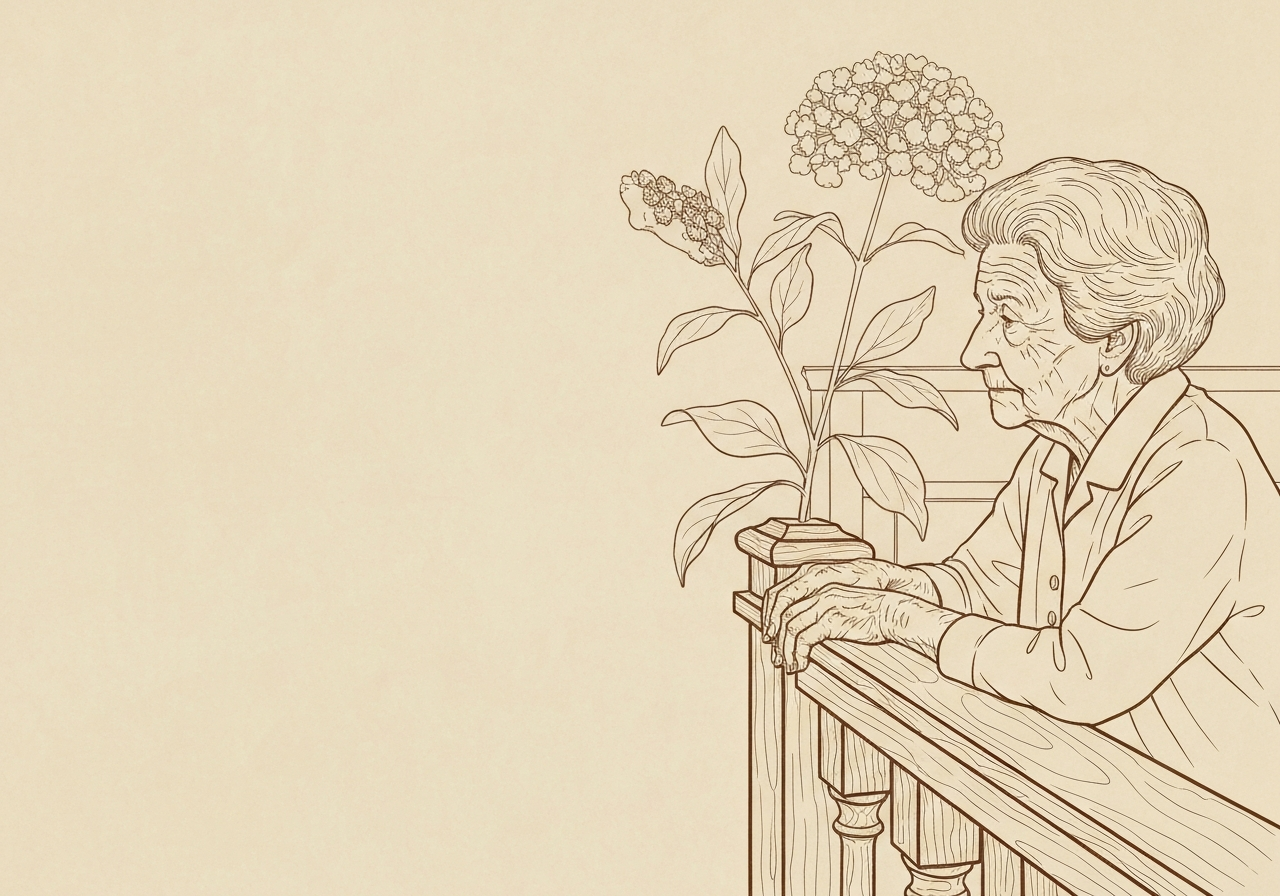
The courtroom fell silent as the husband's counsel argued that the marriage had collapsed beyond repair. The bench listened, unmoving, as the file — thin after decades of litigation — sat on the dais. The 82-year-old respondent's age-spotted hands rested on the railing of the witness box as she waited for the court's answer.
When the Wing Commander filed for divorce
Dr. Nirmal Singh Panesar, a retired Wing Commander of the Indian Air Force, married Mrs. Paramjit Kaur in 1963 under Sikh rites. They had three children and lived together for about 21 years. The trouble began in 1984 when Dr. Panesar was transferred to Madras. His wife refused to relocate, preferring to stay in Amritsar with the children.
The couple had been living separately since then. The husband filed for divorce in 1996 on grounds of cruelty and desertion (Section 13(1)(ia) and 13(1)(ib) of the Hindu Marriage Act, 1955 — the legal grounds that allow a spouse to seek divorce if the other has been cruel or has abandoned the marriage without reasonable cause).
The trial court file, now yellowed with age, recorded the husband's complaint: his wife had refused to follow him to Madras, choosing instead to remain in Amritsar with their three children. The wife's handwritten statement, folded carefully in the file, told a different story — she had stayed to raise the children alone while he built his career.
The trial court said yes, the High Court said no
The trial court — the District Court in Chandigarh — granted the divorce decree on February 5, 2000. But the wife appealed. On December 21, 2000, the Single Bench of the Punjab and Haryana High Court reversed the decree, finding that the husband had failed to prove either cruelty or desertion. The Division Bench of the same High Court confirmed this reversal on February 18, 2009, after hearing the Letters Patent Appeal.
The husband then appealed to the Supreme Court. He also added a new argument: even if the statutory grounds for divorce were not made out, the court should use its extraordinary power under Article 142 of the Constitution (the Supreme Court's power to pass any order necessary to do "complete justice" in a case before it) to grant divorce on the ground of irretrievable breakdown of marriage — meaning the marriage had collapsed beyond repair, regardless of who was at fault.
The procedural journey had taken 27 years from the filing of the divorce petition to the final dismissal. The case had wound its way through four courts: the trial court in Chandigarh, the Single Bench and Division Bench of the Punjab and Haryana High Court, and finally the Supreme Court of India.
The wife's answer: she raised their children alone
The wife, now about 82 years old, opposed the divorce. She said she had maintained the marriage all her life. She raised their three children alone while her husband was away. She told the court she did not want to die as a divorcee. Her position was simple: she had kept the marriage alive for decades, and she wanted to keep it alive until her death.
The husband argued that the marriage had irretrievably broken down — the couple had not lived together since 1984, and there was no possibility of reconciliation. He relied on the Constitution Bench decision in Shilpa Sailesh v. Varun Sreenivasan (2023), where the Supreme Court had held that Article 142 could be used to dissolve a marriage on the ground of irretrievable breakdown even when the statutory grounds for divorce were not made out.
The wife's counsel countered by pointing to the long line of precedents on desertion and cruelty. He cited Bipin Chandra Jai Singh Bai Shah v. Prabhavati (AIR 1957 SC 176), where the court had defined the essential elements of desertion, and Lachman Utam Chand Kirpalani v. Meena alias Mota (AIR 1964 SC 40), which had clarified that desertion requires both physical separation and an intention to permanently end the marriage. He also referenced Shobha Rani v. Madhukar Reddi (1988) 1 SCC 105, where the court had held that cruelty must be judged by the totality of the evidence, not by isolated incidents.
Why the Supreme Court said no
The bench of Justice Aniruddha Bose and Justice Bela M. Trivedi upheld the concurrent findings of the High Court on cruelty and desertion. The husband had failed to prove either ground. The court noted that the wife's refusal to relocate did not amount to cruelty — she had chosen to stay in Amritsar to raise their children, and the husband had not shown that this decision was malicious or unreasonable.
On the question of desertion, the court applied the settled legal position from Debananda Tamuli v. Kakumoni Kataky (2022) 5 SCC 459 and Sirajmohmedkhan Janmohamadkhan v. Hafizunnisa Yasinkhan (1981) 4 SCC 250: desertion requires both physical separation and an intention to permanently end the marriage (animus deserendi). The wife had never expressed any intention to abandon the marriage. She had simply refused to move cities.
The court also considered Naveen Kohli v. Neelu Kohli (2006) 4 SCC 558, where the court had discussed the concept of irretrievable breakdown, and Savitri Pandey v. Prem Chandra Pandey (2002) 2 SCC 73, which had held that the court must consider the totality of circumstances before granting divorce. None of these precedents helped the husband, because the wife had maintained the marriage throughout.
Then came the crucial question: could the court use Article 142 to grant divorce anyway?
When complete justice would be injustice
The court held that the discretionary power under Article 142 to dissolve a marriage on the ground of irretrievable breakdown must not be exercised as a strait-jacket formula. Where the opposing spouse has maintained the matrimonial relationship throughout, is willing to continue caring for the other spouse, and expresses genuine sentiments against dissolution, granting divorce would not constitute "complete justice" — it would cause injustice to that spouse.
The court said that granting divorce under Article 142 in this case would effectively punish the wife for having kept the marriage alive. She had sacrificed her own career and comfort to raise their children. She had never sought a divorce. She had never abandoned the marriage. To now grant a divorce against her wishes, the court held, would be to reward the husband for walking away and to penalise the wife for staying.
The bench directly quoted from its own ratio: granting divorce would not constitute 'complete justice' but would cause injustice to the wife, who had maintained the matrimonial relationship throughout her life. The court's words hung in the silent courtroom — a final answer to a question that had taken 27 years to resolve.
What this means for contested divorces
This judgment clarifies that Article 142 is not a magic wand that can dissolve any marriage that has broken down. The court will look at the conduct of both parties. If one spouse has maintained the marriage and genuinely opposes divorce, the court will not force a dissolution simply because the other spouse wants out.
For practitioners, the key takeaway is this: irretrievable breakdown is not a standalone ground for divorce under the Hindu Marriage Act. It can only be invoked through Article 142, and the court will exercise that power only when granting divorce would do "complete justice" to both parties — not when it would crush one spouse's lifelong commitment.
The judgment also reinforces the importance of concurrent findings of fact. Where the trial court and two levels of the High Court have all found that the petitioner failed to prove cruelty and desertion, the Supreme Court will not take a different view in the absence of perversity. This procedural discipline ensures that litigants cannot endlessly relitigate the same facts.
For the wife, the judgment means she will die as she lived — married. The husband's appeal was dismissed, and the marriage survived — not because the couple lived together, but because one woman refused to let it die.
THE PLAY: If you seek divorce on irretrievable breakdown under Article 142, you must show not just that the marriage has collapsed, but that the other spouse has also abandoned the marriage — a spouse who has maintained the relationship and opposes divorce will block this route entirely.
The appeal was dismissed. The marriage survived — not because the couple lived together, but because one woman refused to let it die.