A registered will was challenged. The Supreme Court said: registration alone isn't proof.
The court ruled that a certificate of registration doesn't automatically prove a will was properly signed and witnessed. Here's why.
Held.
Registered will.
Not proven.
The court ruled that a certificate of registration doesn't automatically prove a will was properly signed and witnessed. Here's why.
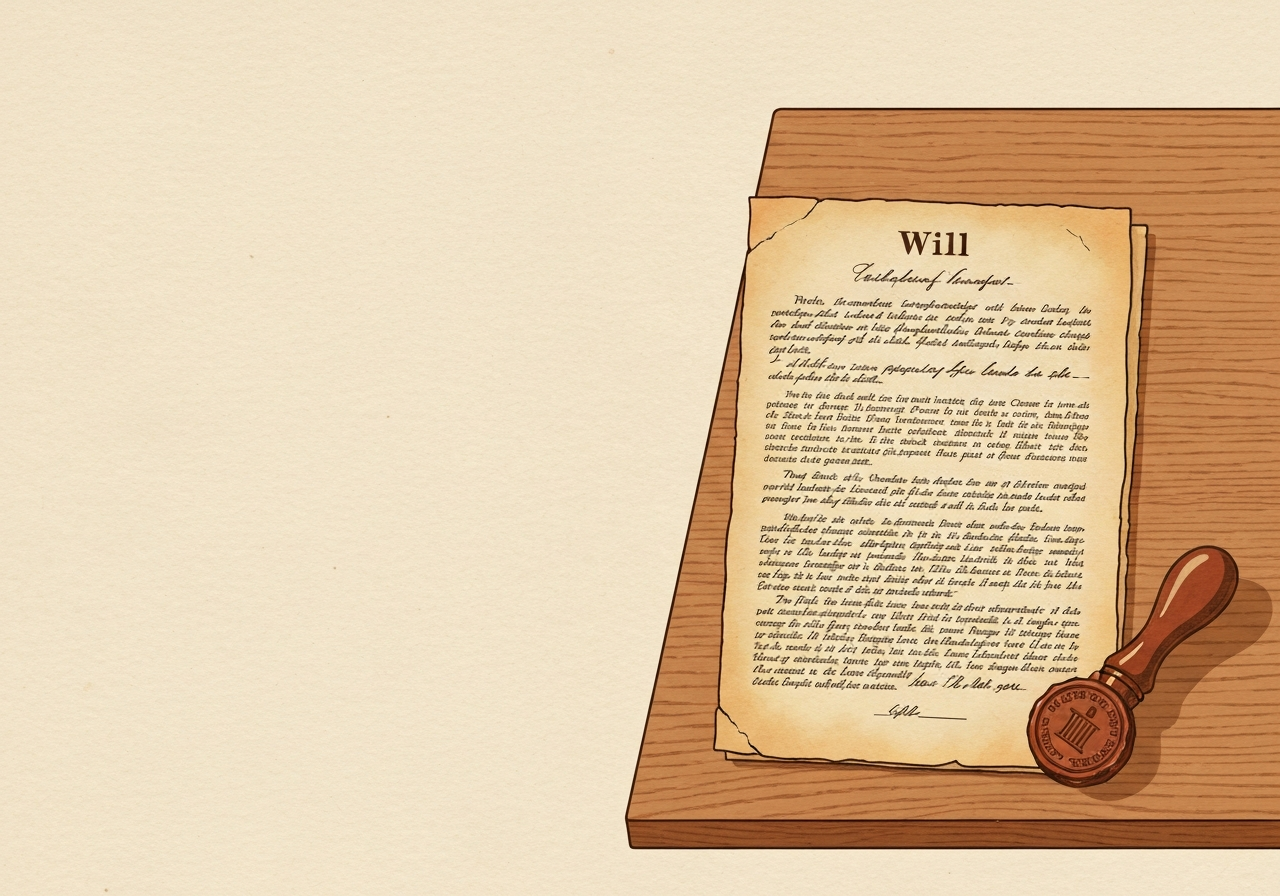
His will was registered with the government. But the Supreme Court said that still wasn't enough to prove it was valid. The document had a stamp, a seal, and a certificate from a public official — yet the court refused to treat it as automatically genuine.
The question was deceptively simple: when a will is registered, does the registration certificate itself prove the will was properly signed and witnessed? Or does the person claiming under the will still have to bring independent proof?
The moment the certificate failed
In Bhagat Ram v. Suresh, a dispute over inheritance reached the Supreme Court. One side produced a will that had been registered under the Registration Act, 1908. They argued that the certificate of registration — issued under Section 60 of that Act — was enough to prove the will was valid. The courtroom was quiet as the counsel held up the document; the Registrar's stamp was still crisp, the ink barely faded, but the bench leaned forward, unconvinced.
Their logic was straightforward. Section 114, Illustration (e) of the Evidence Act says that courts may presume that official acts have been regularly performed. A Registrar is a public servant. So, they argued, the Registrar must have done his job correctly. The endorsements he made under Sections 58 and 59 of the Registration Act — recording that the will was presented, that the person who presented it was identified, and that the document was read over and explained — should therefore be taken as true.
The other side disagreed. A registered sale deed is one thing. A will is another. You cannot skip the specific rules for proving a will just because a Registrar stamped it.
Two laws, one clash
Under Section 63 of the Indian Succession Act, 1925, a will must be signed by the person making it (the testator) in the presence of at least two witnesses. Those witnesses must also sign the will in the presence of the testator. This is called attestation (the act of witnessing someone's signature to confirm it is genuine). Imagine a will that is a single yellowing page, the testator's signature at the bottom, but below it, only one shaky scrawl — the name of a single witness. That single signature, the law says, is not enough to make the will valid.
When a will is disputed in court, the person relying on it must prove two things: first, that the testator signed it, and second, that at least two witnesses saw the testator sign and then signed themselves. This is not a technicality. It is the core safeguard against forged wills.
The Registration Act, on the other hand, has a different purpose. When a document is registered, the Registrar checks the identity of the person presenting it and ensures they understand what they are signing. But the Registrar does not check whether the will was properly witnessed. The Registrar does not ask: were two witnesses present when the testator signed? Did those witnesses sign in the testator's presence? These questions fall outside the Registrar's duties. The will itself, in the court's file, felt thin — a few pages of paper that carried a government seal but could not answer the most basic question about who was in the room when the testator put pen to paper.
What the Registrar's seal could not prove
The Supreme Court drew a sharp distinction. Yes, the court said, the Registrar is a public servant. Yes, there is a presumption that public servants perform their duties regularly. But the Registrar's duties under the Registration Act do not include verifying attestation under the Succession Act.
The court observed that the duties discharged by the registering officer do not include the specific requirements of attestation or verification of attestation of a will as required by Section 63 of the Succession Act.
In plain terms: the Registrar's certificate proves the Registrar did his job. It does not prove the witnesses did theirs.
The court reasoned that although the presumption of regularity applied to the Registrar's duties, the endorsement by the registering officer is not by itself a proof of the will having been duly executed and attested.
This is a crucial limitation. A certificate of registration is evidence of registration — not evidence of valid execution. The two are different things.
Consider this: a man signs a will in his bedroom, alone, with no witnesses. The next day, he walks into a Registrar's office, presents the document, and gets it registered. The Registrar stamps it, seals it, and files it. Later, when the man dies, his son produces the registered will. The registration certificate is pristine. But the will itself was never witnessed. The certificate cannot fix that. The Registrar never saw the bedroom. The Registrar never saw whether two witnesses were present. The seal only says the Registrar did his job — not that the will was properly made. (This is a purely illustrative scenario and not a case from the judgment.)
The verdict that changed the burden
The Supreme Court ruled that the party relying on a registered will cannot simply produce the registration certificate and stop. They must still call the attesting witnesses — or, if the witnesses are dead or unavailable, prove the will through other evidence such as the testimony of someone who saw the testator sign.
The verdict limited the scope of the statutory presumption derived from the collateral fact of registration. The court concluded that while registration proves official regularity, it is insufficient to satisfy the strict mandate for proving the execution and attestation of a will.
In other words: registration is a fact. But it is a collateral fact — a fact about the document's history, not a fact about whether the document was properly made. The law requires direct proof of execution and attestation. Registration alone cannot fill that gap.
What this means for practitioners
For lawyers handling will disputes, the message is clear. Do not assume a registered will is a safe will. The registration certificate is a starting point, not an ending point. You must still be ready to prove that the testator signed in the presence of two witnesses who then signed in the testator's presence. The smell of old paper in a courtroom, the weight of a file that holds only a registration certificate — these are not enough to satisfy the law's demand for direct evidence.
THE PLAY: When proving a registered will, treat the registration certificate as corroboration — never as the sole proof of execution and attestation.
The court ended where it began: with a document that carried a government seal, but not the weight of the law.