An 89-year-old husband, an 82-year-old wife, and a divorce plea that failed.
The Supreme Court dismissed a 27-year divorce battle after finding the wife had not abandoned the marriage and still wished to care for her husband, refusing to invoke Article 142 to do what it called injustice.
27
years.
The Supreme Court dismissed a 27-year divorce battle after finding the wife had not abandoned the marriage and still wished to care for her husband, refusing to invoke Article 142 to do what it called injustice.
An 89-year-old husband, an 82-year-old wife, and a marriage the Supreme Court refused to end
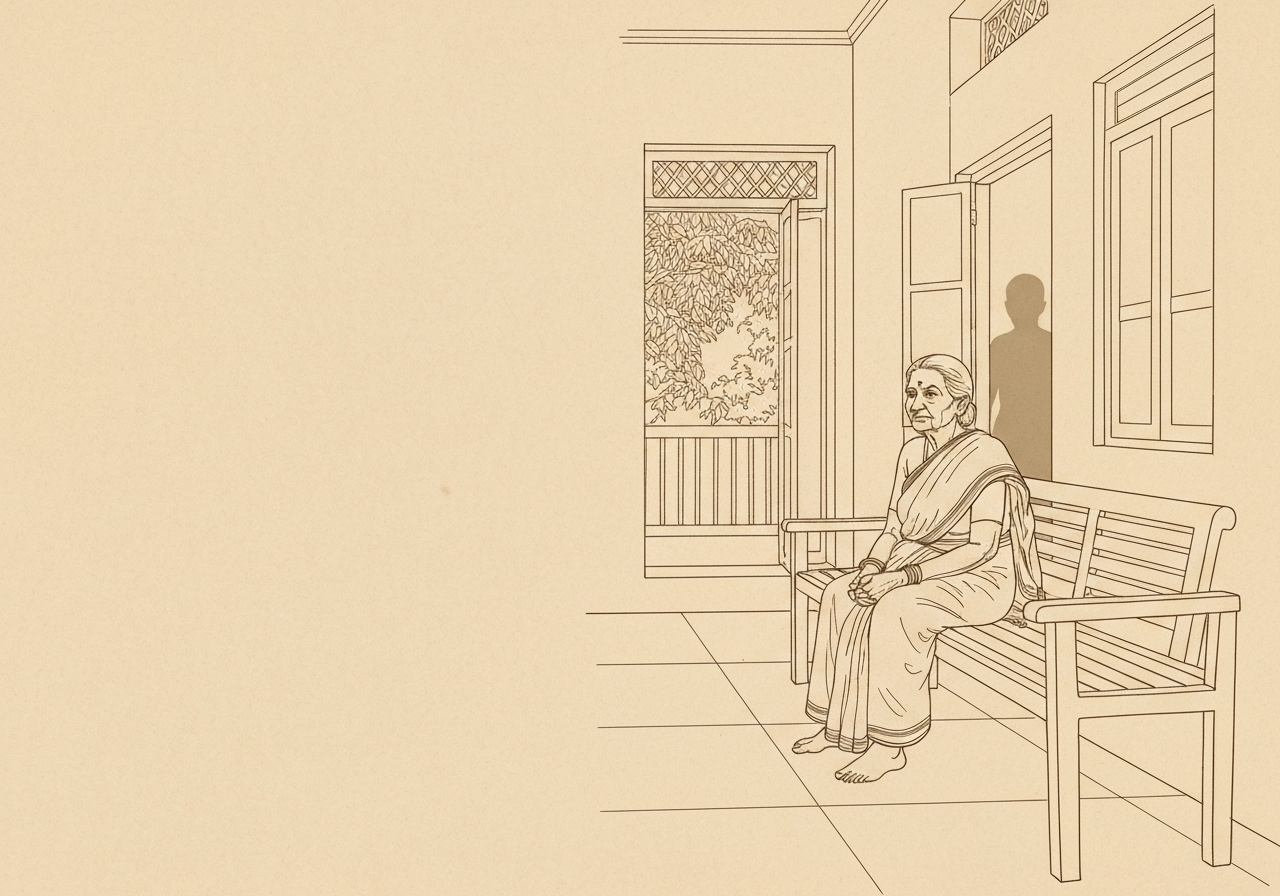
When Dr. Nirmal Singh Panesar, a retired Wing Commander, walked into the Supreme Court in 2023, he was 89 years old. He had been fighting for a divorce since 1996 — nearly three decades. His wife, Paramjit Kaur, was 82. She had one message for the Court: she did not want to die with the stigma of being a divorcee, and she was still willing to care for her husband.
The stakes were not just legal. They were existential. A marriage that had lasted 21 years, produced three children, and then fractured over a transfer to Madras in 1984 — could the Supreme Court, using its extraordinary powers under Article 142, simply declare it dead? The answer, delivered by a Bench of Justice Aniruddha Bose and Justice Bela M. Trivedi on October 10, 2023, was a firm no.
What the trial court saw — and what the High Court reversed
The story begins in 1963. Dr. Panesar married Paramjit Kaur according to Sikh rites in Amritsar. For 21 years, they lived together, raised three children, and built a life. Then came the transfer to Madras. Dr. Panesar wanted his wife to join him. She refused. She preferred to stay in Amritsar with the children.
In 1996, Dr. Panesar filed HMA No. 63/1996 before the District Court, Chandigarh, under Section 13(1)(ia) and 13(1)(ib) of the Hindu Marriage Act, 1955 — cruelty and desertion. The District Court agreed with him. On February 5, 2000, it granted a decree of divorce.
But the High Court of Punjab and Haryana saw it differently. On December 21, 2000, the Single Bench in FAO No. 44-M/2000 reversed the decree. It held that Dr. Panesar had failed to prove either cruelty or desertion. The Division Bench in LPA No. 195/2001 confirmed this on February 18, 2009. Two courts, two judges, one conclusion: the marriage was not dead enough to be dissolved.
The arguments: cruelty, desertion, and a last-ditch plea
Before the Supreme Court, Dr. Panesar's learned Counsel argued two lines. First, on merits: the wife's refusal to relocate to Madras, coupled with her conduct, amounted to both cruelty and desertion. He relied on Naveen Kohli v. Neelu Kohli (2006) 4 SCC 558, which summarised the principles of cruelty — that it could be mental or physical, intentional or unintentional, and must be assessed based on the type of life the parties were accustomed to.
Second, and more creatively, he invoked Article 142 of the Constitution. Even if the High Court's concurrent findings were correct, he argued, the marriage had irretrievably broken down. The couple had lived apart for nearly 40 years. There was no possibility of reconciliation. The Supreme Court, he submitted, had the power under Article 142 to do "complete justice" — and that included dissolving a dead marriage even when one spouse opposed it. He cited Shilpa Sailesh v. Varun Sreenivasan (2023 SCC Online SC 544), where a Constitution Bench had held exactly that.
Paramjit Kaur's response was simple and devastating. She had maintained the sacred relationship throughout. She was willing to care for her husband even now. She did not want to die as a divorcee. Her sentiment was not about societal stigma — it was her own deeply held belief.
Why the Supreme Court said no to cruelty and desertion
Justice Bela M. Trivedi, writing for the Bench, examined the concurrent findings of the High Court. On desertion, the Court turned to the classic formulation from BipinChandra JaiSinghBai Shah v. Prabhavati AIR 1957 SC 176 and Lachman UtamChand Kirpalani v. Meena alias Mota AIR 1964 SC 40. To prove desertion, the petitioner must establish four elements: factum of separation, animus deserendi (intention to desert), absence of consent, and absence of conduct giving reasonable cause to the deserting spouse.
The Court found that Paramjit Kaur's refusal to move to Madras did not demonstrate animus deserendi. She had stayed in Amritsar to care for the children. She had not abandoned the marriage — she had simply chosen not to relocate. As the Court noted in Debananda Tamuli v. Kakumoni Kataky (2022) 5 SCC 459, desertion means intentional abandonment without consent and without reasonable cause. That was not the case here.
On cruelty, the Court applied the principles from Naveen Kohli. Cruelty, the Court observed, must be distinguished from the ordinary wear and tear of family life, as held in Savitri Pandey v. Prem Chandra Pandey (2002) 2 SCC 73. A wife's refusal to move to a new city, after 21 years of settled matrimonial life, did not cross that threshold. The concurrent findings of the High Court were sound. The Supreme Court would not interfere.
The Article 142 question: when 'complete justice' means saying no
This was the heart of the case. Dr. Panesar's Counsel argued that even if cruelty and desertion were not proved, the marriage was irretrievably broken. The couple had lived apart for nearly four decades. There was no emotional or physical connection left. Why force them to remain married?
The Supreme Court acknowledged its power under Article 142. In Shilpa Sailesh, the Constitution Bench had held that the Court could dissolve a marriage on the ground of irretrievable breakdown even when one spouse opposed it. But the Court also emphasised that such power must be exercised with "great care and caution" and only to do "complete justice".
Justice Trivedi drew a line. The discretion under Article 142, she held, must be exercised to do complete justice — not to do what one party considers just. Here, Paramjit Kaur had maintained the sacred relationship throughout. She was willing to care for her husband. She expressed deep personal sentiment against the stigma of divorce. Granting dissolution would constitute injustice to her, not complete justice.
THE TEST: Before invoking Article 142 to dissolve a marriage on irretrievable breakdown, the Court must ask: would granting divorce do 'complete justice' to the spouse who opposes it? If the answer is no — because that spouse has maintained the relationship, is willing to care for the other, and holds deep personal sentiment against divorce — the power must be declined.
The Court went further. It observed that the formula of "irretrievable breakdown of marriage" should not be accepted as a strait-jacket formula for granting divorce under Article 142. The institution of marriage, the Court said, is still considered pious, spiritual, and an invaluable emotional life-net between husband and wife in Indian society. It is governed not only by law but by social norms, with many relationships stemming from and thriving on matrimonial relationships.
This was not a rejection of the Shilpa Sailesh principle. It was a reminder that the principle has limits. The Court's power under Article 142 is not a magic wand. It is a scalpel — and it must be used only where the incision will heal, not where it will wound.
What this means for practitioners
For advocates handling matrimonial disputes, this judgment offers two clear lessons.
First, on cruelty and desertion: A spouse's refusal to relocate to a new city, after years of settled matrimonial life, does not automatically constitute cruelty or desertion. The petitioner must prove animus deserendi — the intention to abandon the marriage. A decision made for the sake of children, or for personal reasons that do not amount to abandonment, will not suffice. The burden of proof is heavy, and concurrent findings of the High Court will not be lightly disturbed.
Second, on Article 142: The power to dissolve a marriage on irretrievable breakdown exists, but it is not a routine remedy. The Court will weigh the sentiments of the opposing spouse. If that spouse has maintained the relationship, is willing to care for the other, and holds deep personal sentiment against divorce, the Court will decline to exercise its discretion. The subjective feelings of the opposing spouse matter — even if society at large may not share those sentiments.
For CFOs and founders, the takeaway is simpler: marriage, in Indian law, is not a contract that can be terminated at will. It is an institution. And the Supreme Court will not use its extraordinary powers to dissolve it unless doing so serves complete justice — not just the convenience of one party.
The bottom line
Dr. Nirmal Singh Panesar's appeal was dismissed. The marriage survived — not because the Court believed it could be saved, but because the Court refused to use its power to end it against the will of a spouse who had never given up.