An IBC petition was filed. Then an arbitration plea. Which one wins?
The Supreme Court says it depends on whether the insolvency petition has been 'admitted' yet — and that changes everything about when a dispute can go to arbitration.
30
%.
The Supreme Court says it depends on whether the insolvency petition has been 'admitted' yet — and that changes everything about when a dispute can go to arbitration.
A company was hit with an insolvency petition. It said: 'Let's arbitrate instead.' The court had to decide which door opens first.
On one side stood Kotak India Venture, demanding repayment. On the other, Indus Biotech, insisting the debt didn't exist and pointing to a contract that said disputes go to arbitration, not court. The answer, the Supreme Court ruled, depends on a single moment: has the insolvency petition been admitted yet? If yes, arbitration is dead. If no, the contract wins.
When the conversion formula broke down
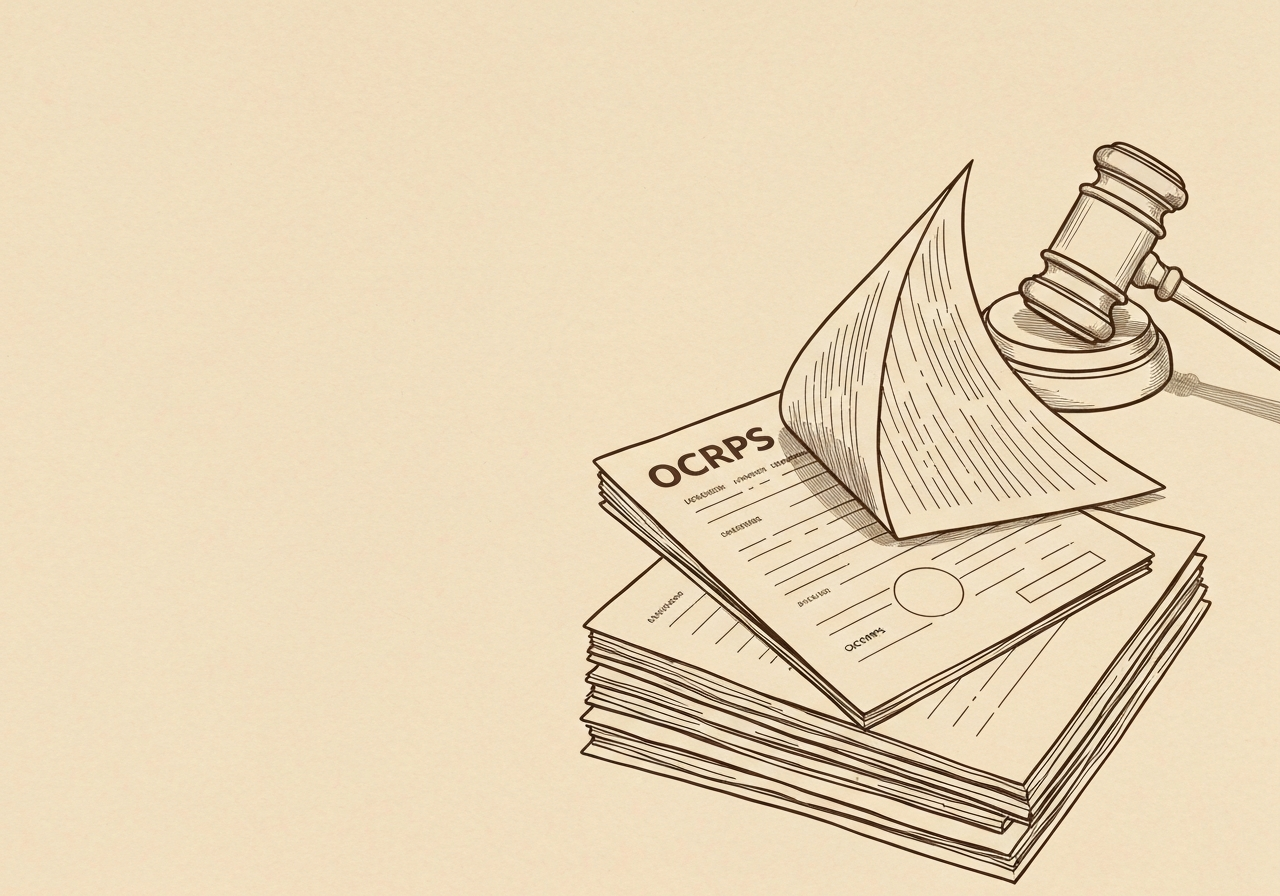
Indus Biotech, a private company, had signed investment agreements with Kotak India Venture entities. Under those agreements, Kotak subscribed to a special class of shares called optionally convertible redeemable preference shares (OCRPS — shares that carry a fixed dividend and must be either redeemed or converted into equity on a specific date). The stack of OCRPS documents, thick with subscription terms and redemption clauses, sat before the court as the dispute unfolded.
When Indus Biotech planned an initial public offering, SEBI regulations required that these preference shares be converted into equity shares first. But the two sides could not agree on the conversion formula. Kotak claimed it was entitled to 30% of the equity. Indus Biotech said the number was closer to 10%. The conversion discussions were still ongoing when the redemption date — 31 December 2018 — passed. Kotak did not wait. It filed insolvency proceedings before the National Company Law Tribunal (NCLT — the tribunal that hears corporate insolvency cases), claiming the unredeemed amount as a debt that had gone into default.
Kotak's move: insolvency petition
Kotak filed its petition under Section 7 of the Insolvency and Bankruptcy Code (IBC — the law that allows a financial creditor to start a process to recover its money or wind up a company). It argued that since the redemption date had passed and the money was not paid, a default had occurred. The company, it said, should be pushed into the corporate insolvency resolution process (CIRP — the formal process where a company tries to restructure its debts or faces liquidation).
Indus Biotech countered that there was no default at all. The conversion negotiations were still alive. The company had not refused to pay — it was simply waiting for the conversion formula to be settled. And the Share Subscription and Shareholders' Agreements between the parties contained an arbitration clause. Any dispute, Indus Biotech said, must go to arbitration, not to the NCLT. It filed two applications: one under Section 8 of the Arbitration and Conciliation Act (the provision that asks a court to refer parties to arbitration when a valid arbitration agreement exists), and another under Section 11 of the same Act (which allows the Supreme Court to appoint an arbitrator when the parties cannot agree on one).
The NCLT's call: no default, go arbitrate
The NCLT, Mumbai Bench, looked at the facts. The bench sat in silence as the arguments were weighed — the date stamp on Kotak's petition, 31 December 2018, marking the claimed default, was examined against the ongoing negotiation records. It found that the conversion discussions had commenced and were still underway. The redemption date had passed, but that alone did not mean a default had occurred — because the parties were actively negotiating how the shares would be converted. The tribunal dismissed Kotak's Section 7 petition. It allowed Indus Biotech's Section 8 application, effectively saying: take this dispute to arbitration.
Kotak appealed to the Supreme Court.
The central question: which law overrides which?
The IBC has an overriding effect — Section 238 of the Code says that if there is a conflict between the IBC and any other law, the IBC wins. Kotak argued that this meant the insolvency petition, once filed, blocked arbitration. The dispute, it said, was now a matter of insolvency, not contract.
Indus Biotech argued the opposite. A mere filing of an insolvency petition, it said, does not transform a dispute into something that cannot be arbitrated. The petition had not been admitted — the NCLT had not yet recorded a finding that a default had occurred. Until that moment, the dispute remained a commercial disagreement between two parties, covered by their arbitration agreement.
The Supreme Court had to decide: at what point does an insolvency proceeding become a proceeding in rem (a case that affects the rights of all creditors, not just the two parties before the court), and therefore become non-arbitrable?
The trigger point: admission, not filing
The bench — Justice S.A. Bobde, Justice A.S. Bopanna, and Justice V. Ramasubramanian — drew a sharp line. The courtroom fell quiet as the judgment was read. "A proceeding under Section 7 of the IB Code becomes a proceeding in rem only upon admission by the Adjudicating Authority after recording satisfaction that default has occurred," the Court held. Mere filing of the petition does not change the nature of the dispute.
The court explained the sequence. When a Section 7 petition is filed and a Section 8 arbitration application is also filed, the NCLT must first decide the Section 7 petition. It must record a finding on whether a default exists. If it finds a default, the arbitration application is not maintainable — the insolvency process takes over. But if it finds no default, the Section 7 petition is rejected, and the field is left open for arbitration.
In this case, the NCLT had found no default. The conversion discussions were ongoing. The redemption date had passed, but the parties were still negotiating. It would be premature, the Supreme Court agreed, to conclude that a default had occurred.
What the court ordered
The Supreme Court dismissed Kotak's appeal. It upheld the NCLT's decision. And it allowed Indus Biotech's arbitration petition, appointing an Arbitral Tribunal to resolve the conversion dispute. The operative order was clear: "Civil Appeal arising out of SLP(C) No. 8120 of 2020 is dismissed. Arbitration Petition No. 48 of 2019 is allowed. Parties to bear their own costs." The court laid down the principle clearly: an insolvency petition that has not been admitted does not kill an arbitration agreement. The contract survives. The parties must go where they agreed to go.
Why this matters for every commercial contract
For any company that has signed an investment agreement with an arbitration clause, this judgment is a shield. A financial creditor cannot file a Section 7 petition and then argue that the dispute is no longer arbitrable. The moment of admission is the Rubicon. Before that, the contract's dispute resolution mechanism stands.
For practitioners, the lesson is procedural but critical. When a Section 7 petition is filed, the first question to ask is: has it been admitted? If not, a Section 8 application can still succeed. But the NCLT must decide the default question first — and if it finds a default, arbitration is off the table.
THE PLAY: File your Section 8 arbitration application before the NCLT admits the Section 7 petition — once admission happens, the dispute becomes in rem and arbitration is dead.
The conversion formula was never decided by the Supreme Court. It went to arbitration, where it belonged.