Bail with a Google Maps pin? Supreme Court says no
A Nigerian man got bail after 8 years in jail, but the court made him drop a location pin and get an embassy certificate. The Supreme Court found both conditions impossible and unconstitutional.
8
years.
A Nigerian man got bail after 8 years in jail, but the court made him drop a location pin and get an embassy certificate. The Supreme Court found both conditions impossible and unconstitutional.
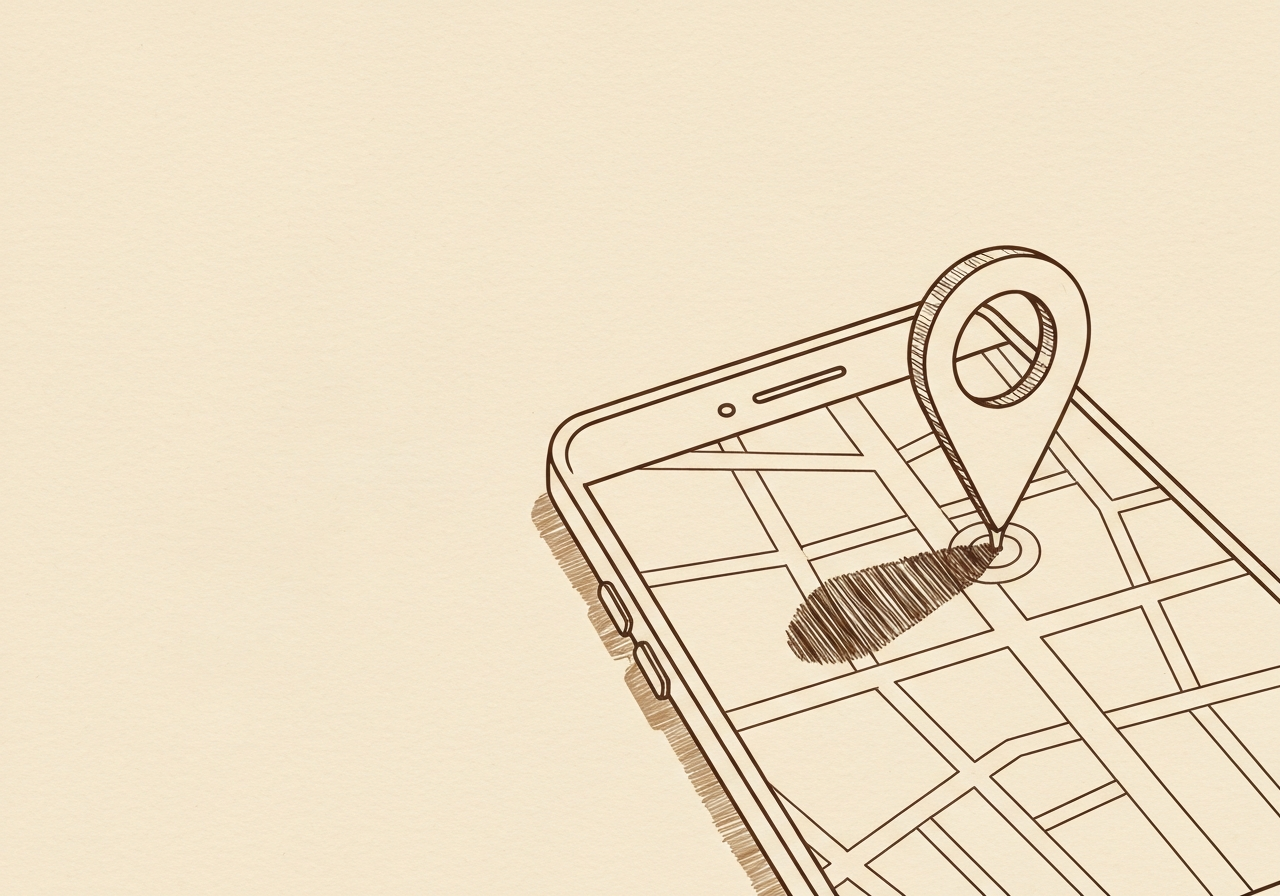
He was granted bail after 8 years in jail. But the court said he had to drop a pin on Google Maps so the police could track him. The second condition: get a certificate from the Nigerian High Commission promising he wouldn't flee. Frank Vitus, a Nigerian national arrested in 2014 for drug offences, had finally secured his freedom — or so he thought.
The question before the Supreme Court was brutally simple: Can a court set bail conditions that are impossible to follow? And if it does, is that still bail, or is it a different kind of confinement?
Eight years in a Delhi jail
On 21 May 2014, officers from the Narcotics Control Bureau arrested Frank Vitus. The charges were under the NDPS Act (the Narcotic Drugs and Psychotropic Substances Act, 1985 — India's primary law against drug trafficking). Sections 8, 22, 23, and 29 — possession, sale, and conspiracy related to commercial quantities of psychotropic substances. For a foreign national with no local roots, bail was a distant possibility.
Eight years passed. Vitus remained in judicial custody through the trial. Then, on 31 May 2022, the High Court finally granted him bail. But the order came with two conditions that would turn his release into a legal puzzle.
First, he had to obtain a certificate from the Nigerian High Commission in New Delhi, assuring the court that he would not leave India and would appear when required. Second, he had to drop a location pin on Google Maps so the investigating agency could track his every move.
When the embassy said no
Vitus approached the Nigerian High Commission. They refused to issue the certificate. The reason was straightforward: the High Commission did not have a mechanism to provide such assurances for every citizen facing criminal charges abroad. It was not their role, they said. Vitus was stuck — he could not comply with a condition that depended entirely on a third party's willingness to act.
The Google Maps condition was equally problematic. Dropping a pin is a one-time action. It does not provide real-time tracking. It does not alert authorities when the accused moves. It is, as the Supreme Court would later observe, technically useless. More importantly, it required Vitus to surrender his location data to the state — a permanent digital leash.
Vitus challenged both conditions before the Supreme Court. His argument: these conditions violated his fundamental rights under Article 21 of the Constitution (the right to life and personal liberty, which includes the right to privacy). They were also impossible to fulfil, which meant the bail order was, in effect, a denial of bail.
What the law actually allows
The Narcotics Control Bureau opposed the challenge. They argued that the conditions were standard practice for foreign nationals in NDPS cases, derived from a 1994 Supreme Court judgment — Supreme Court Legal Aid Committee Representing Undertrial Prisoners v. Union of India. That judgment had directed that foreign accused in drug cases should obtain a certificate from their embassy as a condition for bail.
The Supreme Court examined the scope of Section 437(3) of the CrPC (the Code of Criminal Procedure, 1973 — which lists the conditions a court can impose while granting bail in non-bailable offences). The provision allows courts to impose conditions to ensure the accused appears for trial, does not tamper with evidence, and does not commit further offences. That is the complete list. Nothing in the section mentions embassy certificates or location tracking.
The Court also looked at Section 37 of the NDPS Act (which makes drug offences non-bailable and sets a higher bar for granting bail). Even under this stricter regime, the conditions imposed must be reasonable and capable of being fulfilled.
Why the Google Maps pin failed
Justice Abhay S. Oka and Justice Ujjal Bhuyan, who heard the appeal, found the Google Maps condition fundamentally flawed on two grounds.
First, it was technically redundant. Dropping a pin does not allow continuous tracking. The investigating agency cannot monitor the accused's movements in real time. The condition, the Court said, served no legitimate purpose connected to the objects of bail — ensuring the accused remains available and does not interfere with the investigation.
Second, and more importantly, the condition violated the right to privacy under Article 21. The Court held that any bail condition that enables the police or investigating agency to track every movement of an accused person using technology would amount to keeping constant vigil on that person. This, the Court said, would effectively be a form of confinement even after release on bail. The accused would be free in name only, with the state watching every step.
"Courts cannot impose conditions that amount to keeping constant vigil on the accused," the bench observed, "as this would effectively amount to confinement even after release on bail."
The embassy certificate trap
The second condition — the embassy certificate — was more complex. The 1994 judgment in Supreme Court Legal Aid Committee had indeed directed that foreign nationals in NDPS cases should obtain such a certificate. But the Supreme Court now clarified that this was a one-time direction for pending cases at that time, not a universally mandatory condition for every NDPS bail involving a foreign national.
The Court held that even where such a condition is imposed, if the embassy fails to issue the certificate within a reasonable time — say, seven days — the court must dispense with the condition. The reason is simple: compliance is beyond the accused's control. A bail condition that depends on the action of a third party, and that third party refuses to act, cannot be used to effectively deny bail.
"A bail condition that is impossible for the accused to comply with cannot be imposed," the Court held, "as it would deprive the accused of bail though otherwise entitled to it."
What this means for every bail order
The Supreme Court deleted both conditions. Vitus was granted bail on standard terms — surrender his passport, report to the investigating officer periodically, and not leave the country without court permission. The case was listed for final orders on 15 July 2024 after compliance with these standard conditions.
For practitioners, the judgment is a clear warning: bail conditions must be within the four corners of Section 437(3) CrPC. They cannot be fanciful, arbitrary, or freakish. They must be consistent with the legitimate objects of bail — ensuring the accused does not flee, does not tamper with evidence, and appears for trial. Nothing more.
THE PLAY: When drafting bail conditions, ask one question: Is this condition within the four corners of Section 437(3) CrPC, and can the accused actually comply with it? If the answer to either is no, the condition will not survive appeal.
The Google Maps pin was deleted. The embassy certificate requirement was relaxed. And the principle was reaffirmed: bail is freedom, not a permanent leash.