Can a handwriting expert be recalled for more cross-examination?
A court allowed a witness to be called back for further questioning to test his truthfulness. The verdict: credibility is earned under fire.
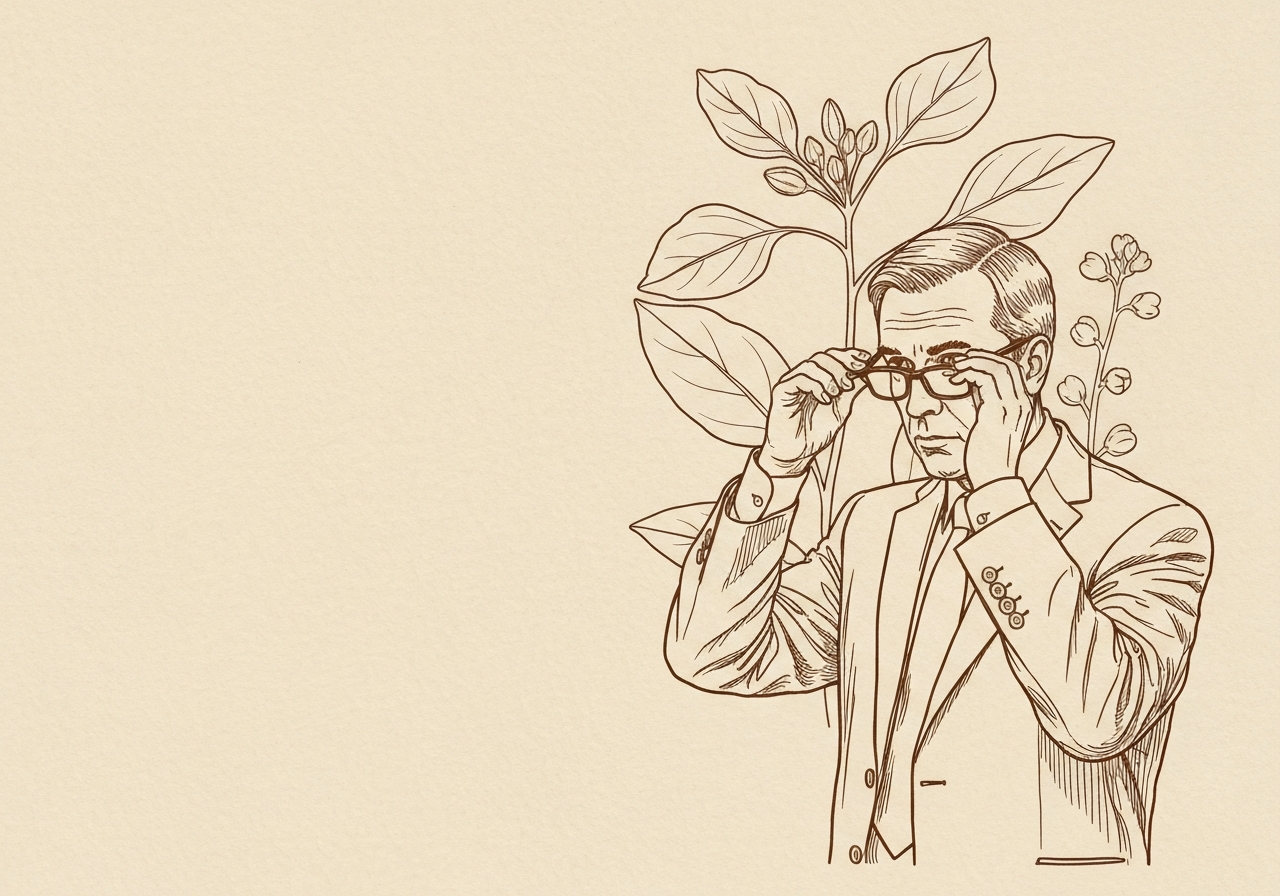
Recalled.
Second round.
Expert re-tested.
A court allowed a witness to be called back for further questioning to test his truthfulness. The verdict: credibility is earned under fire.
The cross-examiner wasn't done. He wanted the handwriting expert back on the stand. The judge said yes—
A piece of paper sat on the evidence table in a small courtroom. On it, a few lines of handwriting. The case, Govind Narain v. Smt. Chhoti Devi, turned on a single question: who wrote those words? One side had brought in a handwriting expert to say the writing belonged to a particular person. The other side had cross-examined him once. But the cross-examiner believed the expert had not been tested hard enough. He asked the court to call the expert back for a second round of questioning.
The court agreed. And in doing so, it made a quiet but significant point: an expert's word alone cannot decide a case. Credibility must be earned under fire.
When the expert took the stand the first time
The case began like many civil disputes where a document's authenticity is in doubt. One party produced a handwriting expert to prove that a certain person had written a particular document. The expert examined the writing, compared it with admitted samples, and gave his opinion in court. Under cross-examination (where the opposing lawyer questions a witness to challenge their truthfulness), he answered questions about his method, his training, and his conclusions.
But the cross-examiner felt the first round had not gone deep enough. He wanted to probe further—to test not just what the expert saw, but whether the expert was telling the truth at all. The question was no longer about the handwriting. It was about the man who claimed to read it.
In that first session, the courtroom had been still. The expert had held the paper up to the light, tracing the loops and slants with a steady finger. The judge had watched from the bench, silent, his robe rustling as he leaned forward. The cross-examiner had taken notes, the scratch of his pen the only sound. The air smelled of old paper and ink. But when the expert stepped down, the cross-examiner felt a gap—a question not asked, a doubt not pressed. He needed the expert back.
The request to recall the witness
The cross-examiner moved the court to recall the handwriting expert for further cross-examination. The request was simple: let me question him again, because the first session did not fully test his credibility. The expert had given his observations, but the cross-examiner argued that those observations needed deeper scrutiny. He wanted to see if the expert's testimony would hold up under sustained pressure.
The court had to decide whether this was fair. Was it permissible to call an expert back after he had already been examined and cross-examined once? Or would that be an abuse of process—a way to harass a witness or delay the proceedings?
The cross-examiner's argument was direct: the initial testimony might be insufficient or require deeper scrutiny. He wanted to verify the credibility of the expert, and one round had not been enough. The court listened. The file on the judge's desk was thin, but the question it contained was weighty. The cross-examiner's voice was steady as he made his case: the expert had given his observations, but the truthfulness of those observations had not been fully tested. The judge nodded slowly, considering the weight of the request.
What the Indian Evidence Act says about expert witnesses
Under the Indian Evidence Act, an expert witness is a person with special knowledge, skill, or experience in a particular field—here, handwriting analysis. The court allows such a witness to give an opinion on a fact that requires specialised judgment. But the law does not treat that opinion as final. The expert's credibility must be tested, and the primary tool for that testing is cross-examination.
The court in Govind Narain v. Smt. Chhoti Devi observed that an expert witness, after giving his observations, can be recalled by the cross-examiner for further questioning. The court's exact reasoning was clear: "an expert witness, called under the Indian Evidence Act, can be recalled after he gives his observations by the cross-examiner." The logic was straightforward—cross-examination exists precisely to challenge the honesty of a witness. If one round of questioning is not enough to test that honesty, the court has the power to allow a second round.
The Indian Evidence Act does not treat an expert's opinion as conclusive. Section 45 of the Act allows the court to receive expert testimony on matters of science, art, or foreign law, but the weight of that testimony depends entirely on the expert's credibility. The court in this case made clear that the process of cross-examination is fundamentally designed to challenge the honesty of a witness. Recalling an expert is not a deviation from that process—it is an extension of it.
Why the court said yes
The court's reasoning was rooted in the purpose of cross-examination itself. The process is not a formality. It is the mechanism by which the court determines whether a witness is telling the truth. If the cross-examiner believes that the first session did not accomplish that goal—if the expert's testimony remained untested on critical points—the court should not shut the door.
The court was convinced about the credibility of the handwriting expert only after the cross-examination was complete. That is the key point: credibility was not assumed because the expert had credentials. It was earned under fire. The court needed to see the expert withstand questioning before it could trust his opinion.
The ruling makes clear that rigorous questioning, even if it requires recalling a witness, is a legitimate tool for the court to verify credibility. The ultimate value of any testimonial evidence—expert or otherwise—depends on whether it can survive this challenge. The cross-examiner had argued that the expert's initial testimony might be insufficient, and the court accepted that deeper scrutiny was necessary to test the expert's truthfulness.
When the expert returned to the stand for the second round, the courtroom felt different. The cross-examiner had prepared new questions. The expert adjusted his spectacles, waiting. The judge leaned forward, his robe rustling against the wooden bench. The silence before the first question was thick—a space in which the entire case seemed to hang. The cross-examiner began, and the expert answered, and this time, the court watched every detail: the hesitation before a response, the confidence in a denial, the small shifts in posture that betrayed discomfort. The scratch of the pen on paper was the only rhythm in the room.
What this means for practitioners
For lawyers, the takeaway is practical. If you believe an expert witness has not been adequately tested in the first round of cross-examination, you can ask the court to recall that witness. The court has the discretion to allow it, and the decision in Govind Narain v. Smt. Chhoti Devi supports that request—provided you can show that further questioning is necessary to test the witness's truthfulness, not merely to harass or delay. The cross-examiner's argument that the initial testimony might be insufficient or require deeper scrutiny is the kind of reasoning that courts will consider.
For judges, the case is a reminder that cross-examination is not a single event. It is a process that continues until the court is satisfied that the witness's credibility has been properly examined. If that requires a second round, so be it. The court's observation that an expert witness can be recalled after giving his observations reinforces this principle.
The case also carries a lesson for experts themselves. An expert who takes the stand must be prepared not just for one round of questioning, but for the possibility that the cross-examiner will come back for more. The expert's credibility is not established by credentials alone. It is established by the ability to withstand scrutiny—again and again, if necessary. The expert in this case faced that second round, and the court watched every moment.
In a broader sense, the ruling affirms a principle that runs through the entire law of evidence: the truth is not found in documents or opinions. It is found in the crucible of cross-examination. The court does not accept an expert's word because the expert is an expert. It accepts it because the expert has survived the test that every witness must face—the test of being doubted, questioned, and challenged until the truth emerges. The cross-examiner's request to recall the expert was not a procedural trick; it was the very mechanism by which the court verified credibility.
THE PLAY: If an expert witness's testimony survives only one round of cross-examination, ask the court for a second—credibility is not established until the witness has been tested under sustained pressure.
The handwriting expert came back to the stand. He answered more questions. And when he was done, the court knew whether to believe him. But the question that remains: how many rounds does it take before a court is truly satisfied?