Can a party hide documents from cross-examination? Supreme Court says no
The Court ruled that both parties and witnesses must produce documents during cross-examination, rejecting the idea that parties have lesser obligations.
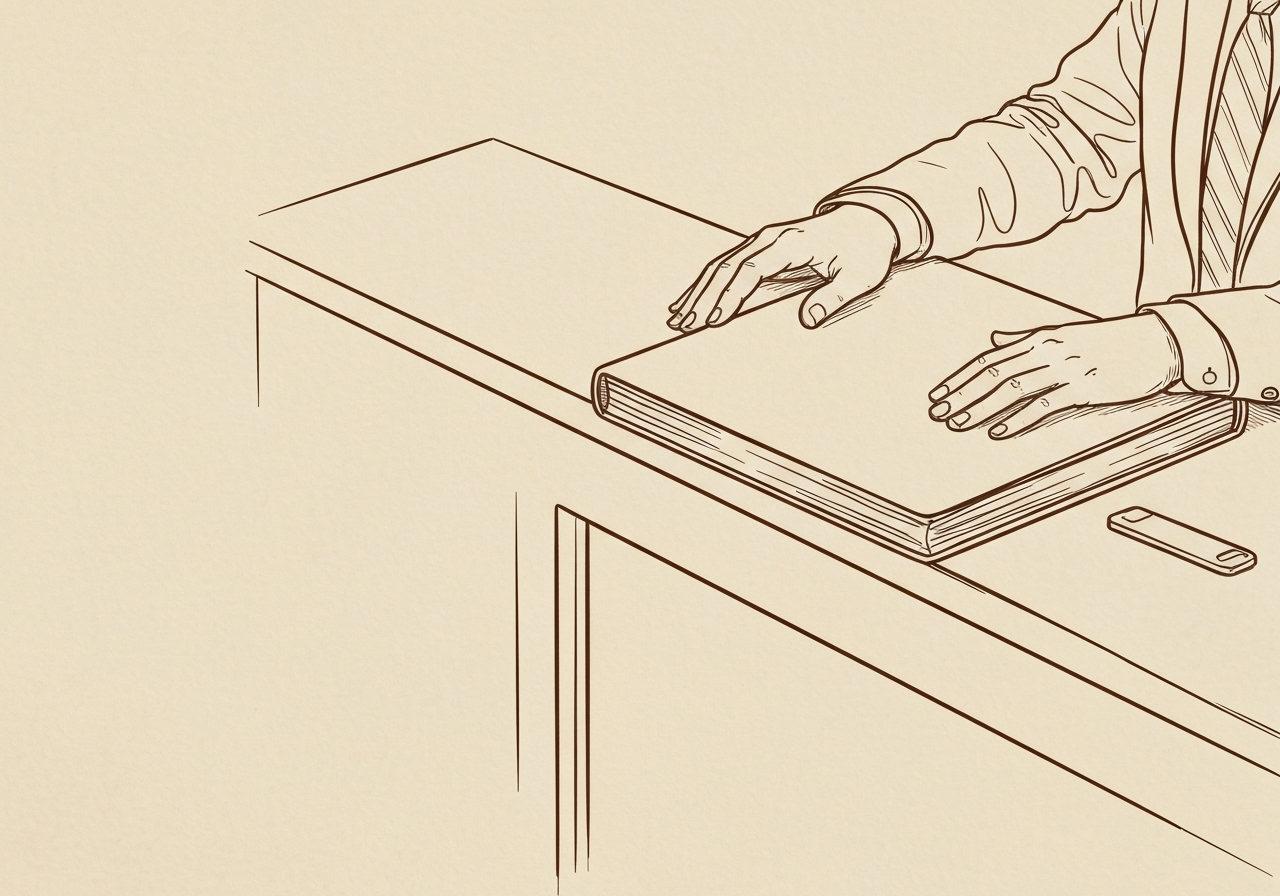
Produce them.
No shield for
parties.
The Court ruled that both parties and witnesses must produce documents during cross-examination, rejecting the idea that parties have lesser obligations.
A party to a civil suit tried to withhold documents during cross-examination. The Supreme Court's response? 'You can't—here's why.'
The courtroom fell silent as Mohammed Abdul Wahid stood before the bench, a party to a civil suit, holding a stack of documents the other side wanted to see. He argued that because he was a party—not just a witness—the law gave him the right to keep those papers to himself during cross-examination. The Supreme Court looked at that argument and dismantled it in a single, clean judgment.
The question was deceptively simple: does the law treat a party to a suit differently from an ordinary witness when it comes to producing documents during cross-examination? If yes, then parties could hide documents behind procedural walls. If no, then every document relevant to testing a person's story must come out when that person is being questioned.
When the documents stayed hidden
The dispute began in a civil suit between Mohammed Abdul Wahid and Nilofer along with another party. During the trial, the stage came for cross-examination—the process where one side questions the other side's witnesses (or the other party themselves) to test whether their story holds up. In any trial, cross-examination is the moment of truth. It is when a lawyer confronts a witness with prior statements, inconsistent claims, or documents that contradict their version of events. The stack of papers on the bench grew thicker as the arguments unfolded, each document a potential weapon for the truth.
Wahid was a party to the suit, meaning he was directly involved in the case, not a neutral bystander called to testify. When the other side sought to use certain documents during his cross-examination—presumably to challenge what he had said—Wahid objected. His argument: the law distinguishes between a party and a witness. A witness must produce documents when asked. A party, he claimed, does not have the same obligation. The trial court judge's brow furrowed as Wahid's counsel pressed this point, the silence in the room punctuated only by the rustle of paper.
The trial court had to decide. And the issue eventually reached the Supreme Court.
The argument that almost worked
Wahid's lawyers argued: Section 137 of the Evidence Act defines cross-examination as the examination of a witness by the adverse party. Section 138 deals with the order of examinations. But the Code of Civil Procedure, Order 16 Rule 1, speaks of parties as persons who may be summoned to give evidence—not as witnesses in the strict sense. The argument was that a party to a suit is not a "witness" in the strict sense—that a party has a different procedural status, and that status comes with the right to withhold documents unless a specific stage of the trial demands their production. The lawyers gestured toward the bench, their voices rising and falling as they cited provisions, the weight of the argument hanging in the air.
The other side—Nilofer and the second respondent—argued the opposite. Cross-examination is not a formality. It is the primary tool for testing veracity (whether a person is telling the truth). If a party can hide documents during cross-examination, then the entire purpose of cross-examination collapses. A witness can be confronted with a letter they wrote. A party should be confronted with the same letter, for the same reason: to see if their testimony matches the documentary evidence. The respondent's counsel spoke with measured calm, each word landing like a gavel on the courtroom's wooden benches.
Why the Supreme Court said no
The Supreme Court rejected the distinction entirely. The bench observed that the freedom to produce documents for cross-examination or for refreshing memory (a witness looking at a document to recall details) serves the purposes of all parties, not just one side. The senior judge's tone was firm, almost weary, as he read the key passage aloud.
The Court's reasoning was direct: "Precluding effective questioning and answer reception with the aid of these documents will put the other at risk of not being able to put forth the complete veracity of their claim—thereby fatally compromising the said proceedings." The words echoed in the silent courtroom, the only sound the faint scratch of a stenographer's pen.
In plain language: if you stop a party from being confronted with documents during cross-examination, you stop the other side from proving their case. The entire proceeding becomes compromised. A trial is not a game where one player can hide pieces of the board. It is a truth-seeking exercise, and documents are the evidence that reveals whether a person's oral testimony is reliable. The bench's gaze swept across the courtroom, meeting no one's eyes, as the weight of the ruling settled over the room.
The Court therefore held that the proposition that the law differentiates between a party and a witness for the purposes of evidence was negated. The production of documents for both a party to the suit and a witness is permissible at the stage of cross-examination. There is no special shield for parties. If you are on the stand being questioned, the documents that can test your story must come out. The file on the judge's desk—thin, ordinary, unremarkable—had just rewritten the rules of engagement for every civil trial in the country.
What this means for every civil suit
This judgment has a practical consequence for every lawyer and every litigant in a civil case. Documents that exist before a trial—letters, agreements, receipts, emails, WhatsApp messages, bank statements—are not just pieces of paper filed in court. They are weapons for cross-examination. And they must be available when the person who wrote or received them is being questioned. The smell of old paper and ink, the weight of a bound file—these are the tools of truth, not of concealment.
For practitioners, the takeaway is clear: prepare your documentary evidence early. If you have a document that contradicts the other side's story, you will be allowed to use it during cross-examination. The other side cannot hide behind their status as a "party" to avoid being confronted with their own writings. The courtroom's fluorescent lights hummed overhead as the verdict sunk in—a quiet, final sound that marked the end of one argument and the beginning of a new standard.
THE PLAY: Before every cross-examination of an opposing party, assemble every document that party signed, wrote, or received—the Court will let you use them all.
The judgment underscores a simple truth: pre-existing records become the tools used reactively during cross-examination to extract the truth. A party cannot claim a special privilege to withhold those tools. The courtroom is not a place for hiding. The bench's ruling had turned the stack of documents from a shield into a window—a clear view into the truth that every trial seeks.
Wahid walked into court holding documents. He walked out holding nothing but the Court's answer: produce them. The courtroom door closed behind him with a soft click, the silence now filled with the knowledge that no party, no matter how central to the suit, could ever again hide behind their own status to keep the truth buried.