Charged with murder by gunshot, but victim died of knife wounds: SC acquits 3 after 22 years
The Supreme Court found the charge sheet misled the accused about how the crime was committed, and the judge never asked them about the actual evidence against them.
22
years.
The Supreme Court found the charge sheet misled the accused about how the crime was committed, and the judge never asked them about the actual evidence against them.
They were charged with murder by gunfire. The evidence showed the victims died from sharp weapons. The judge never asked them about it.
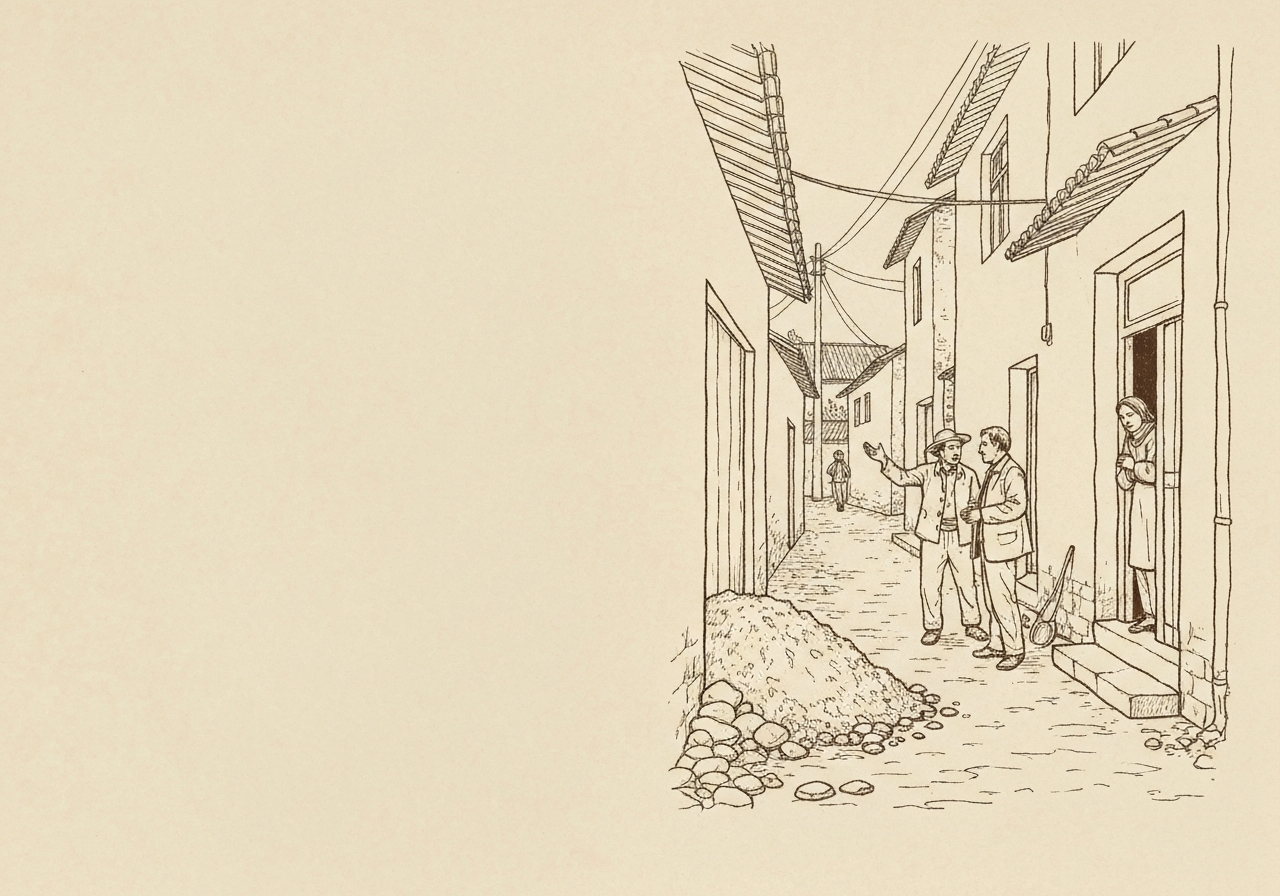
On a December evening in 2000, a quarrel over soil being carried for levelling a lane in Bulandshahr, Uttar Pradesh, became a bloodbath. The dust from the soil hung in the December air as the initial altercation between informant Atar Singh and the family of the accused escalated. Two people were dead. Several others were injured. Five were arrested, charged, and convicted for murder. Twenty-two years later, the Supreme Court asked a question that should have been asked at the very start: how can you be convicted for a crime you were never properly told about?
When the charge sheet lied
The prosecution said the accused returned armed after the initial quarrel. Accused Yaad Prakash fired four to five shots from a country-made pistol. In the commotion, Harpal Singh fell and was attacked with sharp weapons by other accused. He died. Another victim, Rani, was killed by accused Bangali using a razor. The post-mortem report noted sharp weapon injuries—a detail that stood in stark contrast to the gunshot allegations in the charge sheet. Several others were injured.
The trial court—the Fast Track Sessions Court, Bulandshahr—convicted all five. One, Diwan Singh, was later found to be a juvenile and acquitted by the Supreme Court. The remaining three—Kalicharan, Yaad Prakash, and Shakuntala Devi—challenged their conviction. Their argument: the entire trial was fundamentally unfair.
The numbers didn't add up
The first problem was about numbers. Under Section 141 of the Indian Penal Code (the definition of an 'unlawful assembly'), at least five people must be part of the group. Sections 148 (rioting armed with a deadly weapon) and 149 (every member of an unlawful assembly guilty of an offence committed in prosecution of a common object) depend on this threshold. With Diwan Singh acquitted, only four accused remained. The foundation for the murder charges under Section 302 read with Section 149 had collapsed.
The second problem was deeper. The charge alleged murder by bullet injuries. The prosecution's own evidence showed the victims died from sharp weapon assaults. The charge and the evidence were talking about two different crimes. The accused had prepared their defence against gunshot murder. They were never told the actual case was about knives and razors.
The procedural journey of the case reveals the layers of this failure. On 6 December 2000, two FIRs were registered at the Police Station in Bulandshahr—one for Indian Penal Code offences against all accused, and another against accused no. 2 under the Arms Act. The trial before the Fast Track Sessions Court, Bulandshahr, resulted in the conviction of all five accused. The appeals to the High Court of Judicature at Allahabad were dismissed. When the matter reached the Supreme Court, accused no. 3 Diwan Singh was acquitted as a juvenile on 1 July 2021. The final hearing before the Supreme Court bench of Justice Sanjay Kishan Kaul and Justice Abhay S. Oka on 6 December 2022—exactly 22 years after the incident—resulted in the acquittal of the remaining three appellants.
The case, Kalicharan & Ors. v. State of Uttar Pradesh, cited as 2022 LiveLaw (SC) 1027, raised two primary grounds of challenge. First, with the acquittal of one accused as a juvenile, the prerequisite of five or more persons for an 'unlawful assembly' under Section 141 IPC was not met, rendering Sections 148 and 149 inapplicable. Second, the charge framed alleged murder by bullet injuries whereas the prosecution evidence established death by sharp weapon assault, constituting a fundamental defect under Section 213 CrPC—compounded by the failure to put the actual incriminating circumstances to the accused under Section 313 CrPC.
The judge's silence
This is where Section 313 of the CrPC (the power to examine the accused) became critical. Under this provision, a judge must question the accused about the circumstances appearing in the evidence against them. It is the accused's only chance to explain, deny, or clarify the prosecution's case before the judge decides their fate.
In this case, the judge never put the actual incriminating circumstances to the accused. They were asked about gunshots. The evidence was about sharp weapons. The judge never asked: "The prosecution says you attacked Harpal Singh with a knife—what do you say to that?" Because the charge itself was wrong, the Section 313 examination was also wrong. The accused were never given a fair opportunity to defend themselves against the case that actually existed.
The Supreme Court held that Section 313 CrPC examination is not an empty formality. The accused must be explained the actual circumstances appearing in the evidence against him. If material circumstances on which conviction is based are not put to the accused, those circumstances must be excluded from consideration, and the resulting prejudice occasions failure of justice. In this case, the discrepancy between the charge alleging gunshot murder and the evidence showing sharp weapon deaths meant that the accused were never questioned about the evidence that actually mattered.
The court examined the provisions of the Code of Criminal Procedure that govern errors in charge framing. Section 212 CrPC requires particulars as to time, place and person. Section 213 CrPC mandates that when the manner of committing an offence is material, the charge must specify it. Section 215 CrPC addresses the effect of errors—providing that errors in the charge do not vitiate the trial unless they occasion a failure of justice. Section 464 CrPC gives the court the power to set aside a conviction if the error in the charge has prejudiced the accused. The Supreme Court found that all these provisions, read together, pointed to a fundamental failure in this case.
"Serious prejudice occasioning failure of justice"
The Supreme Court found that the defects in the charge and the Section 313 examination had caused "serious prejudice occasioning failure of justice." The court cited three precedents—Jai Dev v. State of Punjab (1963), Sharad Birdhichand Sarda v. State of Maharashtra (1984), and Hate Singh Bhagat Singh v. State of Madhya Bharat (1951)—to establish that when an accused is misled about the nature of the charge, the resulting conviction cannot stand.
Under Section 213 of the CrPC (when the manner of committing an offence must be stated), the charge must specify the manner in which the offence was committed if the manner is material. A charge that says "murder by gunshot" when the evidence shows "murder by knife" is not a minor error. It is a fundamental defect that misleads the accused about what they need to defend against. Under Section 215 of the CrPC (effect of errors), such an error vitiates the trial if it occasions a failure of justice. Under Section 464 of the CrPC (effect of omission to frame, or error in, charge), the court can set aside the conviction if the error has prejudiced the accused.
The incident was more than 22 years old. Remanding the case for a fresh trial with proper charge framing and a proper Section 313 examination would cause further serious prejudice. The court declined to order a retrial, holding that the defects in the charge and the Section 313 examination had caused "serious prejudice occasioning failure of justice." The court reasoned that when the incident is more than 22 years old, remanding the case for retrial with proper charge framing and fresh Section 313 examination would cause serious prejudice to the accused and would be unfair.
What the judgment means
A fair trial is not just about the final verdict. It is about every step along the way. The charge must accurately reflect the prosecution's case. The accused must be told what they are actually accused of. And the judge must ask them about the evidence that actually exists—not about a different case altogether.
The ratio decidendi of the judgment establishes three key principles. First, when one of the accused forming part of an alleged unlawful assembly is acquitted, and the remaining accused number fewer than five, the charge under Sections 148 and 149 IPC cannot be sustained as Section 141 IPC requires an assembly of five or more persons. Second, when the charge framed alleges a fundamentally different mode of committing the offence from what the prosecution evidence establishes, and this discrepancy misleads the accused in defending themselves, it constitutes a failure of justice under Sections 215 and 464 CrPC warranting setting aside the conviction. Third, Section 313 CrPC examination is not an empty formality—the accused must be explained the actual circumstances appearing in the evidence against him.
THE PLAY: If the charge framed against you describes a different mode of committing the offence than what the prosecution evidence shows, and you were never questioned about the actual evidence under Section 313 CrPC, your conviction is vulnerable to being set aside for failure of justice.
The Supreme Court ordered that Kalicharan, Yaad Prakash, and Shakuntala Devi "be forthwith set at liberty unless required to be detained in connection with any other offence." After 22 years, they walked out of a system that had charged them for one crime, tried them for another, and never once asked them about the evidence that actually mattered.