Cheque bounce case ran 4 years. Then judge noticed a technicality.
The trial was over—evidence recorded, statements taken—when the magistrate suddenly discharged the accused. The Supreme Court called it unjust.
4
years.
The trial was over—evidence recorded, statements taken—when the magistrate suddenly discharged the accused. The Supreme Court called it unjust.
Four years into a Rs 45 lakh cheque bounce case, the judge noticed the cheques were presented in a different district. His next move shocked the complainant. The magistrate, without warning, discharged the accused—ending the trial before final arguments could begin.
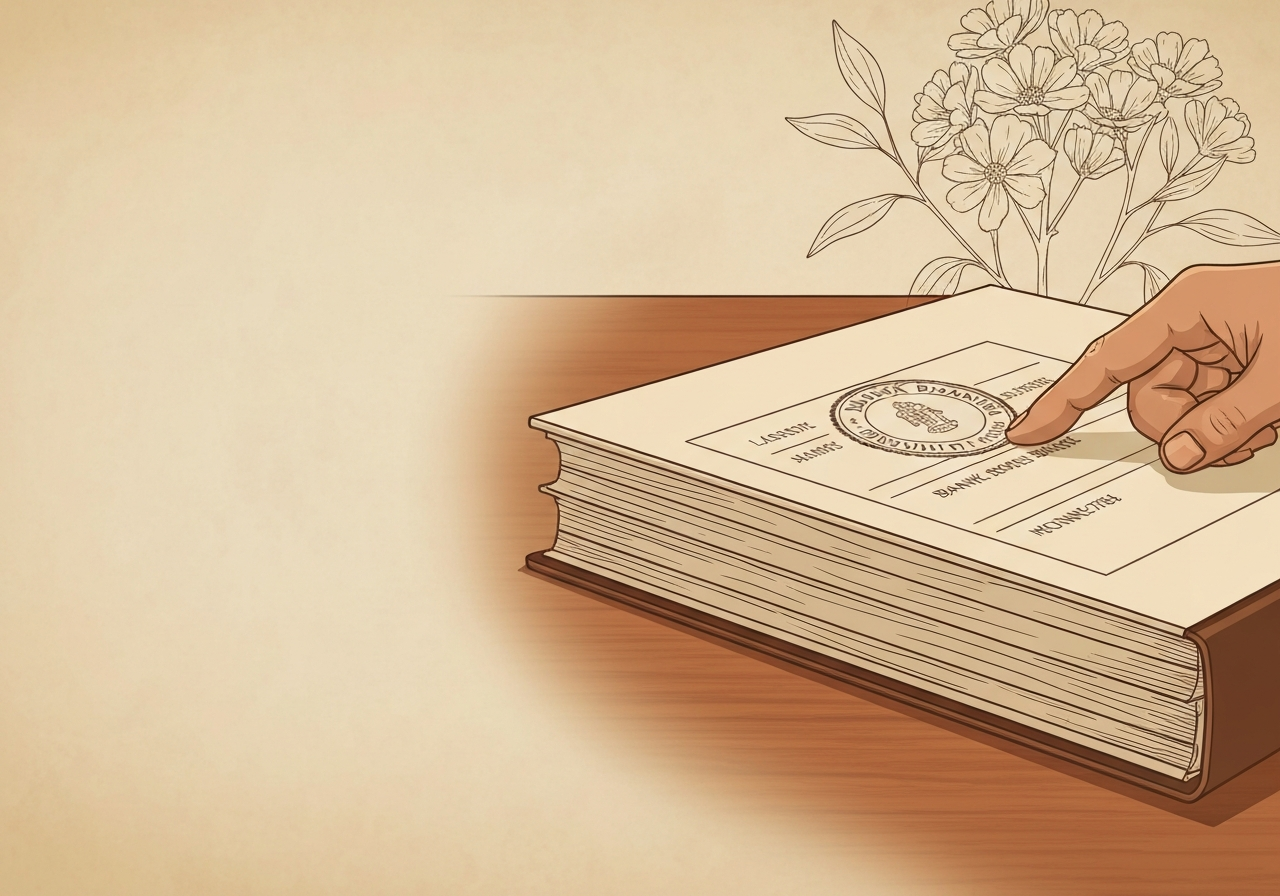
Four years of evidence. Four years of hearings. Four years of a complainant waiting for his money. And then, one quiet moment in court, the magistrate’s finger paused on the bank branch name in the file. The case stopped dead.
When the cheque bounced, the complaint began
In 2016, the complainant filed a complaint under Section 138 of the Negotiable Instruments Act, 1881 (the law that makes cheque bouncing a criminal offence) before the Chief Judicial Magistrate in Jamshedpur, Jharkhand. The amount was Rs 45,20,000.
The court took cognizance (formally acknowledged the complaint) and issued summons. Then the machinery of justice began to turn. Over the next four years, the case passed through every stage of a criminal trial. Prosecution evidence was recorded. The accused gave his statement under Section 313 of the Criminal Procedure Code, 1973 (the stage where the court asks the accused to explain the evidence against him). Defence evidence was also led—witnesses called, documents marked, the accused’s side of the story placed on record.
By February 2020, the case was ready for final arguments. The finish line was in sight. The courtroom, after years of routine hearings, felt the weight of a case about to conclude.
The magistrate's sudden discovery
Then, on 18 February 2020, the Judicial Magistrate First Class (JMFC) at Jamshedpur noticed something. The cheques had been presented for payment at a bank branch in Saraikela-Kharsawan—a different district. The magistrate’s eyes stayed on that detail. The file, thick with four years of proceedings, suddenly felt fragile.
Under Section 142(2)(a) of the Negotiable Instruments Act (the provision that determines which court can hear a cheque bounce case based on where the bank is located), the magistrate concluded that Jamshedpur had no territorial jurisdiction. The case had been tried in the wrong court for four years.
The magistrate did not ask the complainant if he wanted to transfer the case to the correct court. He did not give him a chance to fix the problem. He simply discharged the accused. The courtroom fell silent. The trial was over. Four years of work, gone.
The High Court said no relief
The complainant approached the Jharkhand High Court under Section 482 of the CrPC (the High Court's inherent power to prevent abuse of its process or secure the ends of justice). He argued that the magistrate should have allowed him to seek a transfer rather than abruptly ending the case.
On 7 December 2021, the High Court dismissed his petition. It upheld the magistrate's order. The complainant was left with no remedy.
Except one.
Why the Supreme Court found it unjust
The Supreme Court heard the appeal—Criminal Appeal No. __/2023, arising out of SLP (Crl.) No. 894/2022. The bench—Justice Sanjiv Khanna and Justice S.V.N. Bhatti—saw a problem that the lower courts had missed.
The court noted that the trial had proceeded for over four years without any objection from the accused on the question of jurisdiction. The accused had participated fully—recording his statement under Section 313, leading defence evidence. The objection was raised suo motu (on the court's own motion) at the final arguments stage, and the complainant was given no chance to seek a transfer under Section 407 of the CrPC (the provision that allows a case to be moved from one court to another).
The Supreme Court held that a territorial jurisdiction defect in a cheque bounce case is a procedural defect—not a fundamental lack of subject-matter jurisdiction. The court stated that such a defect has a remedy (transfer), and is not so substantial as to constitute lack of subject-matter jurisdiction. It is the kind of defect that has a remedy: transfer to the correct court. To treat it as a death sentence for the case, after years of trial, would defeat substantial justice.
The court also observed that the complainant had not received proper legal guidance. A lawyer who spots a jurisdiction problem early can seek a transfer. But here, the complainant was blindsided at the last moment.
Article 142: The court's extraordinary power
The Supreme Court invoked Article 142 of the Constitution (the power to pass any order necessary to do complete justice in a case before it) read with Section 406 of the CrPC (the Supreme Court's power to transfer cases). It set aside both the magistrate's discharge order dated 18 February 2020 and the High Court's dismissal order dated 7 December 2021.
The court directed that the trial continue in the court of the JMFC at Jamshedpur—the same court where it had begun. The case was resurrected. The complainant, who had walked out of the Jamshedpur courtroom four years after filing his complaint, now had another chance.
But the court added a caveat: this order was on the peculiar facts of the case and would not be treated as a precedent. Other litigants cannot cite this judgment to argue that jurisdiction defects can always be ignored.
THE PLAY: If a magistrate raises a territorial jurisdiction objection at the final arguments stage without giving you a chance to seek a transfer, go directly to the Supreme Court—the High Court may not help, but Article 142 can.
The cheque was presented in Saraikela-Kharsawan. The trial was in Jamshedpur. Four years later, the case is back where it started. The law is a little clearer on what justice requires. But for the complainant, the wait continues.