Glock wins right to independent arbitrator in ₹9.64 crore dispute with MHA
Supreme Court rules that a contract signed in the President's name does not shield the government from arbitration law that bars its own employees from acting as arbitrators.
9.64
crores.
Supreme Court rules that a contract signed in the President's name does not shield the government from arbitration law that bars its own employees from acting as arbitrators.
The government invoked a ₹9.64 crore bank guarantee. Then it insisted that its own law secretary be the sole arbitrator.
Glock Asia-Pacific Ltd., a foreign company, had delivered 31,756 pistols to India's Ministry of Home Affairs. All of them, by August 2012. Full payment arrived by November 2012. Nine years later, the company was still extending a performance bank guarantee — a financial assurance that the contract terms had been met — long after the guns were in the hands of security forces. In May 2021, Glock told the Ministry it would not extend the guarantee any further. The Ministry responded by invoking the guarantee for approximately ₹9.64 crore, citing warranty clauses.
When Glock tried to start arbitration, the government refused to let an independent judge hear the case. It pointed to a clause in the tender: the Secretary of the Ministry of Home Affairs would appoint an officer from the Ministry of Law as the sole arbitrator. One of its own employees would decide whether the government owed Glock ₹9.64 crore.
The Supreme Court had one question to answer. Can a government department appoint its own employee as arbitrator when the law explicitly bars that arrangement?
The nine-year guarantee that wouldn't die
The contract was signed in 2011. Glock supplied all 31,756 pistols within a year. Payment was made in full. But the contract required Glock to maintain a performance bank guarantee — insurance that warranty obligations would be met — for a period after delivery.
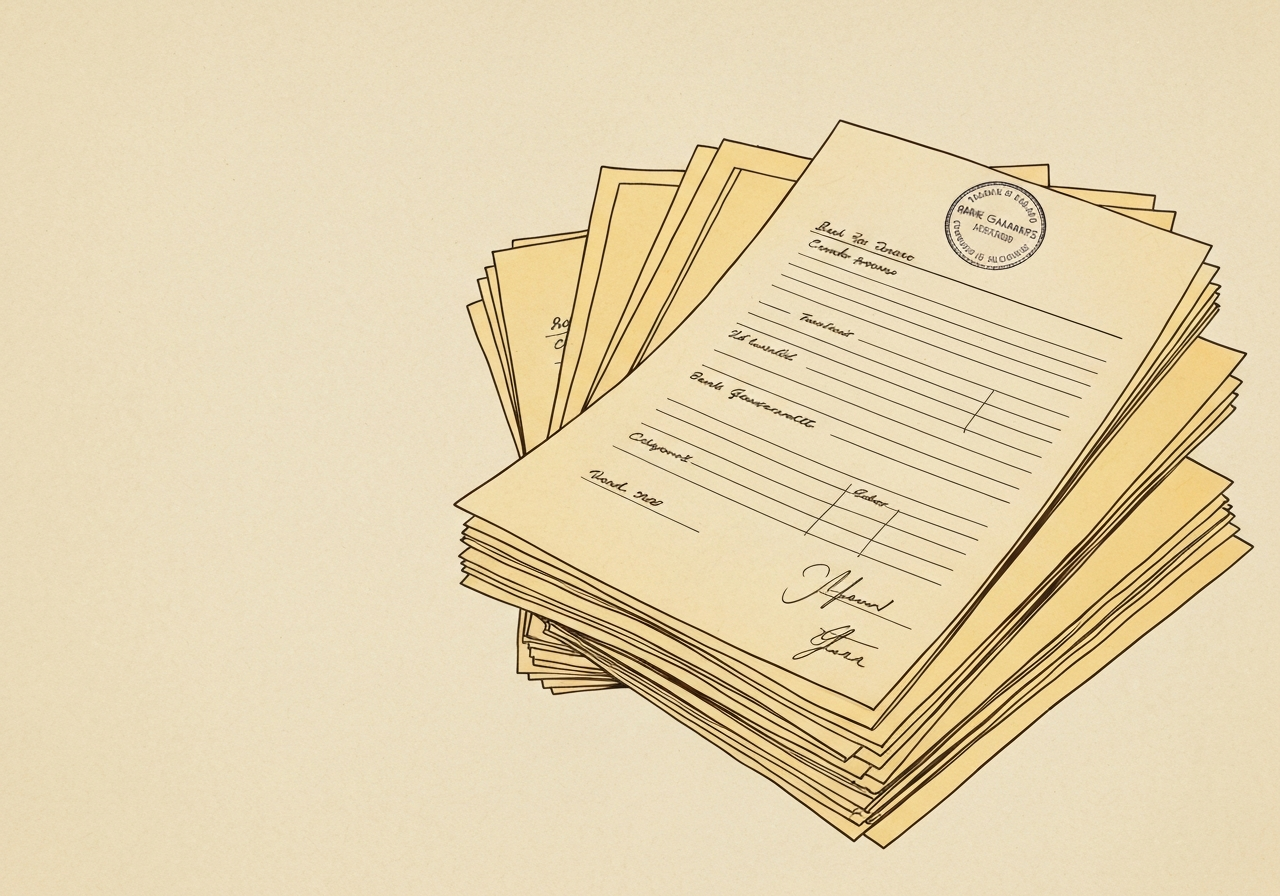
Glock kept extending that guarantee for nine years. The stack of tender documents grew thin with age, its pages yellowing at the edges, but the bank guarantee remained alive. The bank guarantee letter itself, with its expiry date stamped in fading ink, sat in a file that had long since lost its crispness. By 2021, the company decided it had been long enough. It informed the Ministry it would not extend the guarantee further. The Ministry immediately invoked the guarantee — demanding ₹9.64 crore from the bank — claiming warranty issues remained unresolved.
Glock disagreed. On July 20, 2022, it sent an arbitration notice and nominated a retired High Court judge as its arbitrator. The Ministry rejected that nomination. It insisted on Clause 28 of the tender conditions: the Secretary of the Ministry of Home Affairs would appoint "an officer of the Ministry of Law" as the sole arbitrator.
The clause that the government thought would protect it
Clause 28 was a standard government contract provision. It gave the government the power to choose the arbitrator — and to choose someone who worked for the same government that was now a party to the dispute. Glock argued this violated Section 12(5) of the Arbitration and Conciliation Act, 1996 — a provision that makes certain people ineligible to serve as arbitrators, including employees of a party to the dispute.
Section 12(5) read with Paragraph 1 of the Seventh Schedule of the Act says a person who is an employee of a party cannot be an arbitrator. This rule applies even if the contract says otherwise. The idea is simple: no one should judge a case where their employer is one of the sides.
The government raised two defences. First, it argued that contracts signed in the name of the President of India under Article 299 of the Constitution — which governs how the government enters into contracts — stand on a different footing. The government claimed this constitutional status gave it immunity from the ordinary rules of arbitration. Second, it pointed to a Supreme Court precedent — Central Organisation for Railway Electrification v. ECI-SPIC-SMO-MCML (JV) — which it said permitted such appointments.
Why the President's name did not save the clause
The Supreme Court bench — Chief Justice Dr. Dhananjaya Y. Chandrachud, Justice Pamidighantam Sri Narasimha, and Justice J.B. Pardiwala — rejected both arguments. The courtroom fell silent as the bench read the order, the only sound the rustle of paper as the Chief Justice turned the final page of the judgment. A clerk near the dais held his breath, the silence stretching for a moment before the order was pronounced.
On the first defence, the court held: a contract entered into in the name of the President of India under Article 299 does not create any immunity against the application of statutory prescriptions imposing conditions on parties to an agreement, including Section 12(5) of the Arbitration Act regarding ineligibility of arbitrators. The Constitution does not give the government a free pass to bypass the law.
On the second defence, the court distinguished the Central Organisation for Railway Electrification case. In that case, the arbitrator was a retired employee — someone who no longer worked for the government. The court said that precedent did not apply to serving employees who still draw a salary from the same government that is a party to the dispute. Precedents upholding appointment of retired employees as arbitrators — who have no connection with the disputing party — are distinguishable and do not validate appointment of serving employees.
The court also relied on two earlier judgments: TRF Ltd. v. Energo Engg. Projects Ltd. (2017) and Perkins Eastman Architects DPC v. HSCC (India) Ltd. (2020). In TRF, the court had held that if a person is ineligible to be an arbitrator, they cannot appoint another arbitrator either. In Perkins Eastman, the court had extended that logic to say that a party cannot appoint its own employee as an arbitrator. The government's clause fell squarely within that prohibition.
The court's reasoning was precise. An arbitration clause authorising a serving employee of a party — the Union of India — to nominate another serving employee as sole arbitrator falls within the ineligible category under Paragraph 1 of Schedule VII read with Section 12(5) of the Arbitration Act. This operates notwithstanding any prior agreement to the contrary. The bar under Section 12(5) read with Schedule VII applies to serving employees of a party.
The procedural journey had been long. The tender and contract were issued by the Ministry of Home Affairs on March 31, 2011. The performance bank guarantee was invoked on May 31, 2021, for the precise sum of ₹9,64,42,738. The arbitration notice was sent on July 20, 2022, and the respondent rejected the applicant's nominee, insisting on Clause 28. The Supreme Court application under Section 11(6) was filed, and on May 19, 2023, the bench delivered its order.
The appointment that broke the pattern
The court allowed Glock's petition under Section 11(6) of the Arbitration Act — the provision that lets the court appoint an arbitrator when the parties cannot agree. It appointed Ms. Justice Indu Malhotra, a former judge of the Supreme Court, as the sole arbitrator. The court directed that she would adjudicate the disputes subject to mandatory disclosures under the amended Section 12 of the Act. The order was dated May 19, 2023.
The order was clear: the government's clause was void to the extent that it allowed a serving employee to act as arbitrator. The bar under Section 12(5) read with the Seventh Schedule applies regardless of any prior agreement to the contrary. After the order was read, the courtroom exhaled — a collective release of tension as the bench rose. The file on the dais, marked Arbitration Petition No. 51 of 2022, was closed with a soft thud.
What this means for every government contract
For practitioners, the message is straightforward. If you are drafting an arbitration clause for a government contract, do not include a provision that lets a government employee — serving, not retired — act as the arbitrator. The clause will be struck down. The government cannot hide behind Article 299 or standard tender conditions to bypass Section 12(5).
For companies contracting with the Indian government, this judgment is a shield. If the contract gives the government the power to appoint its own employee as arbitrator, that clause is unenforceable. You can approach the court under Section 11(6) for an independent appointment. The case also clarifies that contracts entered into in the name of the President under Article 299 do not stand on a different footing from ordinary commercial contracts when it comes to arbitration law.
The several precedents the court relied upon — Perkins Eastman Architects DPC v. HSCC (India) Ltd., TRF Ltd. v. Energo Engg. Projects Ltd., Indian Oil Corporation Ltd. v. Raja Transport Pvt. Ltd., Voestalpine Schienen GmbH v. DMRC, Chatturbhuj Vithaldas Jasani v. Moreshwar Parashram & Ors., and State of Assam v. Shri Kanak Chandra Dutta — collectively establish that the principle of party autonomy in arbitration is subject to the statutory ineligibility regime. No agreement, however carefully drafted, can override Section 12(5).
THE PLAY: Any arbitration clause in a government contract that allows a serving government employee to act as sole arbitrator is void under Section 12(5) of the Arbitration Act — strike it from your next tender response.
The government invoked a ₹9.64 crore bank guarantee. It ended up with a former Supreme Court judge deciding the case.