Government gave land to poor farmers. They sold it. Now it's gone.
The Supreme Court ruled that resuming land sold illegally is not the same as acquiring it—so no compensation is due. And a second notice wasn't barred because the first was quashed on different grounds.
142
acres.
The Supreme Court ruled that resuming land sold illegally is not the same as acquiring it—so no compensation is due. And a second notice wasn't barred because the first was quashed on different grounds.
The government gave 142 acres to landless families. They sold it anyway. Then the state took it back—and the Supreme Court just said: no compensation.
In the 1960s, the Andhra Pradesh government assigned about 142 acres of government land in Manchirevula village near Hyderabad to 20 landless Scheduled Caste families for cultivation. The pattas (temporary land grants) came with a clear condition: you cannot sell this land. But decades later, as Hyderabad's real estate boom reached the village, the assignees signed a power of attorney in favour of one M.A. Baksh. He carved the land into residential plots and sold them to private buyers.
The government discovered the sales. It sent show cause notices. It cancelled the grants. It resumed the land. And when the buyers challenged the resumption, the Supreme Court just delivered its final word: the land belongs to the state, the Greyhounds Commando Force gets it for its training headquarters, and no one—not the original assignees, not the buyers—gets a single rupee in compensation.
When the government gave land with strings attached
In 1953, the Revenue Department of Andhra Pradesh sanctioned the assignment of 200 acres of government land (called Kancha land) to landless Harijans (Scheduled Caste persons) in Manchirevula village. The land was granted under the Laoni Rules of 1950, a set of regulations governing the allotment of government wasteland to the poor.
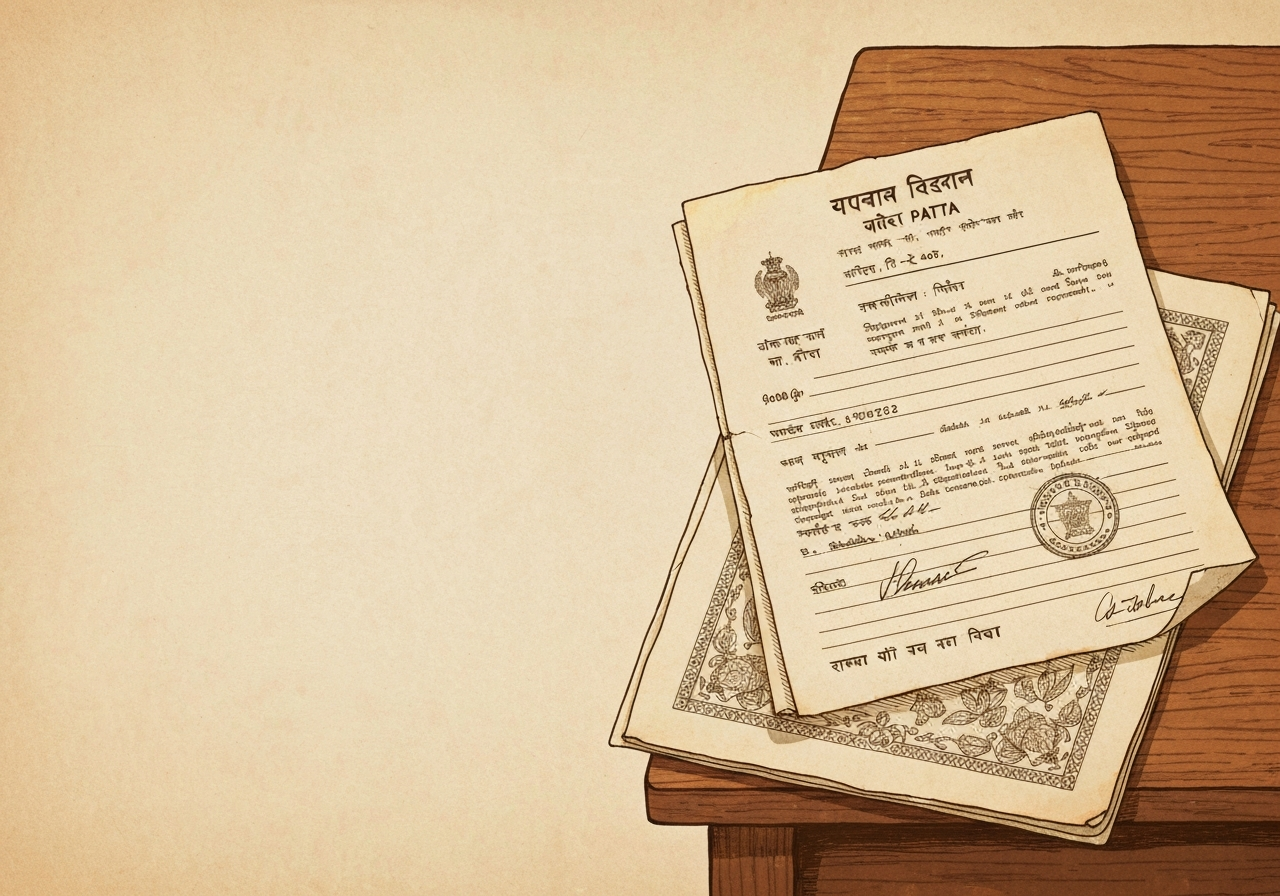
By 1961, the Tehsildar of Hyderabad West had issued temporary pattas to 20 assignees for 142 acres and 39 guntas (a gunta is about 1/40th of an acre). The pattas contained a non-alienation condition—the assignees could cultivate the land but could not sell, mortgage, or transfer it to anyone else without government permission. Each patta document, stamped with the Tehsildar's seal, bore the fading ink of a promise: this land is yours to work, not to sell.
For decades, the land stayed with the families. Then Hyderabad grew. The city's outskirts turned into residential colonies. Somewhere in the 1990s, the assignees executed a general power of attorney in favour of M.A. Baksh, who began selling the land as residential plots to private buyers. The power of attorney was signed in a crowded tehsildar office, the papers shuffled across a worn wooden counter—a transaction that would unravel decades later.
The 1977 Act that made the sales illegal
The government caught on. In 1994, the District Revenue Officer issued a show cause notice to the assignees and buyers: why should the land not be taken back for violating the transfer ban? The notice arrived by registered post, the envelope thick with legal warnings that few recipients fully understood.
The legal weapon the government used was the Andhra Pradesh Assigned Lands (Prohibition of Transfers) Act, 1977. Section 3 of this Act (the prohibition provision) makes any transfer of assigned land by a landless poor person absolutely null and void. Section 4 (the resumption provision) gives the government the power to take back the land and restore it to the original assignee—or, if that is not possible, to resume it to the state.
The first round of show cause proceedings ended inconclusively. The District Revenue Officer's order was set aside by the Collector, then restored by the High Court, then sent back by the Supreme Court for fresh consideration. By 2001, the Joint Collector had ordered resumption of the land to the state.
Why the first notice was quashed
The buyers challenged the resumption order in the High Court. In 2002, a Single Judge set aside the Joint Collector's order on a technical ground: the Joint Collector lacked jurisdiction to pass the order. The matter went back to the District Collector.
In 2003, the District Collector again ordered resumption. The buyers challenged this too. In 2006, the High Court quashed the first show cause notice and the resumption order—but crucially, it gave the government liberty to initiate fresh proceedings. The court did not decide whether the transfers were actually illegal. It only said the procedure followed in the first round was flawed.
That "liberty to initiate fresh proceedings" would become the decisive legal hinge of the entire case.
The second notice and the resumption that stuck
In December 2006, the Deputy Collector issued a fresh show cause notice under the 1977 Act. The assignees and buyers were asked: why should the land not be resumed for violation of the transfer prohibition? The notice sat on kitchen tables, its typed paragraphs a quiet threat to families who thought they had bought a home.
On January 27, 2007, the revenue authorities passed a resumption order under Section 4 of the 1977 Act. The land was taken back by the state. The order was read out in a small government office, the walls lined with dusty files, the officer's voice flat and final.
The buyers went back to the High Court. This time, they raised a new argument: the second notice was barred by res judicata (the legal principle that once a matter has been finally decided by a court, it cannot be re-litigated). The Single Judge of the Telangana High Court agreed. In February 2010, the judge quashed the resumption order on res judicata grounds.
The state appealed. In December 2021, a Division Bench of the Telangana High Court reversed the Single Judge. The resumption order was upheld. The buyers appealed to the Supreme Court.
What the Supreme Court decided
On August 1, 2023, a bench of Justice Surya Kant and Justice J.K. Maheshwari dismissed the appeals. The courtroom fell silent as the judgment was read—the land vested in the state, and no further claims would be entertained.
The court addressed three key legal questions.
First, was the second notice barred by res judicata? No, said the court. The first show cause notice was quashed on procedural grounds—the authority that issued it lacked jurisdiction. The High Court had explicitly given the government liberty to start fresh proceedings. The second notice raised a distinct cause of action: violation of the 1977 Act. The court clarified that only fundamental determinations are hit by res judicata—a determination is fundamental only if the decision cannot stand independently without it. Collateral or incidental observations do not bind future proceedings.
Second, did the land qualify as "assigned land" under the 1977 Act? Yes. The land was granted free of cost to landless SC persons under the Special Laoni Rules with non-alienation conditions. This squarely fits the definition of assigned land under the Act. Any transfer without the Collector's sanction was void from the beginning.
Third, did the resumption require compensation under Article 300-A of the Constitution (the right to property)? No. The court drew a sharp distinction between resumption and acquisition. Acquisition is when the state takes away a pre-existing private right—that requires compensation. Resumption is when the state takes back what it granted because the grantee violated the conditions of the grant. No compensation is due because the grantee never had an absolute right to begin with. The condition of non-alienation was part of the grant itself.
Why the Greyhounds got the land
By the time the Supreme Court decided the case, the Greyhounds Commando Force—an elite anti-Naxalite unit of the Telangana police—had already been allotted the land for its training headquarters. The court declared that the land vested in the state government free of all encumbrances (any claims or rights of third parties), and that the ownership and possessory rights were transferred to the Greyhounds. On the resumed land, the Greyhounds now conduct their training drills—the thud of boots on earth where farmers once tilled.
The court's operative order was final and absolute: "No court shall entertain any future claims. Final quietus of title in favour of State."
The procedural journey: a decade of legal back-and-forth
The case wound through multiple rounds of litigation over nearly three decades. Here is how the procedural timeline unfolded:
- 1953: The Revenue Department of Andhra Pradesh sanctioned the assignment of 200 acres to landless Harijans.
- 1961: The Tehsildar of Hyderabad West issued temporary pattas to 20 assignees for 142 acres and 39 guntas.
- 1994: The District Revenue Officer issued the first show cause notice, which was later held unsustainable.
- 1995: The District Collector suspended the DRO's order using suo motu revisionary powers under Section 166-B of the Telangana Land Revenue Act.
- 1997-1998: The High Court set aside the Collector's order as arbitrary; the Division Bench upheld this.
- 2000: The Supreme Court partly allowed the state's appeal and remanded the matter to the Collector.
- 2001: The Joint Collector ordered resumption of the land to the state.
- 2002: The High Court set aside the Joint Collector's order for lack of jurisdiction.
- 2003: The District Collector again ordered resumption.
- 2006: The High Court quashed the first show cause notice with liberty to initiate fresh proceedings. In December, the second show cause notice was issued under the 1977 Act.
- 2007: The revenue authorities passed the resumption order under Section 4 of the 1977 Act.
- 2010: The Telangana High Court quashed the resumption order on res judicata grounds.
- 2021: The Division Bench of the Telangana High Court reversed the Single Judge and upheld the resumption.
- 2023: The Supreme Court dismissed the appeals and declared the land vested in the state.
Each step in this journey added a new layer of legal complexity. The file on the case grew thick with orders, counter-orders, and appeals—a paper trail that stretched across three decades before the Supreme Court finally closed it.
What this means for property buyers and lawyers
For practitioners and property buyers, the judgment delivers a harsh but clear message. Land granted to landless SC/ST families under government schemes carries a non-alienation condition that survives for decades. Buying such land from a power-of-attorney holder, even in good faith, gives you no title. The government can resume the land at any time, and you get nothing.
The judgment also clarifies an important legal distinction that lawyers must keep in mind: resumption is not acquisition. When the state takes back land for breach of grant conditions, Article 300-A does not require compensation. The grantee's right was conditional from the start, and the condition was broken.
For buyers, the lesson is stark: before buying any plot, verify the original grant. If the land was assigned under Laoni Rules or similar schemes with non-alienation conditions, the sale is void. The state can take it back without paying a rupee.
THE PLAY: Before buying any plot that was originally government-assigned land, verify the original grant—if it was assigned under Laoni Rules or similar schemes with non-alienation conditions, the sale is void and the state can take it back without paying you a rupee.
The 142 acres of Manchirevula now belong to the Greyhounds. The assignees who sold the land lost it. The buyers who paid for it lost their money. And the Supreme Court has closed the door on every future claim.