He denied fathering a child. Then he refused a DNA test. The court's move?
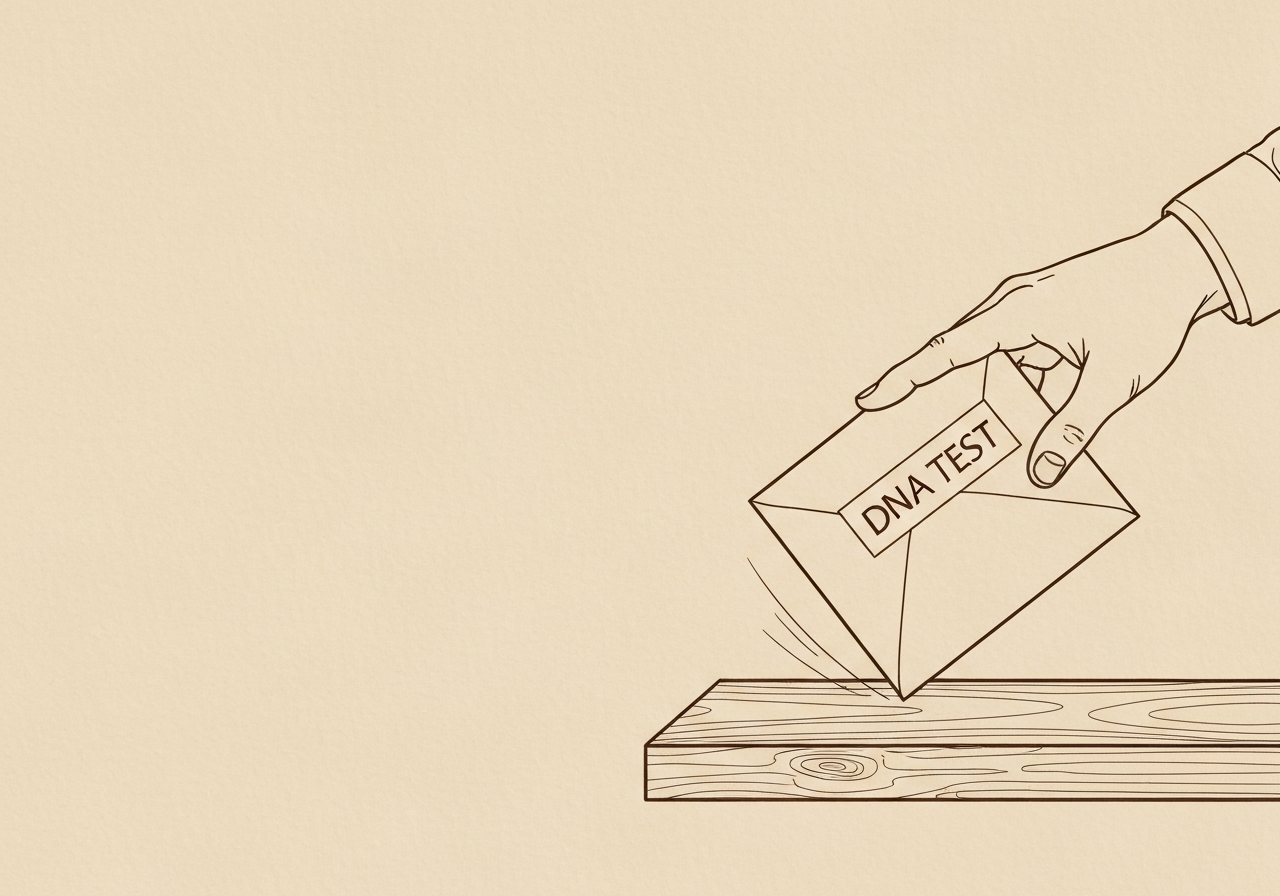
The Supreme Court ruled that a man who refuses a DNA test cannot dispute paternity in a maintenance case. His own denial became his undoing.
1
refusal.
The Supreme Court ruled that a man who refuses a DNA test cannot dispute paternity in a maintenance case. His own denial became his undoing.
He said the child wasn't his. But when the court asked for a DNA test, he said no.
He had taken a vow to marry her. They lived together. A child was born. Then he walked away, insisting the baby belonged to someone else. The question that reached the Supreme Court was simple: could a man who refused a scientific test still be allowed to deny paternity?
In Dwarika Prasad Satpathy v. Bidyut Prava Dixit And Another, the court answered with a principle that would ripple through every maintenance courtroom in the country. The answer was no.
The vow, then the denial
The man was a bachelor. He met the woman. They grew close. He took a vow to marry her. They began living together. She became pregnant.
Then something shifted. He refused to go through with the marriage. The woman and her family pushed. Eventually, a marriage was arranged—but the damage was already done. The child, a daughter, was born. And the man, now legally the husband, denied that he was the father.
The woman filed a petition under Section 125 of the CrPC (a provision that allows a wife and children to claim monthly maintenance from a husband or father who refuses to support them). She asked for maintenance for herself and for the child.
The man fought back. His defence was straightforward: the child was not his. He had no obligation to pay for a child he did not father.
The test he refused
In paternity disputes, a DNA test is the closest thing to a definitive answer. It compares the genetic material of the child and the alleged father. If the markers match, paternity is all but certain. If they don't, the case collapses.
The trial court suggested a DNA test. The courtroom fell silent as the man's answer came: a flat refusal. The judge's tone hardened as he noted the man's unwillingness. The man gave no explanation that satisfied the court. He simply said no. Then he continued to insist that the child was not his.
The trial court looked at the facts. The man had lived with the woman. He had taken a vow to marry her. The child was born during the period of cohabitation. When asked to prove his denial with science, he had refused. The court ordered maintenance.
The man appealed to the High Court. The High Court upheld the order. He then appealed to the Supreme Court.
The logic that closed the door
The Supreme Court examined the circumstances. The man was a bachelor. He developed intimacy with the woman. He took a vow to marry her. They cohabited. A child was conceived.
Then the court turned to the DNA refusal. The reasoning was sharp. If a man denies paternity but refuses to undergo a DNA test—the only reliable way to settle the question—he cannot be allowed to keep the denial alive. He cannot use his own refusal as a shield. By refusing the test, he forfeits the right to dispute paternity.
The court held that where the purported father denied paternity but refused to undergo a DNA test, such a person was disentitled from disputing paternity. The refusal itself became the evidence against him.
The appeal was dismissed. The maintenance order for the minor daughter stood.
Why the refusal mattered more than the denial
This case was decided before DNA testing became routine in Indian courts. At the time, it established an early precedent: the refusal to take a DNA test could be used against the person who refused. It was not a punishment. It was a logical consequence. If you claim a fact—"I am not the father"—and you have the means to prove it, but you refuse, the court can assume the fact is false.
The principle is rooted in the Evidence Act. When a party has exclusive access to evidence and withholds it, the court may draw an adverse inference (a conclusion that the withheld evidence would have hurt that party's case). The DNA test was in the man's control. He could take it or refuse it. He refused. The inference was drawn.
THE PLAY: If your client denies paternity in a maintenance case, advise them to submit to a DNA test immediately. Refusal will be treated as an admission.
The child who won without a name
The judgment does not name the daughter. She is simply "Respondent 2." But she is the reason the case exists. A man refused to support her. He said she was not his. He refused the one test that could have proven him right. The court looked at the man's own actions—the vow, the cohabitation, the refusal—and decided that the child deserved maintenance.
The man's denial became his undoing.
The procedural path: from trial court to the Supreme Court
The case travelled a long road before reaching the Supreme Court. It began in the trial court, where the wife first filed her petition under Section 125 of the CrPC. The trial court heard the evidence: the man's vow to marry, the cohabitation, the conception, the birth of the daughter. When the man refused the DNA test, the trial court ordered maintenance for the wife and child.
The man appealed to the High Court. The High Court examined the same facts. It noted that the man had taken a vow to marry the woman, had lived with her, and had fathered a child. It also noted that he had refused the DNA test. The High Court upheld the trial court's order. The man then appealed to the Supreme Court, arguing that the High Court had erred in holding him liable for a child he denied fathering.
The Supreme Court dismissed the appeal. The court's reasoning was clear: a man who refuses a DNA test cannot be heard to deny paternity. The refusal itself disentitles him from disputing the child's parentage.
The wife's arguments: a vow broken, a child abandoned
The wife's case rested on the man's own actions. She argued that he had taken a vow to marry her. He had lived with her. He had conceived a child with her. When the time came to honour his vow, he refused. But the marriage was eventually arranged—a fact that the court noted carefully. The child was born during the subsistence of the marriage. The man could not simply walk away from his obligations.
The wife also pointed to the man's refusal to undergo a DNA test. If he truly believed the child was not his, she argued, he would have welcomed the test. His refusal showed that he knew the truth and wanted to hide it. The court agreed.
The broader impact: a precedent that endures
The judgment in Dwarika Prasad Satpathy v. Bidyut Prava Dixit And Another is not a dusty relic. It is cited in maintenance cases across the country. When a man denies paternity and refuses a DNA test, the court can draw the inference that the child is his. The refusal becomes the evidence that seals the case.
The principle has since been codified in the Bharatiya Sakshya Adhiniyam, 2023, which replaced the Indian Evidence Act. Section 46 of the new law explicitly allows courts to draw an adverse inference when a person refuses a DNA test in paternity disputes. The logic of the Satpathy case is now part of the statute.
The case also highlights the vulnerability of children in maintenance proceedings. The daughter in this case is not named. She is a legal abstraction—"Respondent 2." But the court's decision ensured that she would not be left without support. The man's denial, his refusal, and his appeal could not erase the reality of the child's existence.
The lesson for litigants and lawyers
For lawyers handling maintenance cases, the lesson is clear. If a client denies paternity, advise them to take a DNA test immediately. Refusal will be treated as an admission. The court will assume the child is theirs. The maintenance order will follow.
For litigants, the case is a warning. You cannot have it both ways. You cannot deny paternity and refuse the test that would prove your denial. The court will see through the strategy. The refusal will become the evidence against you.
The Supreme Court's decision was not a technicality. It was a recognition of the power of science and the logic of the law. When a man refuses a DNA test, he forfeits the right to dispute paternity. The child's right to maintenance prevails.
The man in this case learned that lesson the hard way. His appeal was dismissed. The maintenance order stood. And the child, though unnamed, won.