He didn't sign the will in front of witnesses. The Supreme Court says that's fine.
The Court ruled that a testator can acknowledge his signature later—no need to sign in the witnesses' presence.
"acknowledgement of execution may assume the form of express words or conduct or both"
The Supreme Court on what counts as acknowledging a signatureGanesan v. Kalanjiam — 2023 LiveLaw (SC) 980
The Court ruled that a testator can acknowledge his signature later—no need to sign in the witnesses' presence.
A man's will was challenged because he didn't sign it in front of the witnesses. The Supreme Court just changed the rule.
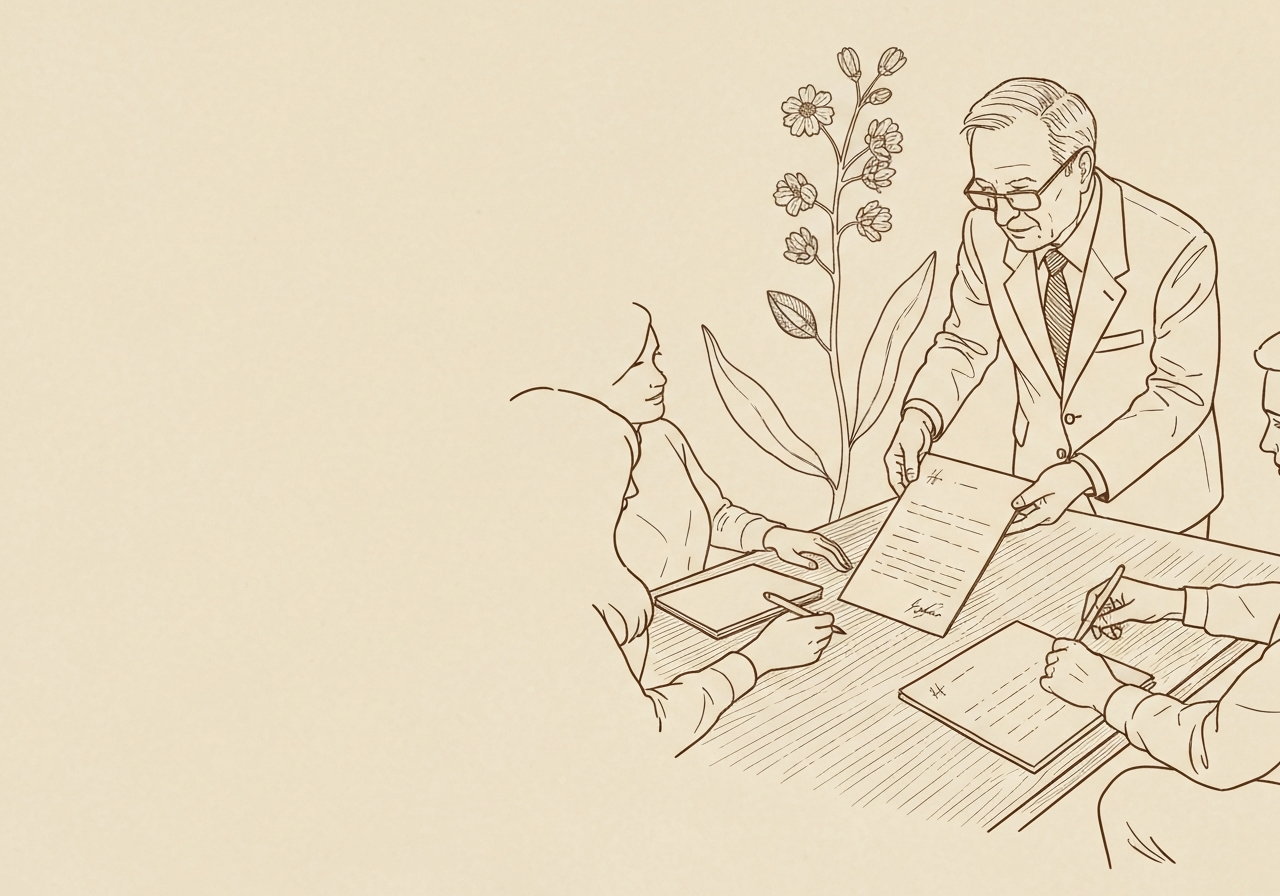
It was a quiet afternoon in a Tamil Nadu town. An elderly man placed a document on a table — a will he had already signed. Two attesting witnesses sat down beside him. He asked them to put their names below his. They did. The paper had a faint, worn texture, and the room was still except for the scratch of the pen. Years later, when the man was gone, his relatives went to court and said: this will is invalid. The testator (the person making the will) did not sign in our presence, they argued. The witnesses saw only a signature that was already there.
The question that hung over the case was deceptively simple: does a will have to be signed in front of the witnesses, or is it enough that the testator shows them his existing signature and asks them to attest it?
When the witnesses became attesters
The facts began with a man named Ganesan. He executed a will leaving his property to certain beneficiaries. On the day of execution, Ganesan had already signed the document before the two attesting witnesses arrived. When they came, he presented the signed will to them and asked them to sign as witnesses. They complied. The will was registered. Ganesan passed away.
Then came the challenge. Kalanjiam, a relative who stood to lose under the will, argued that the entire process was legally defective. The core of the objection was this: Section 63 of the Indian Succession Act, 1925 (the law that governs how wills must be made) requires the testator to "sign or affix his mark to the will" in the presence of two witnesses. Kalanjiam said Ganesan's signature was already on the paper when the witnesses walked in. That, he argued, meant the witnesses never saw the testator sign. Without that visual confirmation, the will was not validly executed.
The case travelled through the lower courts and then to the High Court, where the challenge was rejected. But the legal question remained unsettled enough that the Supreme Court agreed to hear the appeal. The file was thin, but the implications were heavy — the silence in the courtroom stretched as the bench considered the words of a century-old statute.
What the law actually says
Section 63 of the Indian Succession Act lays down three requirements for a valid will. First, the testator must sign or affix his mark. Second, the signature must appear at the foot of the will. Third, two or more witnesses must attest (confirm by signing) that they saw the testator sign, or that the testator acknowledged his signature in their presence.
The critical phrase is "acknowledged the signature." The statute does not say the testator must sign only in the presence of the witnesses. It gives an alternative: the testator can show his already-made signature to the witnesses and acknowledge that it is his. The witnesses then attest that acknowledgment.
Kalanjiam's lawyers argued that this alternative was meant only for cases where the testator was physically unable to sign — illness, old age, injury. They said a healthy man who could sign must do so in front of the witnesses. The Supreme Court did not agree.
Why the judges looked at the words themselves
The bench examined the plain language of Section 63. They noted that the provision uses the word "or" — the testator must either sign in the presence of witnesses, or acknowledge his signature in their presence. The word "or" is disjunctive. It offers two equally valid paths. There is no hierarchy between them.
The court observed that "acknowledgement of execution may assume the form of express words or conduct or both, provided they unequivocally prove an acknowledgment on the part of the testator." In other words, the testator does not need to say "I acknowledge this is my signature" in so many words. If he hands the will to a person and asks that person to attest it, that act itself is a clear acknowledgment. The conduct speaks louder than any formal declaration. The weight of the pen in the testator's hand, the slide of the paper across the table — these gestures carried legal force.
The bench added: "If a testator asks a person to attest his Will, it is a reasonable inference that he was admitting that the Will had been executed by him." This inference is crucial — it bridges the gap between the testator's internal intention and the external legal requirement.
The moment the rule changed
The Supreme Court concluded that "there is no express prescription in the statute that the testator must necessarily sign the Will in the presence of the attesting witnesses only, or that the two attesting witnesses must put their signatures simultaneously at the same time in the presence of each other and the testator."
This sentence dismantled two common assumptions at once. First, that the signing must happen in the witnesses' presence. Second, that all three people — testator and two witnesses — must be in the same room at the same time. The court said neither is required by the plain text of the law.
The impact of this judgment is the clarification that the testator's acknowledgment of an existing signature is just as valid as the physical signing in the presence of the witnesses. The witnesses do not need to see the pen touch the paper. They need only to see the signature and hear — or infer from conduct — that the testator claims it as his own.
What this means for every will in India
For practitioners, the judgment removes a common ground for challenging wills. Many will contests have turned on the argument that the testator signed before the witnesses arrived. That argument is now dead. As long as the testator acknowledged the signature — by words, by gesture, or by the simple act of asking for attestation — the will is valid.
For the common person making a will, the safest practice remains to sign in the presence of both witnesses. But if circumstances prevent that — if the witnesses arrive late, or if the testator signs earlier and then presents the document — the will is not automatically void. The key is acknowledgment, not simultaneity. The smell of old paper in a lawyer's office, the quiet murmur of instructions — these ordinary moments now carry the full weight of the law.
THE PLAY: When attesting a will, the witnesses need not see the testator sign — they need only see the signature and hear the testator acknowledge it as his own, either by words or by conduct such as asking them to attest.
The court ended where it began: with a signed will, two attesting witnesses, and a question that had no business being complicated.