He got no land, so he owed nothing. The High Court disagreed.
A son argued he owed his mother nothing because she gave him no land, but the Madhya Pradesh High Court held that the duty to maintain parents is absolute and independent of property distribution.
"The obligation of children to pay maintenance is not dependent upon the quantum of property received"
The core principle the High Court appliedGovind Lodhi v. The State of Madhya Pradesh and Others — 2024:MPHC-JBP:45445
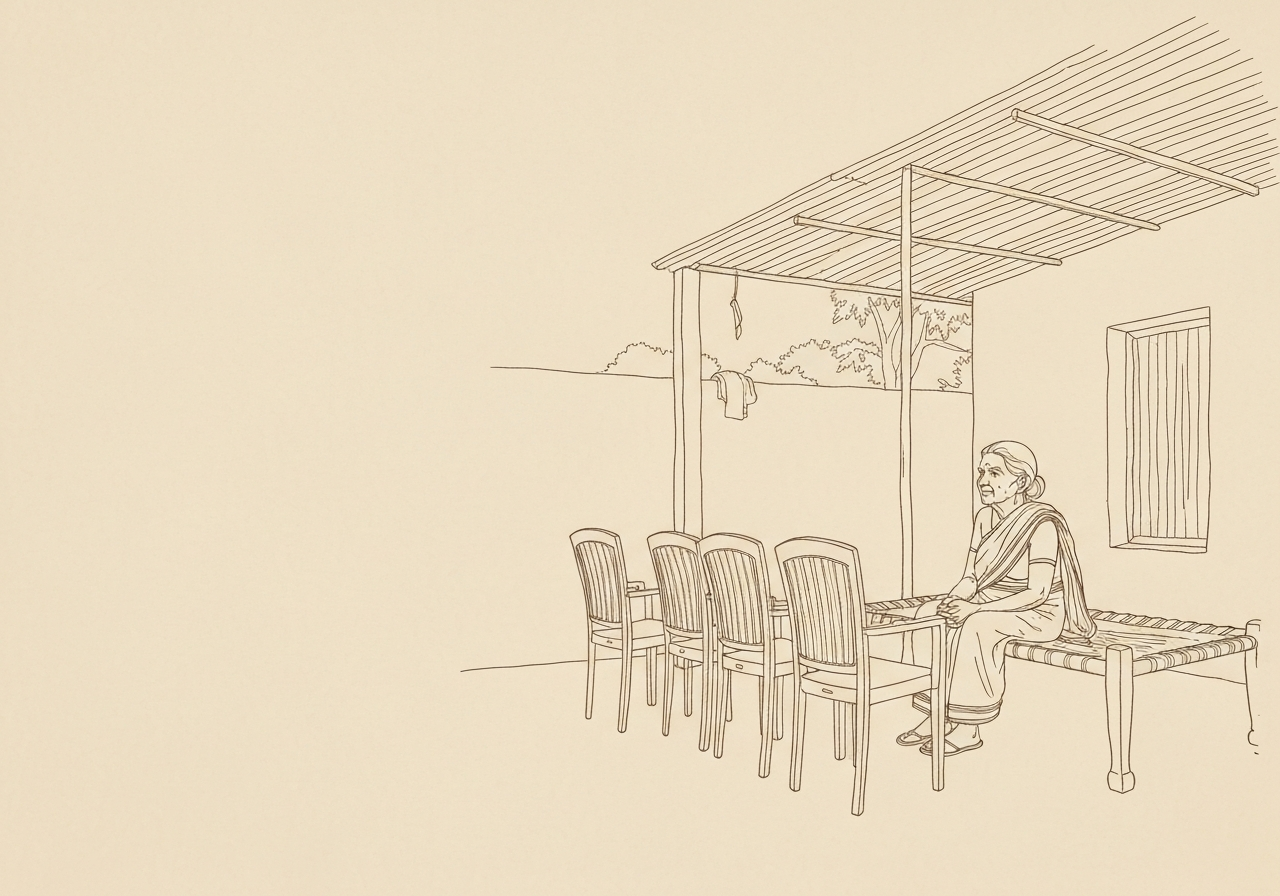
A son argued he owed his mother nothing because she gave him no land, but the Madhya Pradesh High Court held that the duty to maintain parents is absolute and independent of property distribution.
One Son Refused to Pay His Mother. The High Court Shut Down His Argument in One Line.
When Smt. Hakki Bai, an elderly mother in Gadarwara, Madhya Pradesh, divided roughly eight acres of agricultural land among her sons, she did so on a promise. They would maintain her in her old age. But after the sale deeds were executed, the sons refused. She was left with nothing. So she approached the Sub-Divisional Officer (SDO) Gadarwara under the Maintenance and Welfare of Parents and Senior Citizens Act, 2007, seeking maintenance from all four sons. The Tribunal ordered each son to pay Rs.3,000 per month. On appeal, the Additional Collector, Narsinghpur, reduced it to Rs.2,000 per month per son. One son, Govind Lodhi, refused to pay. His argument? He received no land from his mother. Therefore, he owed her nothing.
The High Court of Madhya Pradesh at Jabalpur, in a crisp judgment by Justice G.S. Ahluwalia, dismissed his petition. The Court held that the duty to maintain parents under the 2007 Act is not contingent on receiving property. The obligation is absolute. The son’s argument failed. The mother’s maintenance was upheld.
The Land, the Promise, and the Refusal
Smt. Hakki Bai was the owner of approximately eight acres of agricultural land. She executed sale deeds in favour of her sons, including Govind Lodhi. But here’s the twist: Govind Lodhi claimed he did not receive any land. His brother, Kashiram, filed an affidavit supporting this claim, stating that the mother gave the land to other sons and a grandson, but not to the petitioner. The mother, however, maintained that she had distributed the land among all four sons.
After the distribution, the sons stopped maintaining her. She filed an application under Section 16 of the Maintenance and Welfare of Parents and Senior Citizens Act, 2007 before the SDO Gadarwara. The Tribunal, on March 9, 2023, allowed her application and directed each of the four sons to pay Rs.3,000 per month, totalling Rs.12,000 per month.
The Appeal and the Reduction
The sons appealed to the Additional Collector, Narsinghpur. On June 15, 2023, the Appellate Authority affirmed the order but modified the quantum. It reduced the maintenance from Rs.3,000 to Rs.2,000 per month per son, totalling Rs.8,000 per month. The sons were to pay this amount jointly.
Govind Lodhi, the petitioner, was not satisfied. He filed a writ petition under Article 226 of the Constitution of India before the High Court of Madhya Pradesh at Jabalpur. His core argument: he received no share of the property from his mother. Therefore, he had no obligation to maintain her. He also argued financial incapacity.
The Son’s Argument: “I Got Nothing, So I Owe Nothing”
Govind Lodhi’s case was simple. He said: “My mother gave the land to my brothers and a grandson. I got nothing. Why should I pay her maintenance?” He produced an affidavit from his brother Kashiram to support this claim. The argument was that the obligation to maintain a parent is linked to the receipt of property. If a child receives no property, the child owes no maintenance.
This is a common argument in maintenance cases under the Senior Citizens Act. Children often argue that they were disinherited or received less than their siblings, and therefore, they should not be burdened with maintenance. The High Court rejected this argument outright.
The High Court’s Answer: The Duty Is Absolute
Justice G.S. Ahluwalia held that the obligation of children to pay maintenance to their parents under the Maintenance and Welfare of Parents and Senior Citizens Act, 2007 is not dependent upon the quantum of property received by the child from the parent. It is the duty of children to maintain their parents irrespective of property distribution.
The Court stated: “The obligation of children to pay maintenance to their parents under the Maintenance and Welfare of Parents and Senior Citizens Act, 2007 is not dependent upon the quantum of property received by the child from the parent. It is the duty of children to maintain their parents irrespective of property distribution.”
The Court further clarified that if a child is aggrieved by unequal distribution of property by the parent, the remedy is to file a civil suit, not to refuse maintenance obligations. The two issues are separate. Property distribution and maintenance obligations are not linked under the Act.
The Quantum: Rs.8,000 Per Month Is Not High
The Court also addressed the quantum of maintenance. The petitioner argued that Rs.2,000 per month per son was excessive. The Court observed: “Considering the price index as well as price of goods of daily needs, monthly maintenance of Rs.8,000/- to be paid in equal share by all four sons cannot be said to be on higher side.”
This observation provides a useful benchmark for practitioners. In rural and semi-urban contexts in Madhya Pradesh, a total maintenance of Rs.8,000 per month for an elderly parent is considered reasonable. The Court did not disturb the quantum.
The Operative Order: Petition Dismissed
The High Court dismissed the writ petition. The order of the Additional Collector, Narsinghpur, dated June 15, 2023, was upheld. Govind Lodhi and his three brothers must pay Rs.2,000 per month each to their mother, Smt. Hakki Bai. The total maintenance is Rs.8,000 per month.
The Doctrine That Matters: Maintenance Is Not a Reward for Property
The ratio decidendi of this case is straightforward: the obligation to maintain parents under the 2007 Act is independent of property distribution. This is a critical principle for practitioners. Many children argue that they received no property or less property than their siblings. The Court has now clearly held that this is irrelevant. The duty to maintain parents is a statutory obligation, not a quid pro quo for inheritance.
This principle is rooted in the social welfare purpose of the Act. The Act was enacted to ensure that senior citizens are not left destitute by their children. If maintenance were contingent on property receipt, children could simply refuse to accept property and then refuse to maintain their parents. The Act prevents this mischief.
THE PLAY: If you represent a parent seeking maintenance under the Senior Citizens Act, do not let the child’s argument about property distribution derail the case. Cite Govind Lodhi v. The State of Madhya Pradesh and Others (2024:MPHC-JBP:45445) to establish that the maintenance obligation is absolute and independent of property receipt.
Why This Matters in Practice
For advocates, this judgment is a powerful tool in maintenance cases. The argument that “I received no property” is one of the most common defences raised by children. This judgment shuts it down. The Court has made it clear that the remedy for unequal property distribution is a civil suit, not a refusal to maintain a parent.
For CFOs and founders, this case is a reminder that family obligations are not transactional. The law does not treat maintenance as a reward for inheritance. If you are a child of a senior citizen, you cannot avoid maintenance by claiming you received nothing. The duty is absolute.
For the general reader, this case is about a fundamental principle: children must take care of their parents, regardless of what they received. The law is on the side of the parent.
The Bottom Line
If you are a parent seeking maintenance, do not let your child’s argument about property distribution intimidate you. The law is clear: the duty to maintain parents is not contingent on receiving property. If you are a child refusing to maintain your parent because you received no land, you are wrong. The High Court of Madhya Pradesh has said so. Pay the maintenance.