He hid his rejected bail from the High Court. The Supreme Court didn't just cancel it.
Kusha Duruka got bail from the Orissa High Court without telling them his first bail was rejected and an appeal was pending in the Supreme Court. When the top court found out, it imposed costs and issued new rules for every bail application across India.
4
rules.
Kusha Duruka got bail from the Orissa High Court without telling them his first bail was rejected and an appeal was pending in the Supreme Court. When the top court found out, it imposed costs and issued new rules for every bail application across India.
He walked out of jail after a judge granted him bail. But he forgot to mention one thing—the Supreme Court was already looking at his case.
On October 11, 2023, Kusha Duruka stepped out of custody in Odisha. A judge of the Orissa High Court had just allowed his second bail application. What the judge did not know—because Duruka did not say—was that his first bail had been rejected by the same High Court, and that he had already challenged that rejection before the Supreme Court. When the top court found out, it did not just cancel his bail. It rewrote the rules for every bail application filed across India.
When the truck was stopped
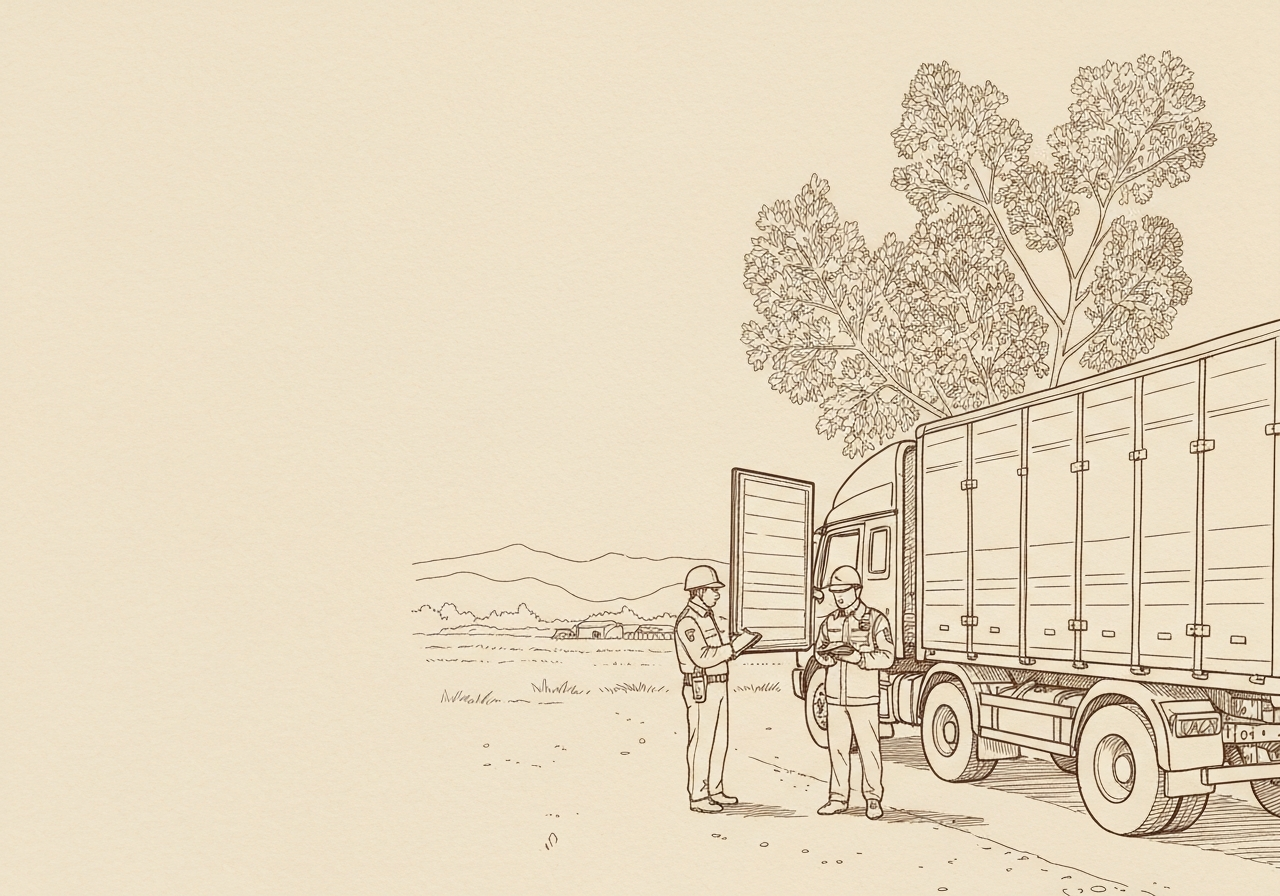
The story begins on February 3, 2022. Police at P.S. Orkel in Malkangiri district, Odisha, intercepted a vehicle allegedly carrying 23.8 kg of ganja. Duruka and a co-accused, Gangesh Kumar Thakur, were arrested. The charge: Section 20(b)(ii)(C) of the Narcotic Drugs and Psychotropic Substances Act, 1985 (the provision that prescribes punishment for possessing or transporting cannabis in commercial quantities).
Duruka applied for bail the very next day. The Sessions Judge-cum-Special Judge in Malkangiri rejected it. He tried again before the Orissa High Court. On March 6, 2023, that court too said no.
But his co-accused Thakur had better luck. On January 17, 2023, the High Court granted Thakur bail. Duruka, still in custody, decided to take his fight higher.
The notice that changed everything
Duruka filed a Special Leave Petition (SLP) before the Supreme Court—essentially, a request for the top court to hear an appeal against the High Court's rejection. On September 22, 2023, the Supreme Court issued notice on that petition. This meant the court had found enough merit to ask the State of Odisha to respond. The case was alive. The Supreme Court was watching.
But Duruka did not wait.
While the SLP was pending—a legal term meaning the case was still under consideration—he filed a second bail application before the Orissa High Court. This time, he did not tell the High Court that his first application had been rejected. He did not mention that the Supreme Court was already examining his case. The High Court, unaware of these facts, granted him bail on October 11, 2023.
How the Supreme Court found out
When the matter came up before the Supreme Court bench of Justice Vikram Nath and Justice Rajesh Bindal on January 19, 2024, the court noticed something wrong. Duruka had been granted bail by the High Court while his SLP was pending. The court called for the original records and asked for explanations.
What it found was a pattern of suppression. Duruka had not disclosed the rejection of his first bail application. He had not disclosed the pending SLP. Even the State Counsel—the lawyer representing the Odisha government—had failed to point these facts out to the High Court.
The Supreme Court was blunt. It called this "suppression of material facts" and "an attempt to pollute the stream of justice." In legal terms, this means a litigant had deliberately hidden information from a court to obtain a favourable order—something courts treat as a serious abuse of process.
What the court did to Duruka
The Supreme Court dismissed Duruka's appeal as "infructuous"—meaning the appeal had become pointless because the High Court had already granted him bail. But the court did not stop there.
It imposed costs of ₹10,000 on Duruka, to be deposited with the Mediation and Conciliation Centre attached to the Orissa High Court within eight weeks. Proof of deposit had to be furnished within two weeks after that. The court also sent a copy of its order to the Registrars General of all High Courts across India.
The message was clear: hiding facts from a court to get bail would not be tolerated. But the court went further. It issued directions that would change how every bail application is handled in India.
New rules for every bail application
The Supreme Court laid down four mandatory disclosures that must now appear in every bail application filed in any High Court or Sessions Court across the country:
First, the applicant must provide details and copies of orders from all earlier bail applications—whether granted or rejected. Second, the applicant must disclose whether any other bail application is pending in any court, or state clearly that none is pending. Third, the application must prominently state whether it is the first, second, or subsequent application. Fourth, the investigating officer in the case must inform the State Counsel of all relevant orders and proceedings in the same case.
These are not suggestions. They are binding directions from the Supreme Court.
Why the same judge rule matters
The court also addressed a practical problem that often delays bail hearings. When multiple accused in the same FIR (First Information Report—the written complaint that starts a police investigation) file separate bail applications, those applications often end up before different judges. This can lead to inconsistent orders and delays.
The Supreme Court directed that all bail applications filed by different accused in the same crime case must be listed before the same judge. The only exceptions: if that judge has retired, been transferred, or is otherwise unable to hear the case. The court also ordered the Registry of each High Court to generate a system report about all decided or pending bail applications in the same crime case and attach it to every new application.
The precedents that guided the court
The Supreme Court relied on a line of earlier judgments that establish a fundamental principle: a litigant who approaches a court must come with clean hands. In Chandra Shashi v. Anil Kumar Verma (1995), the court had held that a person who suppresses material facts is not entitled to any relief. In K.D. Sharma v. Steel Authority of India Limited (2008), the court said that a litigant who approaches a court with unclean hands pollutes the stream of justice. In Dalip Singh v. State of Uttar Pradesh (2010), the court warned that the tendency to abuse the legal process must be curbed.
These cases, cited by the bench, formed the legal foundation for the new directions. The court was not creating new law from scratch. It was enforcing an existing duty—the duty of candour—and giving it teeth through systemic reform.
THE PLAY: Every bail application must now carry a sworn statement disclosing all prior applications and pending proceedings in any court—hide one fact, and the bail can be cancelled with costs.
What this means for lawyers and litigants
For criminal lawyers across India, the judgment changes daily practice. Every bail application must now include a disclosure annexure. Failure to do so could result in the application being dismissed or the bail being revoked. For litigants, the message is simple: honesty is not optional. A court that discovers suppression will not hesitate to impose costs and cancel the relief granted.
For the High Courts, the directions mean a significant administrative overhaul. Registries must now generate system reports linking all bail applications in the same crime case. Listing protocols must ensure that related applications go before the same judge. This will take time and resources, but the Supreme Court has made it clear that the change is non-negotiable.
The original records from the Orissa High Court have been sent back. Duruka's ₹10,000 costs are due. And every bail application filed in India from now on carries a new burden: the burden of full disclosure.
The Supreme Court ended where it began: with a litigant who walked out of jail by hiding the truth, and a court that decided the truth could no longer be hidden.