He lured a 7-year-old for lychees. The Supreme Court just changed his sentence.
Pappu was sentenced to death for the rape and murder of a little girl. The top court upheld his conviction but commuted the death penalty — here's why.
35
years.
Pappu was sentenced to death for the rape and murder of a little girl. The top court upheld his conviction but commuted the death penalty — here's why.
A 35-year-old man took a 7-year-old girl to pick lychees. She was found dead near a riverbank. He got death — until the Supreme Court said: not so fast.
On a winter morning in a village in Uttar Pradesh, a man named Pappu asked a little girl if she wanted to pick lychees. She went with him. She never came home. Her mother searched through the night. By morning, the police had a complaint, an arrest, and a body near a bridge over the river. The trial court gave Pappu the death penalty. The High Court agreed. But when the case reached the Supreme Court in February 2022, the three-judge bench delivered a split decision: the conviction would stand, but the death sentence would not.
The question that hung over the entire appeal was this: can a man be sent to the gallows for a crime everyone agrees is abhorrent — or does the law demand something more before it extinguishes a life?
The courtroom on that February morning had a stillness to it. The bench — Justice A.M. Khanwilkar, Justice Dinesh Maheshwari, and Justice C.T. Ravikumar — sat behind a wall of dark wood. The air smelled of old paper and dust. The file on the dais was thick, but the judges had read it through. When they spoke, their words carried the weight of a man's life.
"Come pick lychees with me"
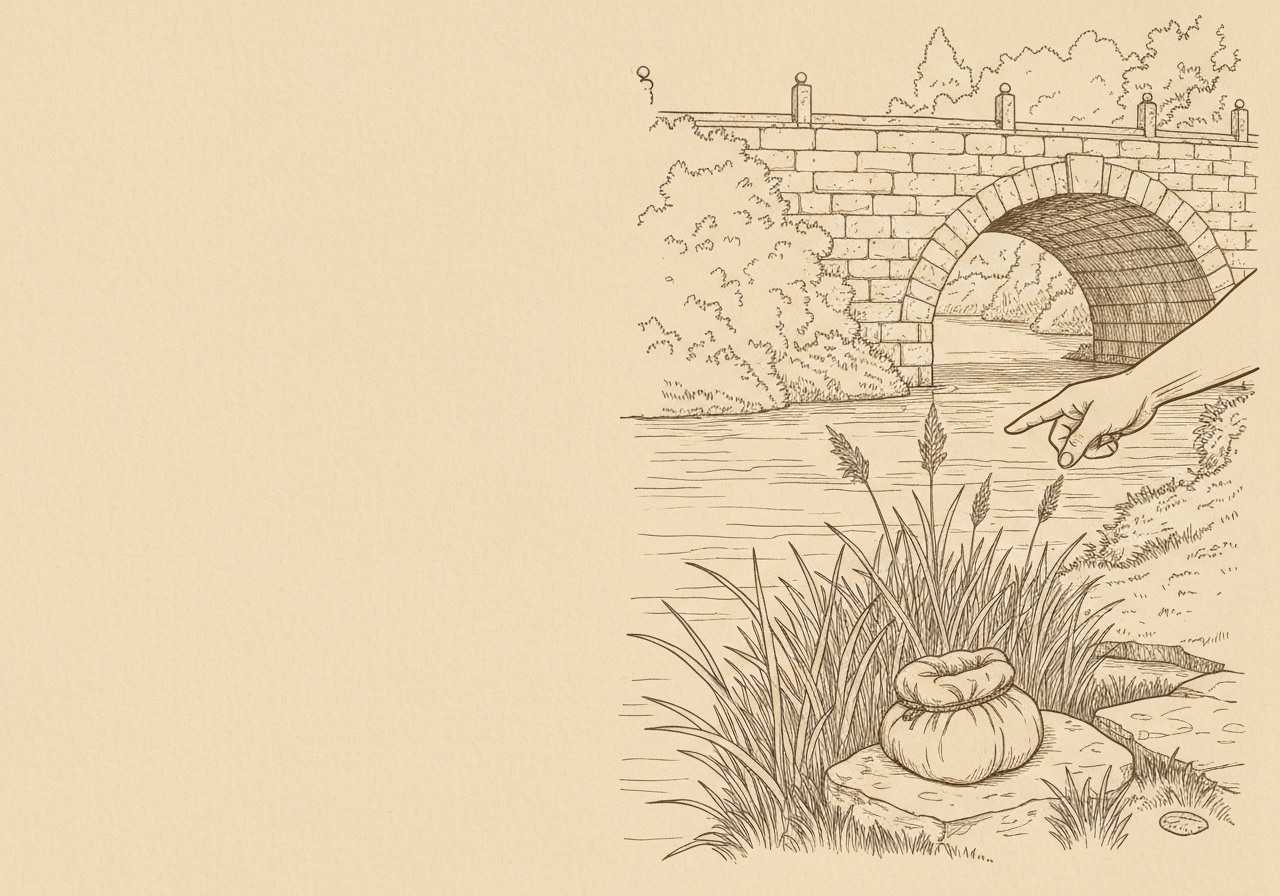
The facts were brutal and simple. Pappu, a 35-year-old labourer, lived in the same village as the 7-year-old victim. On the day of the incident, he allegedly lured her away on the pretext of picking lychees. The lychee orchard stood at the edge of the village — a cluster of trees with low-hanging branches, the fruit red and ripe. When she did not return by nightfall, her mother filed a complaint with the police. A search party scoured the area through the dark, their torches cutting through the cold air. The next day, police arrested Pappu near a local health centre. According to the prosecution, he then led them to the girl's body, which had been dumped near a bridge over a riverbank. The bridge was old, its stone worn smooth by years of rain. The body lay in the grass below. He also led them to the victim's clothes, recovered from the spot — a small bundle of fabric that the court would later hold up as evidence.
The post-mortem report confirmed rape and murder. The doctor's notes were clinical: the time of death approximated, the injuries catalogued. The smell of the mortuary seemed to linger in the pages of the report as it was read aloud in court. The prosecution had no eyewitness. The entire case rested on what lawyers call circumstantial evidence — a chain of facts that, taken together, pointed to Pappu as the killer.
Three pillars that held the noose
The trial court convicted Pappu under multiple provisions: Section 302 IPC (murder), Section 376 IPC (rape), Section 201 IPC (causing disappearance of evidence), and Section 5/6 of the POCSO Act (aggravated penetrative sexual assault on a child). The conviction was built on three pillars.
First, the last-seen theory. Multiple witnesses testified that they saw Pappu walking with the girl toward the lychee orchard. When a person is last seen alive with the accused, and the body is found soon after, the burden shifts to the accused to explain what happened. Section 106 of the Evidence Act (the burden to prove facts especially within a person's knowledge) was invoked: if Pappu knew where the girl was, he had to tell the court.
Second, the discovery of the body at Pappu's instance. Under Section 27 of the Evidence Act (a provision that allows a fact discovered based on information given by the accused to be used as evidence), the police argued that Pappu's voluntary disclosure — "I will show you where the body is" — was admissible and damning. The police officer who recorded the statement remembered the moment: the accused had pointed toward the riverbank without hesitation.
Third, the medical and forensic evidence corroborated the timeline and the nature of the assault. The post-mortem report, with its precise measurements and clinical language, was read into the record. The trial court found the chain of circumstances complete and unbroken. It sentenced Pappu to death, calling the case "rarest of rare" — the legal threshold required under Section 354(3) CrPC (the provision that demands special reasons before a death sentence can be awarded).
The High Court of Allahabad confirmed both the conviction and the death sentence in October 2017. Pappu then filed a Special Leave Petition (SLP) under Article 136 of the Constitution (the Supreme Court's discretionary power to hear appeals) before the top court.
"He can be reformed," his lawyer said
Before the Supreme Court, Pappu's counsel did not deny the horror of the crime. Instead, they attacked the conviction on two fronts. First, they pointed to inconsistencies in the prosecution evidence — gaps in the timeline, contradictions in witness statements, and the absence of direct forensic linking Pappu to the crime. Second, they argued that even if the conviction stood, the death sentence was wrong.
On the sentencing question, they raised three mitigating factors: Pappu had no criminal history — he was not a habitual offender or a hardened criminal. He had a family dependent on him — a wife, children, and an aged father. And his conduct in jail during the trial and appeal had been unblemished. These factors, they argued, meant there was a probability of reformation. The law, they said, does not execute a man who can be reformed.
The prosecution countered that the crime was so depraved — the rape and murder of a 7-year-old child — that no mitigating factor could outweigh the brutality. The death penalty, they argued, was the only just response. The courtroom fell silent as the arguments were made. The judges listened, their faces unreadable, the only sound the rustle of paper as they turned the pages of the case file.
The bench that said "not so fast"
The three-judge bench delivered its judgment on February 9, 2022. On the conviction, the court was firm. It found no manifest illegality, no error of law, and no misreading of evidence in the concurrent findings of the trial court and the High Court. The circumstantial evidence, the court held, formed a complete chain. The last-seen theory, combined with the discovery of the body at Pappu's instance and the medical evidence, was sufficient to uphold the conviction.
But on the death sentence, the court took a different view. It applied the framework laid down in the landmark case of Bachan Singh v. State of Punjab (1980), which requires courts to balance aggravating and mitigating circumstances before awarding the death penalty. The court noted that the "abhorrent nature of the crime alone cannot be the decisive factor." The law demands that a judge consider whether the option of any punishment other than capital punishment is foreclosed — meaning, is there any chance the accused can be reformed?
The bench found that the lower courts had not adequately considered the mitigating factors. Pappu had no criminal antecedents. He was not a hardened criminal. His family depended on him. His jail conduct was good. These factors, the court held, pointed to a probability of reformation. The death sentence was therefore commuted to life imprisonment.
The court also cited several precedents that reinforced this approach: Rajendra Pralhadrao Wasnik v. State of Maharashtra (2019), Mohd. Mannan v. State of Bihar (2019), and Shatrughna Baban Meshram v. State of Maharashtra (2021) — all cases where the Supreme Court had commuted death sentences after finding that mitigating circumstances had been overlooked. The citation sheets were passed between the judges, each precedent marked with a tab, the pages worn from use.
What this means for lawyers and courts
The judgment is a reminder that the death penalty is not automatic, even for the most horrific crimes. The "rarest of rare" doctrine requires a rigorous, individualised assessment of the accused — not just the crime. Courts must record why no punishment other than death is possible, and they must consider the accused's background, criminal history, family circumstances, and potential for reform.
THE PLAY: When arguing against a death sentence, always lead with concrete mitigating evidence — criminal history check, family dependency affidavit, and jail conduct report — before the court reaches the sentencing stage.
The law does not ask judges to be lenient. It asks them to be thorough.
The girl never came home. But the court decided that the state would not take another life in her name. The judgment, when it was pronounced, left a silence in the courtroom that seemed to stretch. The file was closed. The bench rose. And the law, in its cold, careful way, had spoken.