He sold extra flats. The owner cried cheat. But the Supreme Court said —
A builder sold 13 flats when the deal allowed only 9. The owner filed a criminal case. But the Court found no dishonest intent — because the dispute was already in arbitration.
4
flats.
A builder sold 13 flats when the deal allowed only 9. The owner filed a criminal case. But the Court found no dishonest intent — because the dispute was already in arbitration.
He sold 4 flats beyond what the agreement allowed. The owner called it cheating. But the Supreme Court asked: where was the dishonest intent at the start?
By the time the property owner walked into a Bengaluru police station in March 2016, the builder had already moved an arbitrator. The dispute over flats was already being argued in a civil forum. Yet the criminal complaint went ahead — cheating, criminal breach of trust, the whole spectrum. The police filed a charge sheet. The trial court took cognisance. The High Court refused to stop it. And then the Supreme Court did something that sent a clear signal: a broken contract is not a crime.
The owner gave land. The builder sold flats.
A Bengaluru property owner entered a joint development agreement with a builder company. The owner would provide the land; the builder would construct flats. They agreed on how many flats each side would get. Then came a memorandum of understanding (MoU) — a handwritten document that allowed the builder to sell 8,000 square feet from the owner's share, specifically to help the owner repay a loan from Religare Finvest Ltd.
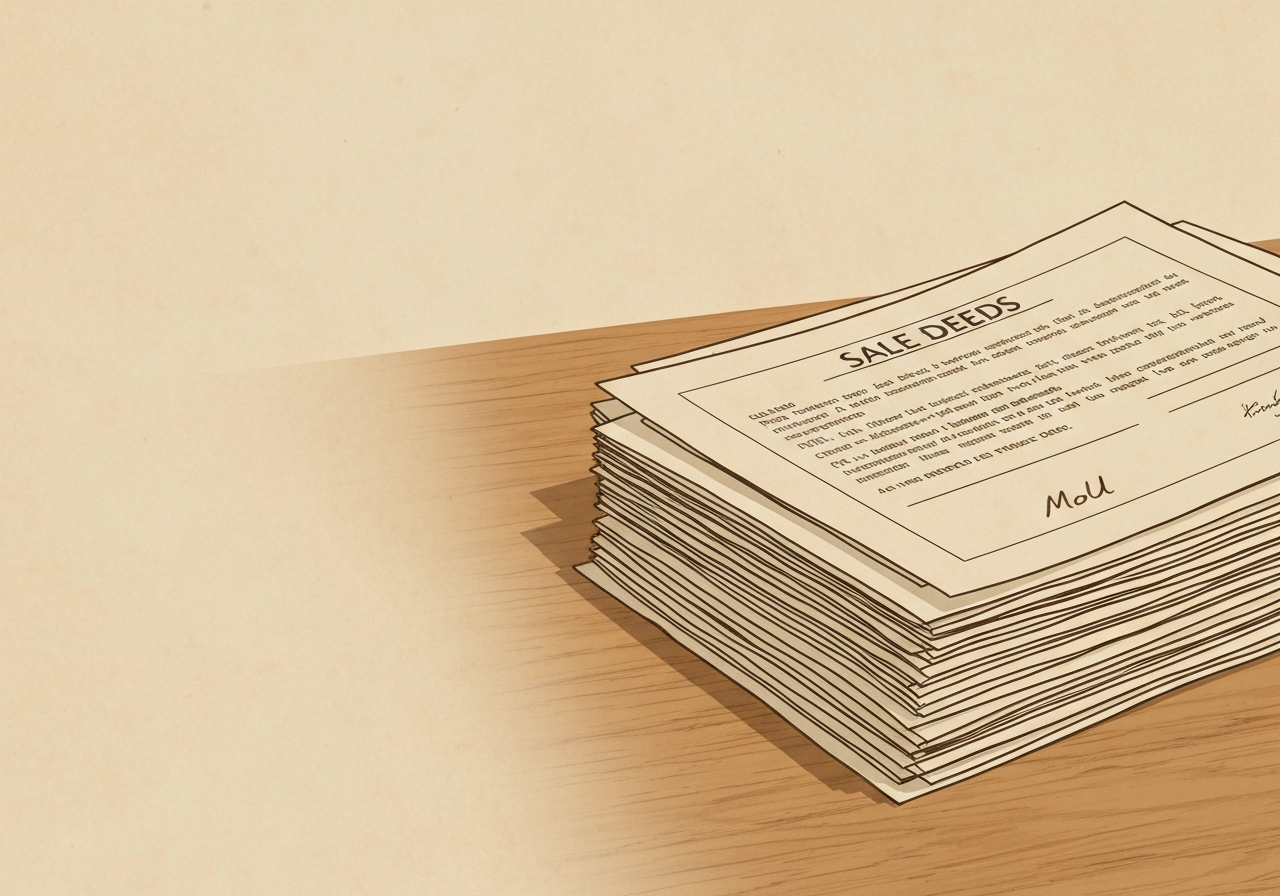
The builder sold 13 flats. The owner said the agreement permitted only 9. The builder claimed a verbal understanding: the extra 4 flats were sold to adjust for loan payments the builder had made on the owner's behalf. The owner disagreed, revoked the power of attorney, and filed a criminal complaint for cheating (Section 420 IPC — inducing someone to part with property through dishonest means). The stack of sale deeds on the table told one story; the MoU told another. The courtroom fell silent when the question about intent was asked.
The builder went to arbitration first
Here is the detail that changed everything. Before the owner even filed the FIR (the written complaint that starts a police investigation), the builder had already initiated arbitration proceedings. The arbitrator later partly allowed claims from both sides, found the revocation of the power of attorney illegal, and noted that the owner had withdrawn the issue of the excess flats to pursue it separately in civil court.
The criminal case, meanwhile, had taken on a life of its own. The builder and its directors were charged under Sections 406 (criminal breach of trust — misappropriation of property entrusted to someone), 419 (cheating by personation — pretending to be someone else to deceive), and 420 read with Section 34 (common intention — multiple people acting together to commit a crime) of the Indian Penal Code. The charge sheet, filed a year after the FIR, ran to dozens of pages. The trial court's file — C.C. No. 20609 of 2017 — grew thicker with each hearing.
The High Court said no
The builder's directors approached the Karnataka High Court with a petition to quash the criminal proceedings. They argued that the entire dispute was civil — a disagreement over a contract, not a criminal fraud. The High Court disagreed and dismissed the petition in August 2019.
The builder appealed to the Supreme Court.
The question the Supreme Court asked
The bench, comprising Justice Krishna Murari and Justice S. Abdul Nazeer, examined the core question: did the builder have dishonest or fraudulent intention at the time the transaction began?
This is the critical distinction. For an offence of cheating under Section 420 IPC, the dishonest intent must exist right at the start — when the accused induces the victim to part with property. A subsequent breach of contract, even if it happens, does not automatically mean the original transaction was fraudulent. The court cited its own precedent in Hridaya Ranjan Prasad Verma v. State of Bihar, where it held: "A mere breach of contract cannot give rise to criminal prosecution for cheating unless fraudulent or dishonest intention is shown right at the beginning of the transaction." The court also relied on M/s Indian Oil Corporation v. M/s NEPC India Ltd., G. Sagar Suri v. State of UP, and Priti Saraf v. State of NCT of Delhi — all reinforcing the same principle: civil disputes must not be given criminal colour.
The court also applied the framework from State of Haryana v. Bhajan Lal, a landmark judgment listing seven categories where criminal proceedings must be quashed. The builder's case fell into three: the allegations in the FIR, even if taken as true, did not make out a criminal offence (Category 1); the allegations were so absurd and improbable that no prudent person could conclude there was sufficient ground for proceeding (Category 3); and the dispute was essentially civil in nature, cloaked with criminal colour (Category 5).
The court examined each category carefully. Under Category 1, it found that the FIR allegations — that the builder sold flats beyond the authorised share — did not, even on their face, disclose the ingredients of cheating or criminal breach of trust. There was no allegation that the builder had, at the time of entering the joint development agreement, intended to deceive the owner. The dispute was about the scope of the MoU and the alleged verbal agreement, not about any false promise made at the inception. Under Category 3, the court noted that the builder's initiation of arbitration before the FIR made the criminal allegations inherently improbable — why would a cheater voluntarily submit to a neutral forum? Under Category 5, the court observed that the entire dispute revolved around the interpretation of contractual documents, which is the domain of civil courts and arbitral tribunals, not criminal courts.
Why the arbitration mattered
The court placed significant weight on one fact: the builder had initiated arbitration before the FIR was filed. This was not a case where a party, facing a criminal case, suddenly rushed to civil court to create a defence. The builder had already chosen a civil remedy. The owner had participated in that arbitration. The arbitrator had passed an award. The owner had withdrawn the specific claim about the excess flats to pursue it in civil proceedings.
In the court's view, this sequence of events completely negated any suggestion of dishonest intention. If the builder had intended to cheat from the beginning, why would it voluntarily submit the dispute to arbitration? Why would it seek a neutral forum to resolve the very same issues the owner later raised in the criminal complaint? The smell of old paper from the arbitration file — the award, the pleadings, the MoU — all pointed to a commercial dispute, not a criminal fraud.
The judgment
The Supreme Court allowed the appeal in October 2021. It set aside the High Court's order and quashed FIR No. 185 of 2016 and all proceedings in C.C. No. 20609 of 2017 before the VI Additional CMM, Bengaluru. The criminal case was dead.
The court's reasoning was clear: the essential ingredient of dishonest or fraudulent intention was not established even prima facie (on the face of it). The dispute was contractual. The parties had a written agreement, an MoU, and an alleged verbal understanding. They disagreed on what those documents meant. That disagreement belonged in a civil court or an arbitration tribunal — not in a criminal court.
What this means for builders, owners, and lawyers
This judgment is a powerful shield for anyone facing criminal proceedings over a contractual dispute. The court has reaffirmed that the police and the courts must examine whether the accused had dishonest intent at the very beginning of the transaction. If the dispute arises from a genuine disagreement over the terms of a contract — and especially if the parties have already chosen a civil remedy — the criminal case cannot survive.
THE PLAY: If you are facing a criminal complaint for breach of contract, check whether you had initiated any civil proceedings or arbitration before the FIR was filed — the Supreme Court treats that sequence as strong evidence of no dishonest intent.
The builder sold 4 flats beyond what the agreement allowed. But the court ended where it began: with a question about intention, and an answer that kept a commercial dispute where it belonged.