He stopped paying maintenance. The Supreme Court didn't just order him to pay.
The husband claimed he had no money. The court looked at his bank statements, his father's property, and then wrote a rulebook that changes how every maintenance case in India works.
7
years.
The husband claimed he had no money. The court looked at his bank statements, his father's property, and then wrote a rulebook that changes how every maintenance case in India works.
He said he was jobless. The court checked his bank account and found something else.
The wife had left the matrimonial home in January 2013, a newborn son in her arms. She needed money to survive. Her husband said he had none. The Supreme Court of India, when it finally heard the case seven years later, did not just order him to pay. It wrote a rulebook that changes how every maintenance case in this country works.
When the bank statements arrived
The wife filed for interim maintenance (temporary financial support during the legal proceedings) under Section 125 of the CrPC (the law that allows a wife, child, or parent to claim basic living expenses from a spouse or parent who refuses to maintain them). She asked for support for herself and her minor son.
The Family Court in Nagpur heard both sides. It looked at the husband's claims of unemployment. It looked at his bank accounts. The courtroom was silent as the statements were read out—each deposit, each withdrawal, a quiet counter to his plea of poverty. On September 2, 2013, it ordered him to pay Rs.15,000 per month to the wife and Rs.5,000 to Rs.10,000 per month for the son.
The husband did not like that order. He went to the Bombay High Court, Nagpur Bench. On August 14, 2018, the High Court dismissed his challenge. The Family Court's order stood.
Still, the husband did not pay. He approached the Supreme Court, arguing that the quantum of maintenance was too high. He claimed he had no means to pay. The wife alleged the opposite: that he was hiding his income and diverting money to his parents. Mediation failed—the two sides sat across a table, but no agreement could bridge the gap between his claims of destitution and her evidence of hidden means.
The pattern of default
During the Supreme Court proceedings, something became clear. The husband was not just arguing his case. He was repeatedly defaulting on court-ordered payments. Each time, he pointed to his unemployment. Each time, the court looked at his bank statements and found something else—a transaction, a deposit, a trail of money that his words had denied. The courtroom fell into a heavy silence each time the default was noted, the judge's gaze lingering on the file.
The court had seen this pattern before. A husband claims poverty. The wife claims concealment. The court is left to decide who is telling the truth, with no clear framework for how to weigh evidence or calculate a fair amount.
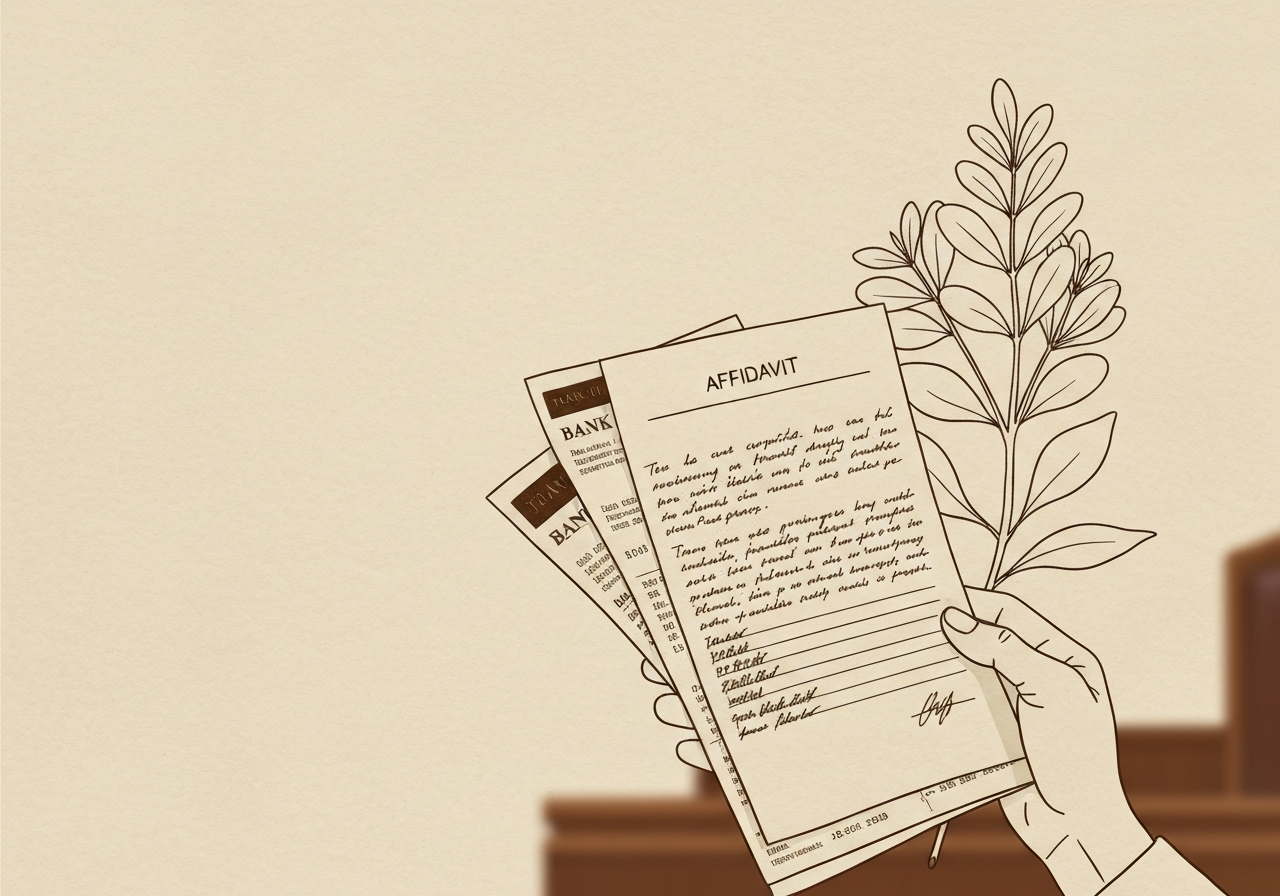
Justice Indu Malhotra's bench used this case to fix that problem. It framed comprehensive guidelines on maintenance that apply across multiple statutes: the CrPC, the Hindu Marriage Act, 1955 (HMA — the law governing divorce and related relief for Hindus), the Hindu Adoptions and Maintenance Act, 1956 (HAMA — the law that gives Hindu wives, widows, and children the right to be maintained), the Special Marriage Act, 1954 (SMA — the law for marriages outside personal customs), and the Protection of Women from Domestic Violence Act, 2005 (DV Act — the law that protects women from abuse in a shared household). The handwritten affidavit of disclosure, when it finally came, felt thin in the hands of the court officer—pages that should have held the truth but seemed to hide more than they revealed.
What the court decided
The Supreme Court affirmed the interim maintenance order. It directed the husband to pay the arrears within 12 weeks. It ordered the Family Court to decide the main maintenance petition within six months.
But the real work was in the guidelines. The court laid down rules for overlapping jurisdictions—what happens when a wife files for maintenance under multiple laws. It set criteria for determining quantum: as the court held, maintenance must enable a standard of living that is "neither luxurious nor penurious, but modestly consistent with the status of the family." It addressed the date from which maintenance should be awarded. And it created a mechanism for enforcement.
The court held that where maintenance is awarded under one statute, courts deciding maintenance under another statute must take note of and adjust the earlier award to avoid double recovery. But the remedies under each law are independent and distinct. A party is not precluded from approaching court under more than one enactment.
The court drew upon a rich body of precedent to support its reasoning. In Captain Ramesh Chander Kaushal v. Mrs. Veena Kaushal & Ors. — (1978) 4 SCC 70, the court had established that maintenance proceedings are a measure of social justice. Nanak Chand v. Chandra Kishore Aggarwal & Ors. — (1969) 3 SCC 802 reinforced the principle that the remedy under Section 125 CrPC is summary in nature and not to be burdened with technicalities. Chand Dhawan v. Jawaharlal Dhawan — (1993) 3 SCC 406 addressed the standard of living to be maintained. Bhagwan Dutt v. Kamla Devi — (1975) 2 SCC 386 laid down the quantum criteria. The court also cited Chaturbhuj v. Sitabai, Bhuwan Mohan Singh v. Meena & Ors., and Abhilasha v. Parkash & Ors. — Criminal Appeal No. 615/2020 (decided 15.10.2020) — to reinforce that maintenance is a measure of social justice, not a punishment.
Why the presumption matters
The husband argued that the Family Court had not properly considered his financial situation. The Supreme Court disagreed. It noted that the Family Court had passed a detailed order on interim maintenance after considering the evidence. The High Court had affirmed it. The Supreme Court would not interfere unless the order was manifestly unjust.
This is the key takeaway for practitioners. A trial court's order on interim maintenance, when supported by evidence and affirmed by the High Court, will not be lightly disturbed. The husband's claim of unemployment was weighed against the bank statements. The bank statements won.
The court also invoked constitutional principles to ground its reasoning. Article 15(3) of the Constitution—which permits special provisions for women and children—provided the constitutional touchstone for the protective nature of maintenance laws. Article 39, part of the Directive Principles, reinforced the state's duty to ensure that children are given opportunities to develop in a healthy manner. These provisions, the court held, underpin the entire maintenance framework.
The guidelines also addressed the procedural mechanics of overlapping jurisdictions. A wife may seek relief under Section 125 CrPC, Section 24 of the Hindu Marriage Act (maintenance pendente lite—financial support during the pendency of divorce proceedings), Section 18 of the Hindu Adoptions and Maintenance Act (maintenance of wife), Section 20 of HAMA (maintenance of children and aged parents), Sections 36 and 37 of the Special Marriage Act (alimony pendente lite and permanent alimony), and the Domestic Violence Act. The court held that while these remedies are independent and a party may approach under more than one enactment, courts must adjust earlier awards to prevent double recovery.
THE PLAY: In any maintenance proceeding, file a detailed affidavit of disclosure of all assets and income — bank statements, property documents, tax returns, and business records — because the court will now expect it, and silence will be treated as concealment.
What this means for every maintenance case
For advocates, CFOs, founders, doctors, and journalists reading this: the Rajnesh guidelines are now the default framework for every maintenance case in India. If you are advising a client on a maintenance claim—whether as the claimant or the respondent—these rules govern how the court will approach the case.
The guidelines cover the format of the application, the documents to be filed (including an affidavit of disclosure of assets and income), the criteria for determining quantum, the date of entitlement, and the enforcement mechanism. They apply across all the major statutes dealing with maintenance: the CrPC, the HMA, the HAMA, the SMA, and the DV Act. The court's reasoning under Section 128 CrPC—the enforcement provision—creates a clear pathway for ensuring compliance, including attachment of property and arrest for default.
For the husband in this case, the message was clear: you cannot hide behind a claim of unemployment when your bank statements show otherwise. For every other litigant, the message is the same: the court will look at the evidence, not just the argument.
The Family Court will now decide the main petition within six months. The husband will pay. The wife and child will receive what the court decided they deserved seven years ago. The question that remains is whether the husband will find another way to delay.
The case—Rajnesh v. Neha & Anr., Criminal Appeal No. 730 of 2020—was disposed of on November 4, 2020. But its impact continues. Every family court in India now looks to these guidelines when deciding how much a spouse must pay, how to weigh claims of poverty against evidence of wealth, and how to ensure that maintenance is neither a luxury for the claimant nor a punishment for the payer. The bank statements, in the end, told the truth that words could not hide.