High Court gave bail for murder without reading the chargesheet. Supreme Court: not okay.
The Supreme Court cancelled bail for two accused in a murder case because the Gujarat High Court granted it without considering eye-witness statements, CCTV footage, or post-mortem reports.
Quashed.
Bail orders set aside.
Evidence ignored.
The Supreme Court cancelled bail for two accused in a murder case because the Gujarat High Court granted it without considering eye-witness statements, CCTV footage, or post-mortem reports.
A man was beaten to death in front of his wife. The High Court granted bail to two accused without even looking at the chargesheet.
The Supreme Court of India would have to decide whether a bail order that ignored every piece of evidence in the case could survive. It did not.
When a scrap collection turned into a murder
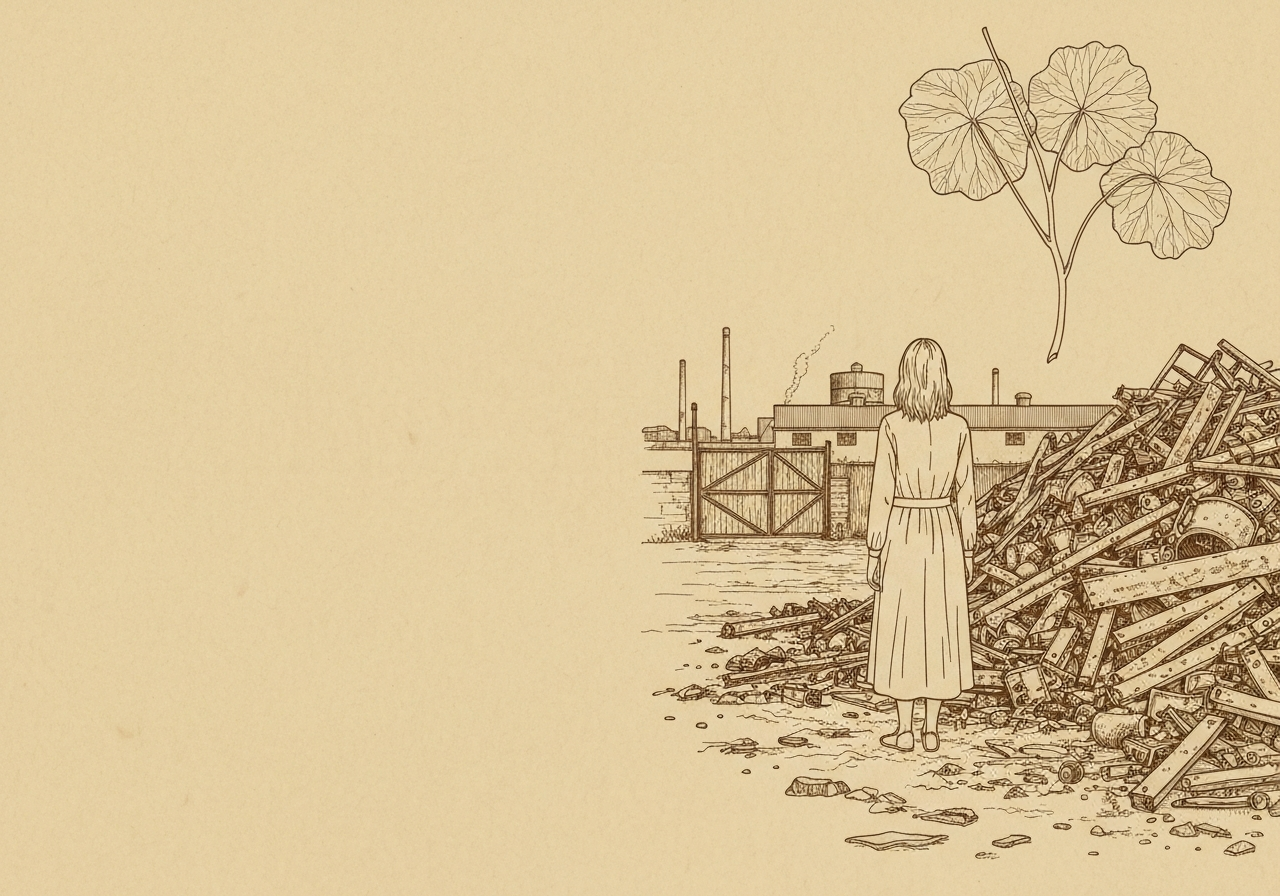
The complainant, Jayaben, along with her husband Mukeshbhai and her aunt Savitaben, went to collect scrap from an open space outside a factory. The scrap lay in a heap of rusted iron and broken concrete outside the factory gate. Five persons arrived, abused them, and started beating all three. The accused then tied Mukeshbhai to the factory gate and continued the assault.
Jayaben and her aunt were told to leave. When they returned with relatives, they found Mukeshbhai unconscious with serious injuries. He was taken to the hospital, where he was declared dead.
The police registered an FIR (a written complaint that starts a police investigation). After investigation, a chargesheet (the formal document listing evidence and accusations) was filed against five accused persons. The charges included Sections 302 (murder), 342 (wrongful confinement), 354 (assault on a woman with intent to outrage her modesty), 323 (voluntarily causing hurt), 143, 147, 148, 149 (unlawful assembly and rioting) of the Indian Penal Code, Sections 3(1)(r)(s), 3(2)(5) of the Scheduled Castes and the Scheduled Tribes (Prevention of Atrocities) Act, 1989, and Section 135 of the Gujarat Police Act.
The Sessions Court said no. The High Court said yes.
Two of the accused — Tejas Kanubhai Zala and Jaysukhbhai Devrajbhai Radadiya — applied for bail before the Sessions Court in Gondal. On September 18, 2018, the Sessions Court rejected their bail applications, finding the case serious enough to keep them in custody. The Sessions Court order was a single page of dense reasoning, its weight in the judge's hand as he read it out.
The accused then approached the Gujarat High Court at Ahmedabad. On February 4, 2019, the High Court granted bail to Tejas Kanubhai Zala. On April 5, 2019, it granted bail to Jaysukhbhai Devrajbhai Radadiya. The orders were brief. The court did not examine the evidence.
Jayaben, the complainant, challenged both bail orders before the Supreme Court of India.
What the High Court missed — and why it mattered
The Supreme Court bench — Justice M.R. Shah and Justice B.V. Nagarathna — examined the High Court's bail orders. What they found was a pattern of omission so stark that the orders could not stand.
The High Court had not considered the gravity of the offences. It had not looked at the eye-witness statements — including the account of the wife who watched her husband being beaten to death. It had not examined the CCTV footage that captured the incident. It had not reviewed the mobile recordings. It had not considered the post-mortem findings. It had not even read the chargesheet.
The prosecution argued that the High Court had committed a "grave error" by granting bail without evaluating any of this material. The defence argued that the accused had not misused their liberty and that time had passed since the bail orders were granted.
Why the Supreme Court said the bail orders had to go
The Supreme Court held that while considering bail in serious offences like murder, the court must consider the gravity of the offences and the evidence collected during investigation that forms part of the chargesheet. This includes eye-witness statements, forensic evidence, CCTV footage, and post-mortem reports. Failure to do so renders the bail order unsustainable.
The Court made a critical distinction. Cancellation of bail for breach of conditions — for example, if an accused person tampers with witnesses or fails to appear in court — is one thing. But quashing or setting aside a bail order that was wrong from the start is another matter entirely. These two situations "stand on different footings with different considerations," the Court said.
Once a bail order is found unsustainable on merits — meaning the court that granted it never should have done so — it must be set aside and bail cancelled, regardless of passage of time or absence of misuse of liberty by the accused. The error in the original order cannot be cured by the mere passage of time.
What this means for bail hearings
For practitioners, the message is clear. A bail order in a serious case that does not engage with the evidence — that does not mention the chargesheet, the witnesses, the forensic material — is vulnerable to being quashed by the Supreme Court. The High Court cannot grant bail as a routine formality. It must demonstrate that it has applied its mind to the facts.
THE PLAY: When challenging or defending a bail order in a serious offence, ensure the court's order explicitly references the key evidence in the chargesheet — eye-witness statements, forensic reports, and electronic records — or the order risks being set aside as perfunctory.
The Supreme Court allowed both appeals. The bail orders were quashed. Tejas Kanubhai Zala and Jaysukhbhai Devrajbhai Radadiya were directed to surrender before the concerned jail authority within one week. If they failed to do so, non-bailable warrants would be issued.
The Court also directed the registry to send copies of the judgment to the Principal Chief Secretary, the Home Department, and the Legal Department of the State of Gujarat.
The wife watched her husband die. The Supreme Court made sure the law watched too.