High Court reversed summoning of murder accused. Supreme Court: 'Too early'
The trial court had summoned three men named in the FIR but left out of chargesheet. The High Court set it aside for one, saying he fled the spot. The Supreme Court restored it: no merit appreciation at this stage.
3
men.
The trial court had summoned three men named in the FIR but left out of chargesheet. The High Court set it aside for one, saying he fled the spot. The Supreme Court restored it: no merit appreciation at this stage.
The police filed charges against 9 people for a midnight murder. But the victim's son named 3 more. One of them got off—until the Supreme Court said: you can't decide innocence yet.
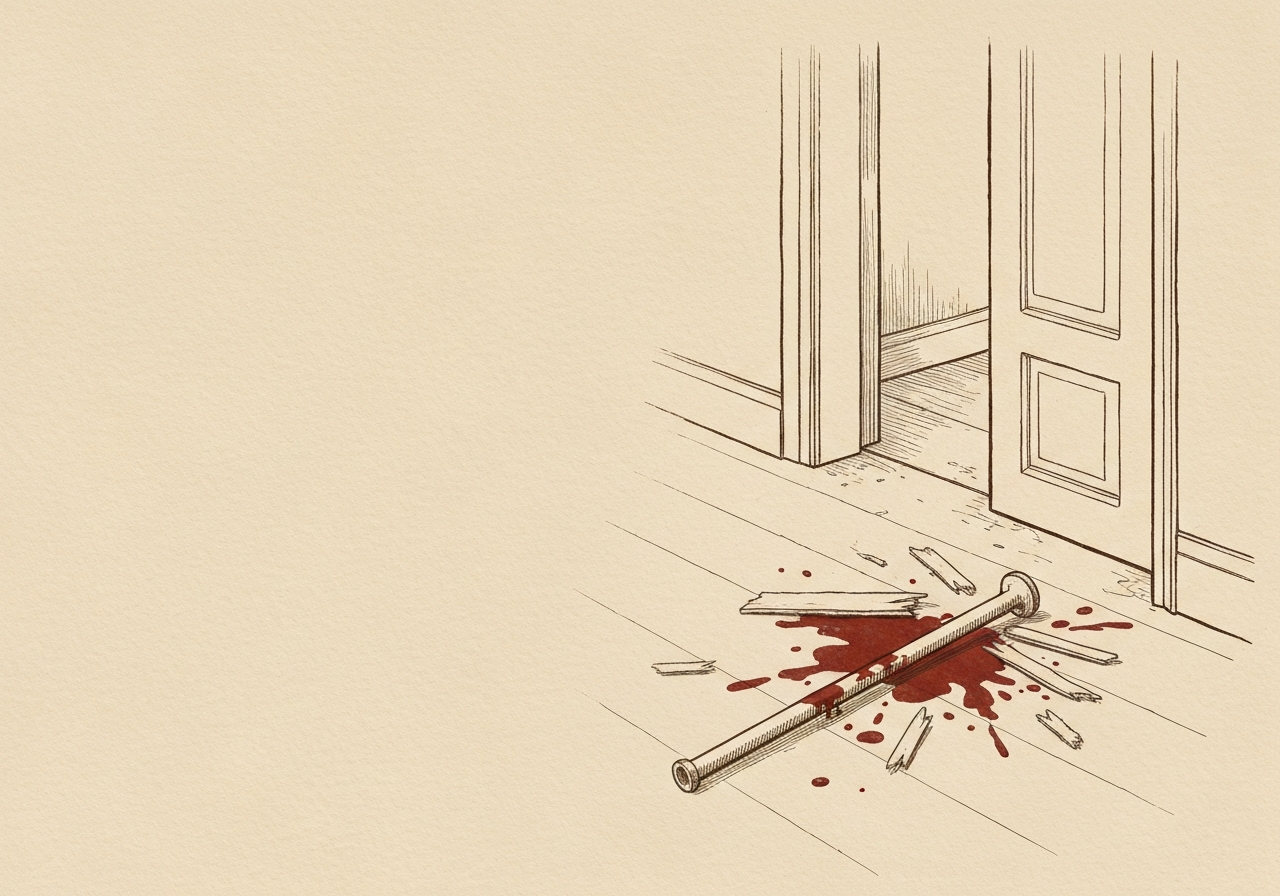
September 7, 2017. Sirsa, Haryana. The night was quiet until the sound of splintering wood shattered it. Fifteen men carrying lathis (iron rods), guns, and pistols broke into Sandeep Kumar's house. The attackers moved through the rooms, the heavy thud of blows mixing with the clatter of overturned furniture. Blood pooled on the floor. By the time the assault ended, Sandeep's father Hanuman was dead.
The police filed an FIR (a written complaint that starts a police investigation) naming seven attackers. But the chargesheet — the final police report listing accused persons — named only nine. Three men named in the FIR — Ramesh Gandhi, Kalu Jakhar, and Pawan — were placed in "column 2" of the chargesheet, a police notation meaning there wasn't enough evidence to charge them. The police file felt thin on these three, but the victim's son remembered everything.
The case could have ended there. But Sandeep Kumar had seen the attack. And when he took the witness stand as PW-9 (prosecution witness number 9), his voice steady in the silent courtroom, he described exactly what each of the three excluded men had done.
When the witness named the missing men
Under examination-in-chief (the first round of questioning by the prosecution), Sandeep gave a detailed account. Ramesh Gandhi carried a gun. Kalu Jakhar and Pawan wielded pistols. All three were part of the group that broke into his house and killed his father. The courtroom fell silent as he spoke, the only sound the scratching of the judge's pen.
This testimony changed everything. Under Section 319 of the Code of Criminal Procedure, 1973, a trial court can summon any person who appears guilty based on evidence that emerges during trial — even if the police left that person out. The provision exists for exactly this situation: when the investigation missed someone, but the trial reveals their involvement. The smell of old case files and the weight of legal tomes seemed to press down as the judge considered the application.
Sandeep filed an application under Section 319, asking the trial court to summon all three excluded men. The Additional Sessions Judge in Sirsa agreed. The court held that the eyewitness testimony of PW-9, assigning specific roles to each man, constituted sufficient prima facie (at first glance) evidence to bring them before the court.
Why the High Court let one man walk
Ramesh Gandhi fought back. He filed a revision petition (a request for the High Court to review the trial court's order) before the Punjab & Haryana High Court at Chandigarh.
The High Court agreed — but only for Ramesh Gandhi. It set aside the summoning order for him, giving two reasons. First, the police investigation had found him innocent. Second, Ramesh Gandhi had fled the spot during the attack, which the High Court interpreted as evidence that he was not involved.
The logic seemed straightforward: if the police cleared him, and he ran away, how could he be guilty? But this reasoning missed a critical legal point — one the Supreme Court would soon correct.
The Supreme Court: 'Too early for this'
Sandeep Kumar appealed to the Supreme Court. The case — Sandeep Kumar v. The State of Haryana & Anr. — was heard by a bench of Justice Sudhanshu Dhulia and Justice C.T. Ravikumar. The courtroom in New Delhi was quiet as the judges listened, the air thick with the tension of a case that had already travelled through two courts.
The Supreme Court reversed the High Court in a crisp judgment delivered on July 28, 2023. The core problem: the High Court had done something it was not supposed to do at the Section 319 stage. It had appreciated the evidence on its merits.
"Merit appreciation — including cross-examination and scrutiny — is to be done only during trial," the court held. At the stage of considering an application under Section 319, the court must not form an opinion on guilt or innocence. It must only ask: is there prima facie evidence from an eyewitness that assigns a role to this person? If yes, summon.
The Supreme Court relied on its own landmark judgment in Hardeep Singh v. State of Punjab (2014), which laid down the framework for Section 319. The test at this stage is stricter than at the cognizance stage (when the court first takes note of the case) but stops short of requiring evidence that would lead to conviction. It requires "stronger evidence than mere probability of complicity" — but the court should not decide whether that evidence will ultimately hold up in trial.
The High Court had crossed that line. By weighing the police investigation report against the eyewitness testimony, and by drawing an inference from Ramesh Gandhi's flight, the High Court had effectively decided his innocence before trial. That, the Supreme Court said, was impermissible.
Why running away doesn't mean innocence
There was another layer. The charges included Section 149 of the Indian Penal Code (every member of an unlawful assembly is guilty of an offence committed in prosecution of the common object). Under Section 149, the Supreme Court clarified, a person does not need to personally use a weapon or inflict injury. Mere membership of an unlawful assembly — a group of five or more persons with a common unlawful purpose — is enough.
This meant the High Court's reasoning was doubly flawed. Even if Ramesh Gandhi ran away during the attack, he could still be a member of the unlawful assembly that planned and executed the murder. Whether he actually participated, or whether he abandoned the common object, was a matter for trial — not for the Section 319 stage.
The Supreme Court also noted that the trial court had not acted mechanically. It had examined the deposition of PW-9, who assigned specific roles to Ramesh Gandhi as a member of the unlawful assembly carrying a gun. That was enough to cross the threshold for summoning.
What this means for trial courts and accused persons
The judgment restores a clear boundary. At the Section 319 stage, the court's job is limited: it must decide whether the evidence that has emerged during trial creates a prima facie case against a person not yet arraigned as accused. It cannot weigh that evidence against the police investigation report. It cannot draw inferences about innocence from behaviour like fleeing the spot. All of that belongs to trial.
The Supreme Court's reasoning also carries a practical lesson for trial courts. When an eyewitness like PW-9 gives specific testimony assigning roles to excluded persons, the court must treat that as sufficient to cross the Section 319 threshold — unless the testimony is so inherently incredible that no reasonable court could rely on it. The trial court in Sirsa had done exactly that. The High Court, by substituting its own view of the evidence, had overstepped.
For accused persons, the judgment is a reminder that the Section 319 stage is not the place to mount a full defence. The police investigation report, however favourable, does not bind the trial court. The accused's conduct during the offence, however ambiguous, does not prove innocence. The only question at this stage is whether the evidence that has emerged during trial — not before — creates a prima facie case.
The judgment also clarifies the relationship between Section 319 and Section 149 IPC. Since Section 149 does not require an overt act, a person can be summoned under Section 319 even if the witness does not describe them personally striking a blow or firing a weapon. Membership in the unlawful assembly, combined with evidence that the assembly committed the offence, is enough.
This is particularly important in cases of mob violence or group attacks, where individual roles may be difficult to pin down but the collective responsibility is clear. The Supreme Court's interpretation ensures that Section 319 does not become a tool for excluding persons who were part of the group but whose specific actions are not captured in the evidence.
THE PLAY: At the Section 319 stage, the court must ask only one question — does prima facie evidence from a witness assign a role to this person? If yes, summon. Everything else — the police investigation, the accused's conduct, the strength of the evidence — is for trial.
The Supreme Court set aside the High Court's order and directed that the trial proceed expeditiously. Ramesh Gandhi, Kalu Jakhar, and Pawan will now face trial alongside the nine already charged. Whether they are guilty or innocent is a question the trial court will answer — not at the summoning stage, but at the end, when the evidence has been fully tested and the arguments have been heard.
For Sandeep Kumar, the judgment means that his testimony as PW-9 will now be heard in full — not cut short by a procedural dismissal. The trial court will weigh his words against the cross-examination, the other evidence, and the arguments of counsel. That is how the system is meant to work: step by step, stage by stage, with each court respecting the boundaries of its role.
The Supreme Court's order was clear and final: the appeal is allowed, the High Court order is set aside, and the trial shall proceed in accordance with law, as expeditiously as possible. The case now returns to Sirsa, where a murder trial awaits its full complement of accused persons.