His High Court order didn't excuse 12 years of broken amenities.
The Telangana RERA bench ruled that a builder's obligation to deliver promised amenities under Section 14(3) is independent of High Court stays or unpaid maintenance dues, setting a precedent for allottees in incomplete projects.
12
years.
The Telangana RERA bench ruled that a builder's obligation to deliver promised amenities under Section 14(3) is independent of High Court stays or unpaid maintenance dues, setting a precedent for allottees in incomplete projects.
540 Flats, 12 Years, One Broken Promise: The Empire Meadows Judgment That Rewrote the Builder-Buyer Rulebook
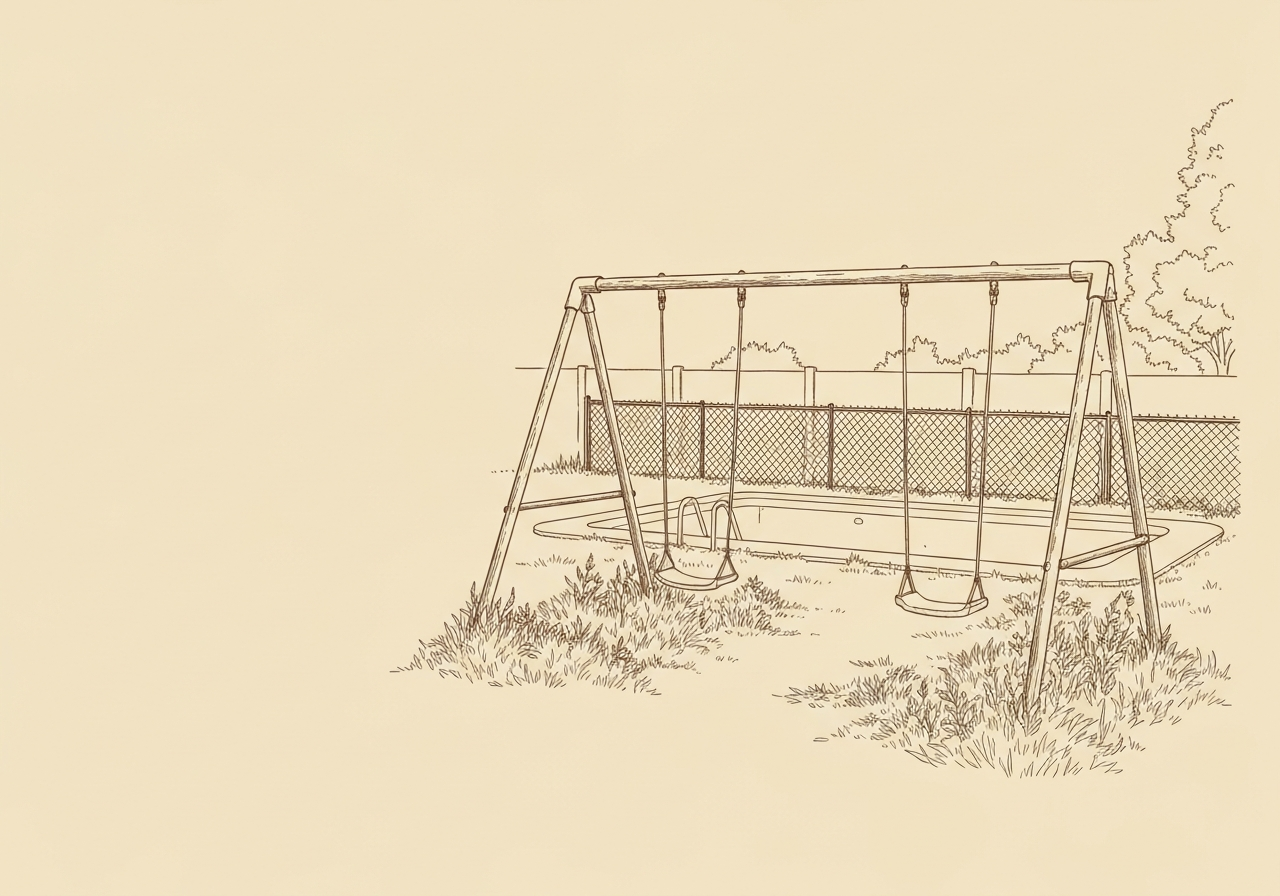
When Chandrashekar Laxmi Sudha and her fellow residents moved into Empire Meadows in Ameenpur, Sangareddy District, they thought they had bought a home. Instead, they bought a 12-year construction site. Over 540 flats across multiple blocks. A clubhouse that never opened. A swimming pool that stayed a blueprint. A drainage system that pumped sewage onto vacant land. And a builder who, when confronted, pointed to a High Court order and said: not my fault.
The Telangana State Real Estate Regulatory Authority (TS RERA), in a three-member bench led by Dr. N. Satyanarayana, IAS (Retd.), had to answer one question: when a builder collects full payment but delivers half a project, who pays the price?
What the residents actually paid for
The complaint, filed under Section 31 of the Real Estate (Regulation and Development) Act, 2016 read with Rule 34(1) of the Telangana RE(R&D) Rules, 2017, was not about non-delivery of flats. The flats existed. What was missing was everything else.
The residents alleged that the promoter, M/s Empire Meadows & Ors., had collected the full sale consideration but failed to deliver the promised amenities. The agreement of sale had promised a clubhouse, a swimming pool, a children's park, and proper security. None of it materialised. The drainage system was dysfunctional — sewage was being pumped to adjacent vacant land, creating a health hazard. Only two of seven borewells were functional. The water supplied to flush tanks was untreated and hazardous. Security barriers were missing. The builder had allegedly made undisclosed changes to the master plan and concealed a title dispute.
The residents wanted relief. They wanted the amenities delivered. They wanted compensation for the years of broken promises.
The builder's defence: a High Court order and unpaid dues
The builder did not deny the incomplete state of the project. Instead, it raised two defences. First, a status quo order passed by the High Court of Telangana in WP Nos. 6520/2018 and 11925/2019 had prevented construction activity for a period. That, the builder argued, was a force majeure event that excused the delay.
Second, the builder counterclaimed that the residents had not paid maintenance dues. The outstanding amount, the builder said, exceeded Rs. 2 crores. The builder argued that it could not be expected to complete amenities when the residents themselves were in default.
The bench had to weigh both sides. The residents had paid for their flats in full. The builder had collected that money. But the builder also had a legitimate claim for maintenance dues that the residents had not paid.
The witness rule the Supreme Court applied — wait, this is RERA
This is not a criminal case. There were no witnesses in the traditional sense. But the principle that the bench applied was the same: the party that makes an assertion must prove it. The residents brought evidence of the incomplete amenities, the dysfunctional drainage, the untreated water. The builder brought evidence of the High Court order and the unpaid maintenance dues.
The bench did not accept the force majeure defence wholesale. The High Court status quo order, the bench observed, was a temporary restraint. It did not excuse the builder from completing the project after the order was lifted. The builder had had years — over a decade — to finish the amenities. The status quo order was not a permanent bar.
But the bench also did not ignore the builder's counterclaim. The residents had not paid maintenance dues. That was a fact. The builder was entitled to recover those dues, with interest.
What Section 14(3) actually says
The bench reproduced the exact text of Section 14(3) of the RE(R&D) Act. It reads: "In case any structural defect or any other defect in workmanship, quality or provision of services or any other obligations of the promoter as per the agreement for sale relating to such development is brought to the notice of the promoter within a period of five years by the allottee from the date of handing over possession, it shall be the duty of the promoter to rectify such defects without further charge, within thirty days."
The bench applied this provision to the facts. The deck slab leakages, the dysfunctional drainage, the untreated water supply — these were defects in workmanship and provision of services. The builder was obligated to rectify them within thirty days, without charging the residents.
This is the core of the judgment. The builder cannot collect money for a clubhouse and then say "the High Court stopped me." The builder cannot collect money for a swimming pool and then say "the residents didn't pay maintenance." The obligation under Section 14(3) is independent of the residents' payment of maintenance dues. The builder must rectify defects. Period.
The amenity block: a separate obligation
The bench also addressed the amenity block — the clubhouse, common facilities, and infrastructure. The sale consideration collected from the allottees encompassed these amenities. The builder was obligated to complete and hand over the amenity block to the association of allottees. The bench directed the builder to complete all pending amenity block tasks and transfer possession to the association within 60 days.
This is a significant direction. It means that the builder cannot hold the amenity block hostage. Once the allottees have paid for it, the builder must deliver it. The association of allottees, once formed, takes over the management and maintenance of the common areas.
The temple problem: a practical solution
One of the more unusual issues in the case was a temple situated within the project premises. Local residents, who were not allottees, used the temple. The allottees complained that this caused disruption and security concerns.
The bench did not order the temple to be removed. Instead, it directed the builder to facilitate a separate entrance for local residents to access the temple, in a manner that does not disrupt the peace of the allottees. This is a practical approach. It balances the community's right to access a pre-existing religious structure with the allottees' right to privacy and security. It sets a template for other RERA authorities dealing with similar issues.
The rocky terrain: from liability to asset
The bench also observed that the rocky terrain, which constituted part of the layout open space, could be transformed into an aesthetically pleasing landscape. The builder agreed to this during the hearing. The bench directed the builder to develop the rocky area into a landscaped area and deliver it to the association.
This is an obiter dictum — not strictly necessary for the decision — but it signals that RERA authorities may direct developers to develop unusable open spaces into functional landscaped areas as part of project completion obligations. For builders, this means that leaving open spaces barren is no longer an option. For allottees, it means that the open space they paid for must be usable.
The maintenance dues: a two-way street
The bench did not let the residents off the hook. The builder was entitled to collect outstanding maintenance dues along with interest for delayed payment. The bench directed the residents to pay maintenance expenses. The builder was empowered to collect the dues with interest.
This is a balanced approach. The builder must deliver the amenities. The residents must pay for the maintenance of those amenities. Neither party can hold the other hostage.
Fresh elections: the association takes over
The bench also directed the builder to conduct fresh elections for the formation of the association of allottees within 60 days. This is critical. Without a properly elected association, the allottees cannot manage the common areas, cannot collect maintenance dues, and cannot hold the builder accountable. The bench ensured that the association would be formed and would take over the management of the project.
The bottom line: what this means for you
THE PLAY: If you are an allottee in a RERA-registered project where the builder has collected full payment but not delivered promised amenities, file a complaint under Section 31 read with Section 14(3). The builder cannot hide behind a High Court order or your unpaid maintenance dues. The obligation to rectify defects is independent and time-bound — 30 days, no charge.
For builders, the message is clear: collect your maintenance dues, but do not use them as a shield to avoid your obligations under Section 14(3). The RERA authority will hold you to your promises. The amenity block must be delivered. The defects must be rectified. The open spaces must be developed. And if you don't comply, Section 63 of the Act provides for penalties.
For allottees, the message is equally clear: pay your maintenance dues. The builder has a legitimate claim. But do not let the builder use your default as an excuse to avoid its own obligations. File your complaint. The RERA authority will balance the equities.
For CFOs and founders in the real estate sector, this judgment is a warning. The RERA regime is not a paper tiger. The authority can and will issue directions under Section 37. It can and will order specific performance. It can and will impose penalties under Section 63. The days of collecting full payment and delivering half a project are over.
The Empire Meadows judgment is a template. It shows how a RERA authority can balance the rights of allottees and builders. It shows that the authority will not accept force majeure defences that are not genuine. It shows that the authority will not allow builders to hold amenities hostage. And it shows that the authority will not let allottees avoid their maintenance obligations.
The bottom line: pay what you owe, deliver what you promised, and if you don't, the RERA authority will make you.