Insurer cleared by law, but Supreme Court made it pay anyway.
The Supreme Court upheld the rule that an uninsured trailer shifts liability to the owner, but used its constitutional power to force the insurer to pay first and recover later, sparing a young amputee from destitution.
100
%
The Supreme Court upheld the rule that an uninsured trailer shifts liability to the owner, but used its constitutional power to force the insurer to pay first and recover later, sparing a young amputee from destitution.
A young woman, a tractor, a trailer, and a life altered forever
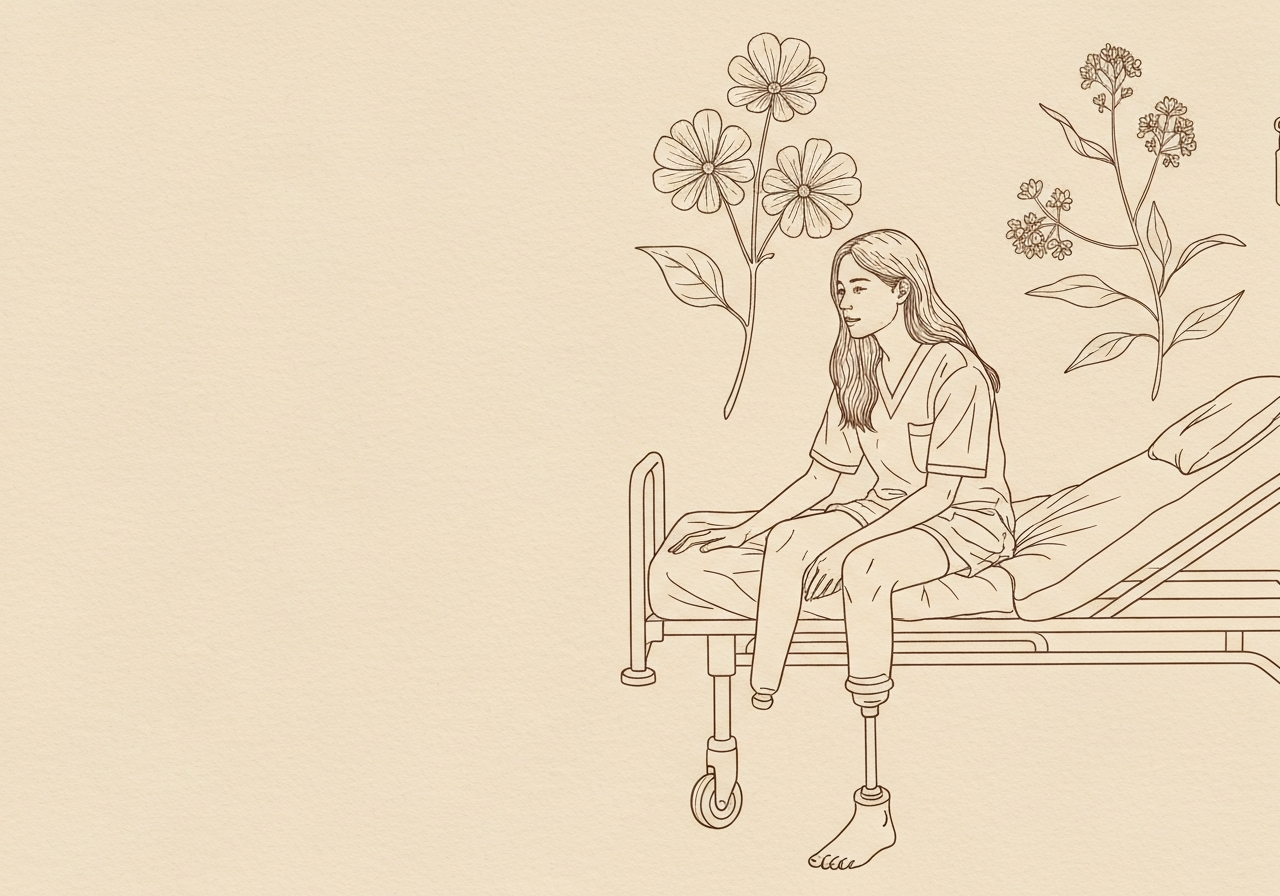
Dhondubai was about twenty years old. She worked as a labourer. One day, she was travelling in a trailer attached to a tractor when the accident happened. The injuries were catastrophic. Her left lower limb had to be amputated above the knee. The doctors assessed her disability at 100%. She filed a motor accident claim before the Motor Accidents Claim Tribunal (MACT). The tribunal awarded her compensation with interest at 6% per annum. She appealed. The High Court of Judicature at Bombay, Bench at Aurangabad, enhanced the compensation with interest at 9% per annum. But then came the blow: the High Court exonerated the insurance company. The reason? The trailer she was sitting in was not insured. Only the tractor pulling it had a policy. The insurance company walked away. Dhondubai was left with a paper award against a vehicle owner from whom she could not realistically recover a single rupee. She approached the Supreme Court of India.
What the law actually says about tractors and trailers
The legal position is settled. When a tractor and trailer are involved in an accident, both the tractor and the trailer must be separately insured. The Supreme Court, in this judgment authored by Justice A.S. Bopanna with Justice Prashant Kumar Mishra concurring, affirmed that principle. The Court held that where a claimant was travelling in an uninsured trailer, liability cannot be fastened on the insurer of the tractor alone. The High Court's exoneration of the insurance company was legally correct. The insurer could not be made to pay under the policy because the risk it covered — the tractor — was not the vehicle in which the claimant was travelling. The trailer was a separate vehicle, and it had no insurance cover.
That is the black-letter law. And the Supreme Court did not disturb it.
The problem with a legally correct but practically impossible outcome
But here is the problem. Dhondubai was a young woman with a 100% disability. She had lost her leg. Her marriage prospects were destroyed. She could not lead a normal life. The vehicle owner was the person who was legally liable to pay the compensation. But the Court noted that the claimant had no realistic prospect of recovering the money from the owner. The owner could be untraceable, insolvent, or simply unwilling to pay. The award would remain a piece of paper. The claimant would be left destitute.
The Supreme Court faced a classic tension: legal correctness versus practical justice. The insurer was not liable. The owner was liable but could not pay. The claimant was a young woman with a life-altering disability who needed the money to survive. What does the Court do?
The power the Supreme Court used — and why it matters
The Court invoked Article 142 of the Constitution of India. That provision empowers the Supreme Court to pass any order necessary to do complete justice in any cause or matter pending before it. It is a constitutional safety valve. It allows the Court to step beyond the strict legal position when the facts demand it.
The Court followed its own precedent in Oriental Insurance Company Ltd. v. Brij Mohan & Ors., reported in (2007) 7 SCC 56. In that case, the Court had faced a similar situation: a trailer was uninsured, the claimant was in difficult circumstances, and the Court directed the insurer to pay and recover from the owner. The Supreme Court applied the same logic here.
The operative order was clear: the respondent-Insurance Company shall pay the amount awarded by the High Court as compensation with the accrued interest and recover the same from the owner of the vehicle. The amount was to be deposited before the MACT within six weeks from the date of receipt of a copy of the judgment. Once deposited, the amount would be disbursed to the claimant. The appeals were disposed of.
What this means for advocates, CFOs, and founders
For advocates, this judgment is a reminder that legal correctness is not always the end of the story. When you represent a claimant who has suffered catastrophic injury and the insurer is technically not liable, you must plead for the exercise of Article 142 power. You must place on record the claimant's age, disability, loss of marriage prospects, and inability to recover from the owner. The Court will consider these factors. The precedent of Brij Mohan is now reinforced. You have a template.
For CFOs and risk managers in the transport and logistics industry, this judgment is a warning. If your fleet uses trailers attached to tractors, you must insure each trailer separately. The tractor's insurance policy will not cover the trailer. If a person is injured while travelling in an uninsured trailer, the insurer will be exonerated. You will be personally liable for the compensation. And if the Supreme Court directs the insurer to pay and recover from you, you will face a recovery proceeding. The cost of insurance is negligible compared to the cost of a claim plus interest at 9% per annum.
For startup founders who operate delivery vehicles, agricultural equipment, or any fleet that uses detachable units, the lesson is the same: every unit that can carry a person or goods must have its own insurance policy. Do not assume that the primary vehicle's policy covers everything attached to it. The law requires separate insurance for each vehicle. Ignorance is not a defence.
The obiter that may shape future cases
The Court made an observation that was not strictly necessary for the decision but may be cited in future cases. The Court noted that apart from 100% disability, there was prejudice to the marriage prospects and to the ability to lead a normal life for the claimant. This observation expands the scope of compassionate factors that courts may consider when invoking Article 142 in motor accident cases, particularly for young female claimants. Advocates should note this. If you represent a young woman who has suffered a permanent disability, you must specifically plead the impact on her marriage prospects and her ability to live a normal life. The Court has signalled that these factors matter.
The bottom line
This judgment does not change the law on insurance. It reaffirms it. But it also demonstrates that the Supreme Court will not allow legal technicalities to defeat the ends of justice when a claimant is in extreme hardship. The insurer pays first, then recovers from the owner. The claimant gets the money. The owner bears the ultimate liability. That is the balance the Court struck.
THE PLAY: When representing a claimant with catastrophic injury where the insurer is technically not liable, specifically plead the claimant's age, disability, loss of marriage prospects, and inability to recover from the owner, and cite Oriental Insurance Company Ltd. v. Brij Mohan & Ors. (2007) 7 SCC 56 to invoke Article 142 for a pay-and-recover direction.
For the vehicle owner, the message is simple: insure every unit separately. For the insurer, the message is equally simple: you may be directed to pay even when you are not liable, but you have the right to recover. For the claimant, the message is hopeful: the law may not always be on your side, but the Constitution is.