It built homes for its own members. The tax department still called it a service.
A cooperative housing society built homes for its own members and faced a service tax demand until the principle of mutuality proved there was no provider-recipient relationship.
2009
the year.
A cooperative housing society built homes for its own members and faced a service tax demand until the principle of mutuality proved there was no provider-recipient relationship.
When a Co-op Society Builds for Its Members, Is It a ‘Service’?
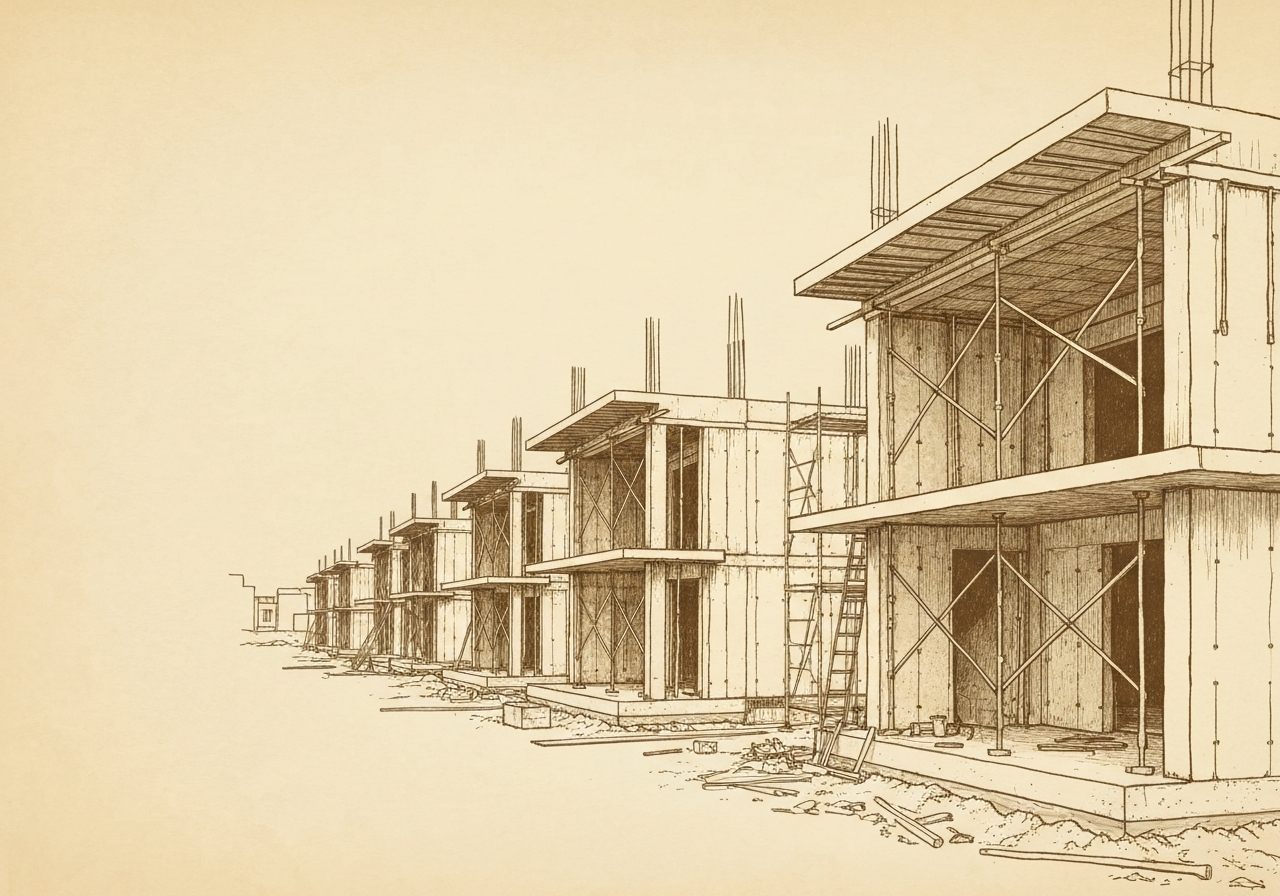
Shantanu Co-Operative Housing Society Limited built homes for its own members. The tax department saw a taxable service. The society saw a mutual arrangement. The Commissioner of Central Excise & ST, Ahmedabad, confirmed a demand for service tax, with interest and penalties. The society appealed to CESTAT. The question was deceptively simple: can a cooperative society be a “service provider” to its own members when it constructs residential units for them?
The stakes were high. For the society, it meant a tax liability that could cripple its finances. For the revenue, it was a test of the reach of the “Construction of Complex Service” provision. For every cooperative housing society in India, the answer would determine whether their core activity—building homes for members—attracts service tax.
The Commissioner’s Order That Started It All
The story begins with an Order-in-Original (OIO) dated 15 February 2012, passed by the Commissioner, Service Tax, Ahmedabad. The Commissioner confirmed the service tax demand against Shantanu Co-Operative Housing Society Limited under Section 65(105)(zzzh) of the Finance Act, 1994—the provision that defines “Construction of Complex Service.” The Commissioner held that the society, by constructing residential complexes for its members, was providing a taxable service. Interest and penalties followed.
The society disagreed. It argued that the relationship between a cooperative society and its members is one of mutuality. There is no separate “service provider” and “service recipient.” The society and its members are, in essence, the same entity. If there is no service provider-service recipient relationship, there can be no service tax.
The Precedent That Changed Everything
The society’s appeal landed before the CESTAT, West Zonal Bench, Ahmedabad. The Bench—comprising Justice Ramesh Nair (Author) and Mr. C.L. Mahar (Concurring)—did not have to start from scratch. An identical issue had already been decided.
In M/s. Shrinandnagar-IV Co-operative Housing Society Limited (CESTAT Order No. A/1346-1361/WZB/AHD/2009 dated 03.07.2009), the Tribunal had held that where a cooperative society constructs residential complexes for its members without engaging an external contractor, the transaction is not taxable under “Construction of Complex Service.” The reasoning was clear: the principle of mutuality negates the service provider-service recipient relationship.
The revenue challenged that decision. The Gujarat High Court, in Commissioner v. Shrinandnagar-IV Co-operative Housing Society Limited (Tax Appeal No. 382 of 2010, order dated 30.06.2011), upheld the Tribunal’s order. The High Court found no question of law. The revenue accepted the decision. The legal position was settled.
What the High Court Actually Said
The CESTAT Bench reproduced the Gujarat High Court’s order in its judgment. The High Court had noted that the Explanation to Section 65(105)(zzzh)—which deems construction intended for sale as a service provided by the builder to the buyer—was introduced later. The High Court held that this Explanation was prospective in nature. It could not apply to past taxing events. There was no indication that the amendment was merely declaratory or clarificatory.
The High Court also referenced M/s. Sujal Developers, where a Division Bench had answered similar questions against the revenue, holding that a developer not having provided any services was not liable to pay service tax.
The High Court’s order was clear: the Tribunal’s decision in Shrinandnagar-IV was correct. The revenue’s appeal was dismissed.
The Tribunal’s Decision: Following the Settled Path
Faced with this binding precedent, the CESTAT Bench had little difficulty. The issue in Shantanu’s case was identical. The society had constructed residential complexes for its members. No external contractor was engaged. The principle of mutuality applied. There was no service provider-service recipient relationship.
The Bench observed that the legal position was settled. The revenue had accepted the Gujarat High Court’s decision. There was no reason to deviate.
The Tribunal set aside the impugned order. The appeal was allowed. The society was entitled to consequential relief, if any, in accordance with law.
THE PLAY: If you are a cooperative housing society that constructed residential units for your members without engaging an external contractor, you can argue that the principle of mutuality negates the service provider-service recipient relationship, and the transaction does not attract service tax under “Construction of Complex Service.”
The Doctrine That Mattered: Mutuality and the Service Tax
The core principle in this case is the doctrine of mutuality. In tax law, a person cannot be both the service provider and the service recipient. A cooperative society and its members are, in essence, the same entity. When the society builds homes for its members, it is not providing a service to a third party. It is acting for its own members, in a mutual arrangement.
This principle is not new. It has been applied in income tax cases involving mutual societies and clubs. But its application to service tax on construction activities was contested. The Shrinandnagar-IV line of cases settled the position: the principle of mutuality applies to cooperative housing societies constructing for their members.
The Explanation to Section 65(105)(zzzh)—which deems construction intended for sale as a service—does not change this position for past periods. The Explanation is prospective. It cannot be applied retrospectively to transactions that occurred before its introduction.
Why This Matters in Practice
For advocates, this case is a reminder of the power of settled precedent. The revenue had accepted the Gujarat High Court’s decision in Shrinandnagar-IV. The CESTAT Bench followed it. The society’s appeal was allowed without a lengthy re-litigation of the same issue.
For CFOs and founders of cooperative housing societies, this case provides clarity. If your society constructed residential units for its members without engaging an external contractor, you may not be liable for service tax under “Construction of Complex Service.” The principle of mutuality protects you.
But there is a caveat. The Explanation to Section 65(105)(zzzh) is now in force. For transactions after its introduction, the position may be different. The Explanation deems construction intended for sale as a service provided by the builder to the buyer. Whether this Explanation applies to cooperative societies is a question that may need to be tested in future cases.
For now, the settled position is clear: cooperative societies constructing for their members, without an external contractor, are not liable for service tax under “Construction of Complex Service” for pre-Explanation periods.
The Bottom Line
If you are a cooperative housing society facing a service tax demand for constructing residential units for your members, cite Shrinandnagar-IV and the Gujarat High Court’s decision. The principle of mutuality is your shield. The revenue cannot tax a transaction where there is no service provider-service recipient relationship.