Marriage dead for 40 years. Both parties 80+. Court still said no to divorce.
The Supreme Court refused to dissolve a marriage dead for four decades, ruling that Article 142's power to do complete justice cannot override a spouse's lifelong commitment and personal sentiment against divorce.
27
years.
The Supreme Court refused to dissolve a marriage dead for four decades, ruling that Article 142's power to do complete justice cannot override a spouse's lifelong commitment and personal sentiment against divorce.
An 89-year-old husband, an 82-year-old wife, and a marriage that refused to end
When Dr. Nirmal Singh Panesar, a retired Wing Commander, walked into the Supreme Court in 2023, he was 89 years old. He had been fighting for a divorce for 27 years. His wife, Mrs. Paramjit Kaur Panesar, was 82. She had one thing to say: she did not want to die with the stigma of being a divorcee. She was still willing to care for him.
The Court had to decide whether to end a marriage that had been dead in every practical sense for nearly four decades — or to respect a woman's lifelong commitment to a bond she considered sacred. The stakes were not just legal. They were existential.
The marriage that broke over a transfer
Dr. Panesar and Mrs. Paramjit Kaur married in 1963 under Sikh rites. They had three children. For about 21 years, they lived together as a family. Then, in 1984, the husband was transferred to Madras. The wife refused to join him. She chose to stay with the children.
That refusal became the fault line. In 1996, Dr. Panesar filed a divorce petition in the District Court, Chandigarh. He alleged cruelty and desertion under Section 13(1)(ia) and Section 13(1)(ib) of the Hindu Marriage Act, 1955. The District Court agreed. On February 5, 2000, it granted a decree of divorce.
But the wife appealed. The Single Bench of the Punjab & Haryana High Court reversed the decree on December 21, 2000, holding that the husband had failed to prove cruelty and desertion. The Division Bench confirmed that finding on February 18, 2009. The husband then approached the Supreme Court.
What the husband argued — and what he couldn't prove
Dr. Panesar's case rested on two grounds. First, cruelty. He argued that his wife's refusal to join him at Madras, and her general conduct, amounted to mental cruelty. He relied on Naveen Kohli v. Neelu Kohli (2006) 4 SCC 558, where the Supreme Court had summarised the principles of cruelty under the Hindu Marriage Act. That judgment held that cruelty could be mental or physical, intentional or unintentional, and must be assessed considering the type of life the parties were accustomed to.
Second, desertion. He argued that his wife had abandoned him without reasonable cause and with the intention to desert — the animus deserendi. The source does not specify which authorities he cited for the four-fold test of desertion.
The problem was that the wife had a perfectly reasonable explanation. She had stayed back to look after the children. The couple had lived together for 21 years before the transfer. There was no evidence that she had abandoned the marriage. The High Court had found that the husband failed to prove either cruelty or desertion. The Supreme Court saw no reason to disturb those concurrent findings.
The Article 142 gambit — and why it failed
Recognising the weakness of his statutory case, Dr. Panesar made an alternative argument. He asked the Supreme Court to dissolve the marriage under Article 142 of the Constitution — the power to do "complete justice" in any cause or matter. He relied on the Constitution Bench ruling in Shilpa Sailesh v. Varun Sreenivasan (2023 SCC Online SC 544), which held that the Supreme Court can dissolve marriages on the ground of irretrievable breakdown even when one spouse opposes, provided the discretion is exercised with great care and caution.
This was a bold move. The marriage had been dead for decades. The parties had lived apart since 1984. The husband was 89. The wife was 82. On paper, it looked like a textbook case for an Article 142 divorce.
But the Court said no.
Why the Supreme Court refused to grant divorce under Article 142
Justice Bela M. Trivedi, writing for the Bench, acknowledged the power under Article 142. She accepted that Shilpa Sailesh permitted such exercise. But she drew a sharp line: the discretion must not be used as a "strait-jacket formula."
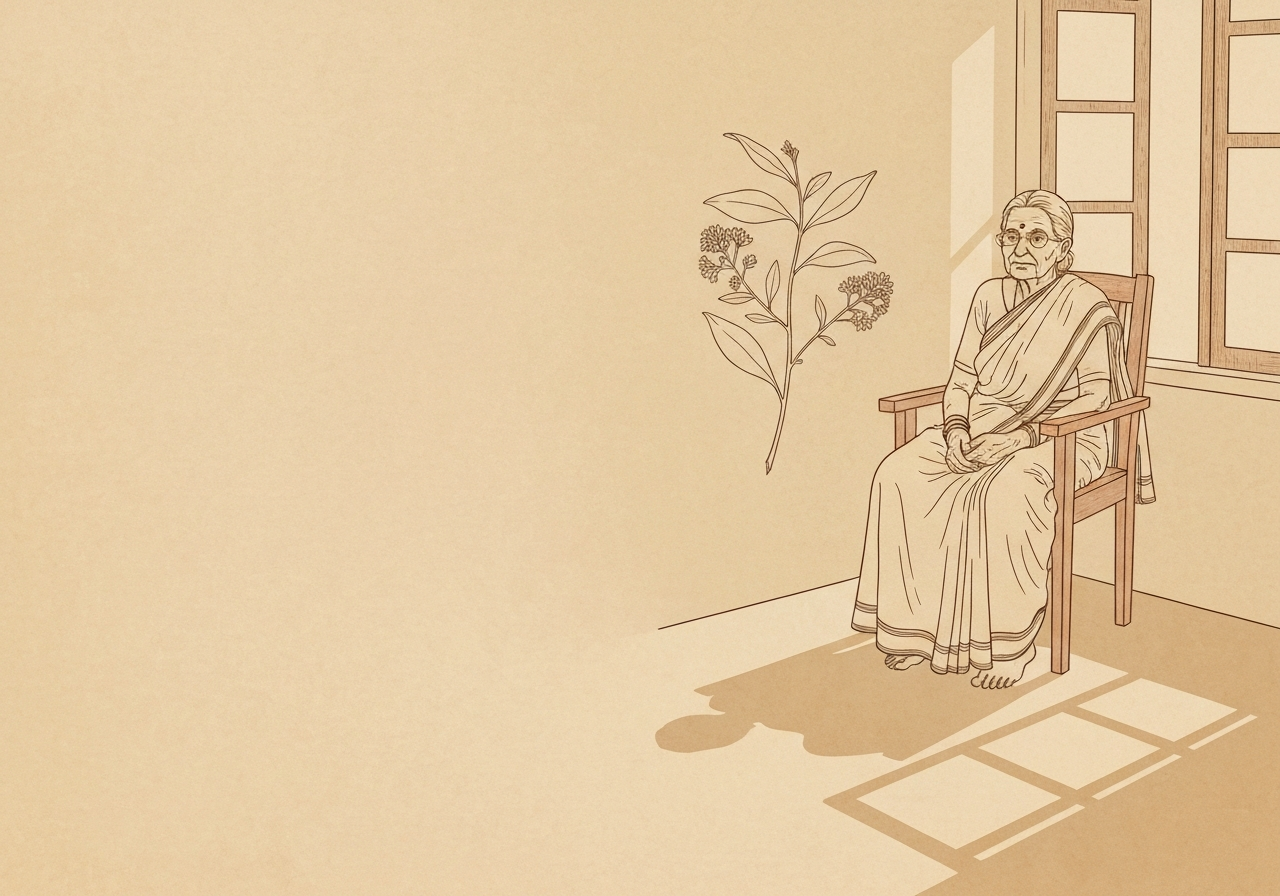
The Court noted that the wife had maintained the marital bond for her entire life. She had expressed, in clear terms, that she did not want to die with the stigma of being a divorcee. She was still willing to care for her husband. Granting a divorce in these circumstances, the Court held, would not constitute "complete justice." It would cause injustice to the wife.
The Bench observed:
THE TEST: The discretion under Article 142 to dissolve a marriage on irretrievable breakdown must not be exercised as a strait-jacket formula. Where the opposing spouse has maintained the marital bond lifelong, is willing to continue caring for the other spouse, and expresses deep personal sentiment against divorce, granting dissolution would not constitute 'complete justice' but would cause injustice to the opposing spouse.
The Court also made a broader observation about the institution of marriage in Indian society. It said marriage is considered pious, spiritual, and an invaluable emotional life-net. It is governed not only by law but by social norms. Therefore, "irretrievable breakdown of marriage" should not be accepted as a strait-jacket formula for divorce under Article 142.
On the question of stigma, the Court acknowledged that in contemporary society, being a divorcee may not constitute a stigma. But it added a crucial caveat: the court must be concerned with the individual respondent's own sentiment on the matter. The wife felt the stigma. That was enough.
What this means for practitioners
This judgment is a significant counter-weight to the expansive reading of Article 142 powers in Shilpa Sailesh. It tells us that the Supreme Court's discretion to dissolve marriages on irretrievable breakdown is not automatic. The Court will look at the facts of each case, and the subjective sentiments of the opposing spouse will be a relevant consideration.
For advocates, the takeaway is clear: if you are seeking a divorce under Article 142, you must do more than show that the marriage is dead. You must also show that granting the divorce would do "complete justice" to both parties, not just to your client. If the opposing spouse has maintained the marital bond and expresses a genuine desire to continue, the Court may well refuse to exercise its discretion.
For CFOs and founders, the lesson is about the limits of legal power. Even the Supreme Court's plenary power under Article 142 has boundaries. It cannot be used to override the fundamental values of the institution of marriage, especially when one party has held onto that institution for a lifetime.
The bottom line
The Supreme Court dismissed the appeal. The marriage survived. Dr. Nirmal Singh Panesar and Mrs. Paramjit Kaur Panesar remain husband and wife — not because the law forced them to, but because the Court refused to use its extraordinary power to end a bond that one party still considered sacred.