Mother kept child in India after US surgery. Court's ruling on privacy shocks many.
Supreme Court says a writ court cannot force a parent to leave India with the child—that violates Article 21. But the child's welfare remains paramount.
2
years.
Supreme Court says a writ court cannot force a parent to leave India with the child—that violates Article 21. But the child's welfare remains paramount.
She brought her child to India for a kidney surgery. Then she didn't go back. The father filed habeas corpus. The High Court ordered her to return to the US with the child—or hand over custody. The Supreme Court just said: that order violated her right to privacy.
In January 2022, a bench of Justice Abhay S. Oka and Justice Ajay Rastogi delivered a judgment that stunned many family law practitioners. It wasn't about who got the child. It was about whether a court could force a parent to leave the country at all. The courtroom fell silent as the bench read out the operative order—a silence broken only by the rustle of paper as the mother's counsel turned the pages of the judgment file.
When the surgery ended but the mother stayed
The case, Vasudha Sethi & Ors. v. Kiran V. Bhaskar & Anr., began with a child born in the USA in 2016. The child needed a kidney surgery. Both parents—the wife Vasudha, an Indian citizen, and the husband Kiran, a permanent US resident—agreed that she would bring the child to India for treatment between February and September 2019.
The surgery happened. The child recovered. But Vasudha did not return to the US by the agreed date. On the desk of the judge in the US Circuit Court of Benton County, Arkansas, an ex-parte order lay dated 3 February 2020—a decision made by hearing only one side because the other side did not show up—granting primary custody to the father. Vasudha was not present at that hearing.
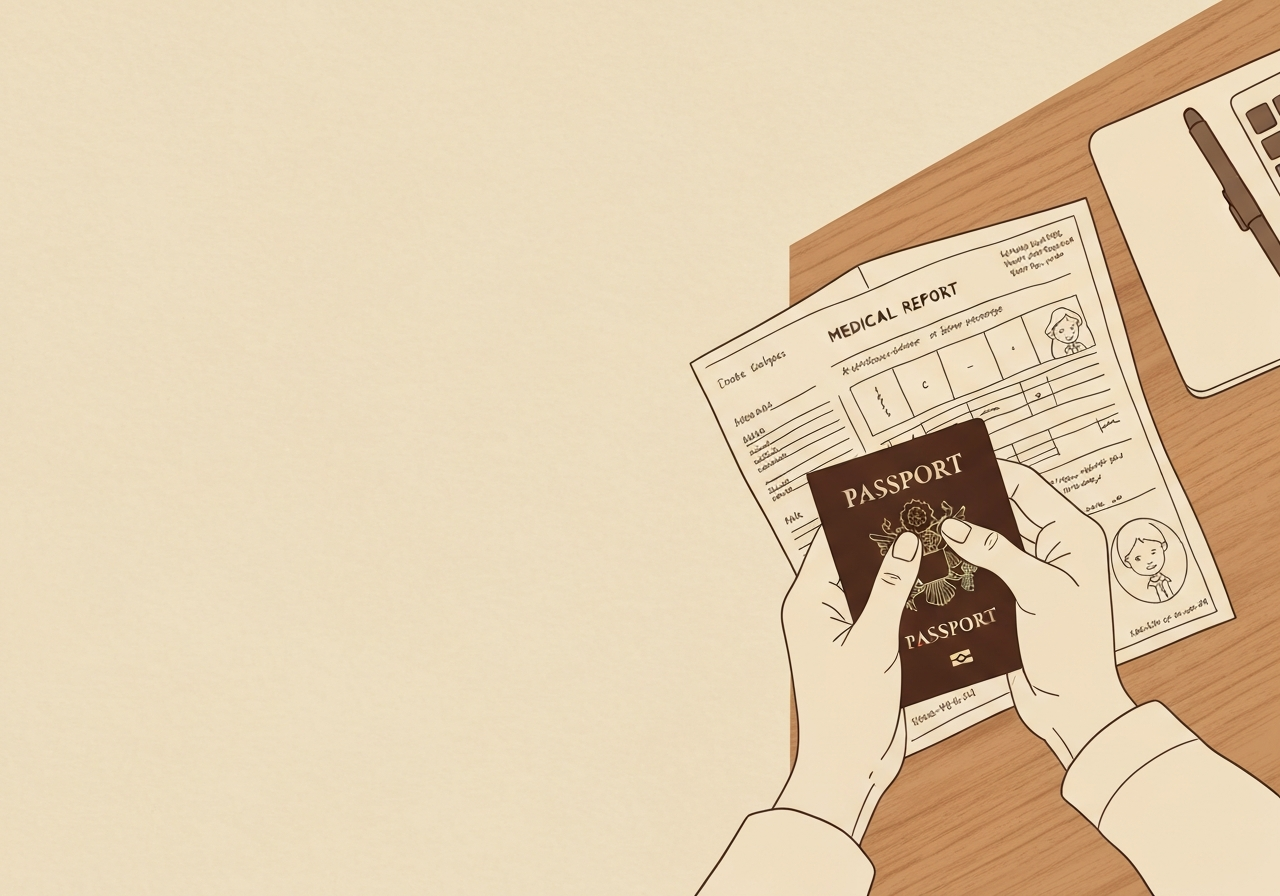
Back in India, Kiran filed a habeas corpus petition—a court order that asks: where is this person, and is their detention illegal—before the Punjab & Haryana High Court at Chandigarh. He argued that the mother was illegally detaining the child in India. In August 2021, the High Court agreed. It directed Vasudha to return to the US with the child—or hand over custody to the father. The mother's passport sat heavy in her hand as she read the order; the child's medical report, showing a successful recovery, lay beside it.
The question the High Court didn't ask
Vasudha appealed to the Supreme Court. Her argument was simple: the High Court had no power to force her to leave India. That, she said, violated her right to personal liberty under Article 21 of the Constitution—the fundamental right to life and personal liberty, which includes the right to choose where to live.
The father's position was equally straightforward: the child was a US citizen. Both parents had agreed to return after treatment. The mother broke that agreement. The child's welfare required returning to the US where the father had a custody order.
But the Supreme Court saw a deeper problem. The High Court had not asked the mother whether she was willing to go to the US. It had simply ordered her to go. And if she refused, it said, she must lose custody. The bench noted that the High Court had applied summary jurisdiction—a quick decision without full trial—without considering the mother's fundamental rights.
Why the right to privacy stopped the repatriation order
The bench turned to the landmark privacy judgment in K.S. Puttaswamy v. Union of India (2017), which declared the right to privacy a fundamental right under Article 21. The court asked: can a writ court force a parent to leave the country?
The answer was no.
The Supreme Court held that a direction compelling a parent to go abroad with the child offends the parent's right to privacy. The parent must be given an option, not a command. The High Court's order—"return to USA with child or hand over custody"—was effectively a compulsion. It gave the mother no real choice. The bench observed, in its reasoning, that the right to privacy under Article 21 includes the right to decide where to reside, and a court cannot force a parent to abandon that right.
But the court did not stop there. It also examined the welfare of the child under Section 13(1) of the Hindu Minority and Guardianship Act, 1956—the principle that the child's welfare is the most important consideration in any custody decision. The bench reaffirmed that the individual or personal rights of parents are irrelevant when weighed against the child's welfare. The two principles—parental privacy and child welfare—had to be balanced.
The court also considered Section 6(a) of the same Act, which defines the natural guardian of a minor Hindu—in this case, the father, but the court noted that the mother is equally entitled to custody in the child's best interest. The bench examined the procedural vehicle of Article 226 of the Constitution—the power to issue writs including habeas corpus—and held that this power, while broad, cannot be used to violate fundamental rights.
The precedents that guided the court
The Supreme Court relied on a line of precedents to shape its reasoning. In Nithya Anand Raghavan v. State (NCT of Delhi) (2017) and Kanika Goel v. State of Delhi (2018), the court had laid down binding parameters for how Indian courts should handle habeas corpus petitions involving children taken abroad by one parent. These cases established that the welfare of the child is paramount, and that a writ court must examine the child's best interests before ordering repatriation.
In Prateek Gupta v. Shilpi Gupta (2018) and Yashita Sahu v. State of Rajasthan (2020), the court had applied these same principles to different factual scenarios. The bench in Vasudha Sethi clarified that Yashita and Lahari Sakhamuri v. Sobhan Kodali (2019) had not departed from the Nithya and Kanika framework—they had merely applied the same law to different facts.
The court also cited Smt. Surinder Kaur Sandhu v. Harbax Singh Sandhu (1984) and Elizabeth Dinshaw v. Arvand M. Dinshaw (1987), both of which dealt with the repatriation of children in custody disputes. These older cases reinforced the principle that the child's welfare is the paramount consideration, but the court now added a constitutional dimension: the parent's right to privacy cannot be sacrificed in the process.
What the Supreme Court actually did
The court partly allowed Vasudha's appeal. It set aside the High Court's direction compelling her to go to the US. Instead, it gave her a choice: she could accompany the child to the US voluntarily. If she chose not to go, the custody arrangements would be made keeping the child's welfare paramount. The bench also left open the possibility of applying Article 14 read with Article 15(3) of the Constitution—equality and special provisions for women—though it did not decide that question in this case.
The operative order was clear: the mother's right to privacy under Article 21 had been violated by the High Court's compulsion. The parameters from Nithya and Kanika were reaffirmed as binding. The child's welfare remained the paramount consideration under Section 13(1) of the Hindu Minority and Guardianship Act, 1956, but the means of achieving that welfare must respect the parent's fundamental rights.
The privacy principle that changes how courts approach NRI custody
For practitioners, this judgment does two things. First, it inserts a constitutional privacy check into every repatriation order. A writ court cannot simply order a parent to leave India. It must first ask the parent if they are willing to go. If they are not, the court must find another way to serve the child's welfare—without forcing the parent to abandon their right to live in India.
Second, the judgment does not dilute the welfare principle. The child's best interest remains the paramount consideration. But the court has now said that the means of achieving that welfare must respect the parent's fundamental rights. The bench noted that the High Court had not considered the mother's willingness to return, and that this omission was fatal to the order.
THE PLAY: In any habeas corpus petition involving a child taken abroad by one parent, the court must first ask the parent whether they are willing to return—and if they refuse, the court cannot compel repatriation; it must instead craft a custody arrangement that prioritises the child's welfare without violating the parent's right to privacy.
The child's kidney surgery saved one life. The Supreme Court's judgment may have saved another—the mother's right to choose where she lives. The file on the bench, thin but weighty, contained a lesson that will echo in every NRI custody case to come: fundamental rights are not suspended at the border.