NIA's conspiracy charge hits a wall: old law's missing stamp
The agency filed a chargesheet for a foiled car-bomb attack on a CRPF convoy. But the judge refused to take up the conspiracy count because a pre-2019 J&K law required government permission — and the NIA didn't have it.
2019
repealed.
The agency filed a chargesheet for a foiled car-bomb attack on a CRPF convoy. But the judge refused to take up the conspiracy count because a pre-2019 J&K law required government permission — and the NIA didn't have it.
A car packed with explosives was meant to ram a CRPF convoy. It exploded early. The men fled. The NIA filed a chargesheet — and then a judge said: sorry, you forgot one piece of paper.
The bomb went off before it reached its target. The convoy survived. But the conspiracy charge — the core of the terror plot — did not. The Special Judge, NIA, in Jammu simply refused to consider it. The reason: the National Investigation Agency had not obtained government permission under an old Jammu & Kashmir law. A law that no longer exists.
The question reached the Supreme Court: Does a dead law still bind you? Or can you ignore what the old code demanded, now that a new one has replaced it?
When the car bomb failed but the case didn't
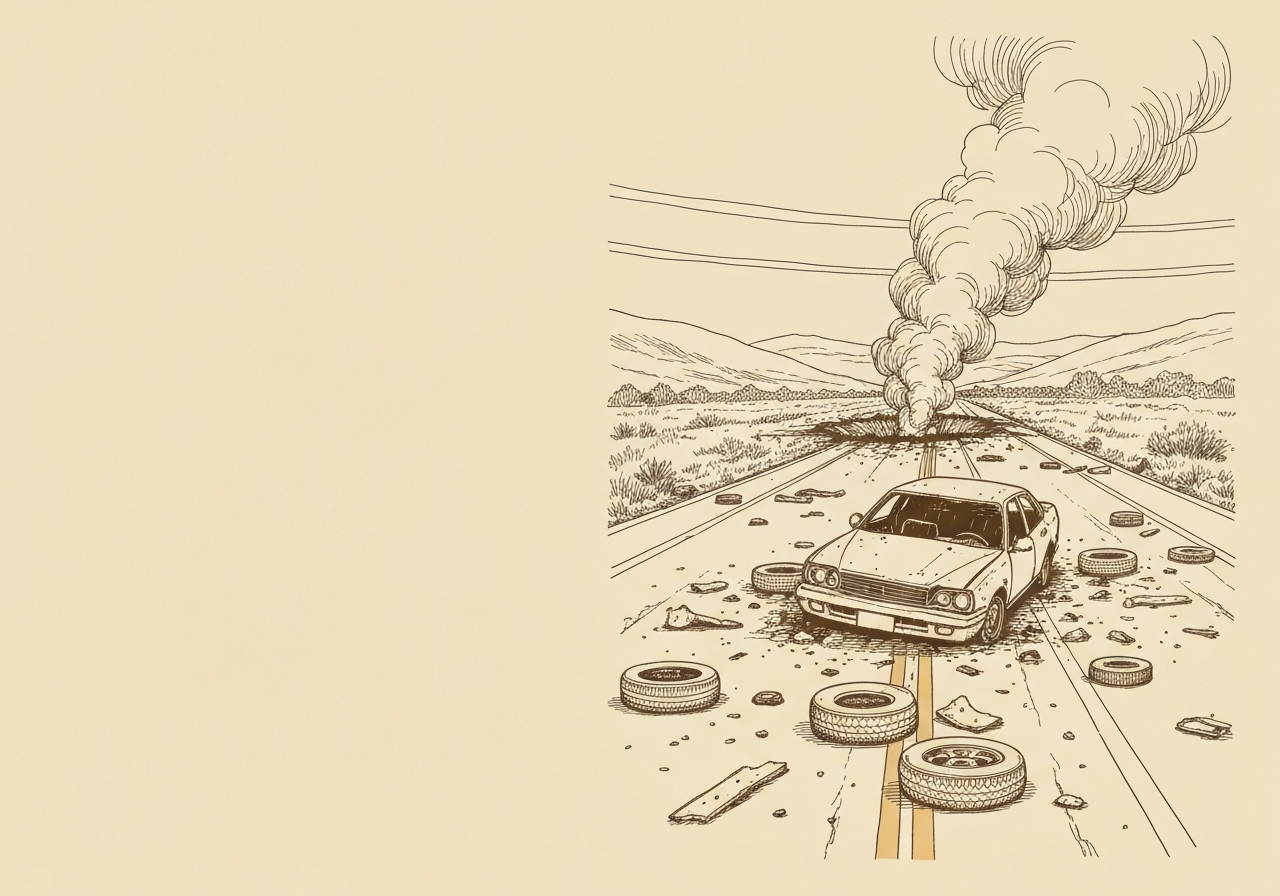
It began on a road in Jammu & Kashmir. A car packed with explosives was driven toward a CRPF convoy. The plan was a ramming attack — crash into the convoy and detonate. But the explosives went off early. The car was destroyed — twisted metal and scorched rubber strewn across the asphalt. The men fled into the surrounding terrain.
The jurisdictional police registered an FIR (a written complaint that starts a police investigation) as Case Crime No. 39/2019. The Ministry of Home Affairs ordered the NIA to take over. On April 15, 2019, the NIA re-registered the case as RC-03/2019/NIA/JMU. On September 25, 2019, it filed a chargesheet before the Special Judge, NIA, at Jammu. The DM Ramban had conveyed a complaint on September 20, 2019 — a document that now sat on the judge's desk alongside the chargesheet, the two papers marking the formal beginning of the prosecution's case.
The chargesheet covered a wide range: Sections 16, 18, 20, 23, 38, and 39 of the Unlawful Activities (Prevention) Act, 1967 (UAPA — India's primary anti-terror law), Sections 3 and 4 of the Explosive Substances Act, 1908, and several provisions of the Ranbir Penal Code, 1989 (RPC — the criminal code that applied in Jammu & Kashmir at the time). Among the RPC charges was Section 120-B — criminal conspiracy (an agreement between two or more people to commit an illegal act).
The judge who said no
The Special Judge took cognizance of most charges — meaning the court accepted the chargesheet and agreed to proceed. But for two sets of charges, the judge refused. The judge's order cited Section 196-A of the old J&K CrPC — a provision that required government authorization before the court could proceed with a conspiracy charge.
For charges under Sections 121, 121-A, and 122 RPC (offences against the State, such as waging war), the judge said the NIA had not complied with Section 196-B of the old J&K CrPC (the Code of Criminal Procedure that applied in Jammu & Kashmir before 2019). For the criminal conspiracy charge under Section 120-B RPC, the judge pointed to Section 196-A of the same old code. That provision said: no court can take cognizance of a criminal conspiracy charge unless the government has given prior authorization.
The NIA had not obtained that authorization. The judge refused to take cognizance of the conspiracy charge.
The NIA appealed to the High Court of Jammu & Kashmir at Jammu. The Division Bench partially allowed the appeal on April 27, 2021 — it reversed the judge's finding on Section 196-B, holding that the complaint was valid. It also remitted charges under Sections 306 and 411 RPC and Section 39 of the UAPA back for fresh consideration. But it upheld the refusal on Section 196-A. The conspiracy charge remained stuck. The DM Ramban's complaint and the chargesheet remained on the file, but the conspiracy charge itself had been set aside.
The clock that had already run out
Here is where the legal twist got sharper. On October 31, 2019 — just over a month after the NIA filed its chargesheet — the Jammu & Kashmir Reorganisation Act, 2019 came into effect. This law did two things. First, it reorganised the State of Jammu & Kashmir into two Union Territories. Second, it repealed the old J&K CrPC, 1989, and replaced it with the national Code of Criminal Procedure, 1973, which applies across the rest of India.
The national CrPC, 1973, has no equivalent to Section 196-A. There is no requirement for government authorization before a court can take cognizance of a criminal conspiracy charge under the national code.
The NIA argued before the Supreme Court: The old law is gone. The requirement of authorization under Section 196-A has vanished with it. The court should now take cognizance of the conspiracy charge under the new code, which has no such requirement.
The Supreme Court did not agree.
Why the old law still mattered
The bench — Justice M. M. Sundresh and Justice S. V. N. Bhatti — examined the J&K Reorganisation Act, 2019 carefully. Section 95 of that Act made the national CrPC, 1973, applicable to Jammu & Kashmir from the "appointed day" — October 31, 2019. But the court held that this change did not apply backwards. The new code would govern only proceedings that began after that date. For proceedings that had already started under the old code, the old code's requirements continued to apply.
The court also looked at Para 2(13) of the J&K Reorganisation (Removal of Difficulties) Order, 2019 — a government order issued to smooth the transition. That paragraph specifically preserved all rights, obligations, and proceedings under the repealed J&K statutes. The court observed that the investigating agency could "both continue and initiate proceedings under the repealed code to cure procedural defects." The investigation in this case had been completed, and the chargesheet filed, before the appointed day. The old code governed those proceedings. The requirement of Section 196-A was still alive.
The court cited a single precedent — Nibaran Chandra v. Emperor, a 1929 Calcutta High Court decision — to support the principle that procedural requirements existing at the time of the proceeding must be followed.
The Supreme Court held: "The Code of Criminal Procedure, 1973, made applicable to J&K from the appointed day under the J&K Reorganisation Act 2019, does not have retrospective application." The old code's requirement of authorization under Section 196-A still held force for this case.
The door left open
But the Supreme Court did not shut the door on the NIA. It held that the defect — the missing authorization — was curable. This was not a fatal error that killed the conspiracy charge forever. The NIA could still go back, obtain the required authorization under Section 196-A of the old J&K CrPC, and then approach the trial court again. Since charges had not yet been framed (the formal stage where the court reads out the specific accusations to the accused), the trial had not progressed to a point where the delay would cause prejudice.
The court allowed the appeal in part. It set aside the High Court's order insofar as it confirmed the refusal of cognizance for Section 120-B RPC. It granted the NIA liberty to comply with Section 196-A of CrPC, 1989, by seeking appropriate authorization. If the NIA obtained that authorization, the trial court would take cognizance and proceed with the trial.
THE PLAY: When a procedural requirement exists under a repealed law for proceedings that began before the repeal, you must still comply with it — but if the defect is curable, you can fix it and start over.
What this means for investigators
For any investigating agency — the NIA, the CBI, state police — this judgment carries a clear message. When you investigate a case under a particular procedural code, you must follow that code's requirements all the way through, even if the code is replaced mid-stream. The new code does not wipe away obligations that arose under the old one. But the judgment also offers relief: procedural defects of this kind are not death sentences. They can be cured, as long as the trial has not progressed to a point where the delay causes unfairness.
The car bomb exploded early. The men fled. The NIA filed its chargesheet. And then a judge said: you forgot one piece of paper. The Supreme Court said: go get it, and come back.