Rajiv Channa's properties were locked for 14 years over a kidney racket that never existed in law.
When the predicate offence vanishes by acquittal, the PMLA attachment must fall too—but it took eleven years and a High Court order to prove that simple truth.
14
years.
When the predicate offence vanishes by acquittal, the PMLA attachment must fall too—but it took eleven years and a High Court order to prove that simple truth.
When the Foundation Crumbles: Why Jeevan Kumar's Acquittal Collapsed the ED's Attachment Against Rajiv Channa
Rajiv Channa and M/S N.R. Merchant Pvt. Ltd. had their properties frozen for over a decade. The Enforcement Directorate had attached them, alleging they were bought with money from an illegal kidney transplant racket run by Dr. Jeevan Kumar. But there was a problem: Jeevan Kumar had been acquitted of all charges in 2013. And that acquittal was never challenged. The Delhi High Court was finally asked a simple question: if the predicate offence doesn't exist, can the PMLA attachment survive?
The answer, delivered by a Division Bench of Justice Purushaindra Kumar Kaurav and Justice Yashwant Varma on 8 April 2024, was a resounding no. The Court quashed the Provisional Attachment Order (PAO) No.6/2010, the confirmation order, and the Appellate Tribunal's dismissal, freeing properties that had been locked for nearly fourteen years.
The Kidney Racket and the Money Trail
The story begins in 2008. On 25 January, an FIR was registered at PS Palam Vihar, Gurgaon, against Dr. Jeevan Kumar under Section 420 IPC and Sections 18/19 of the Transplantation of Human Organs (TOHO) Act, 1994. The allegation was that he was running an illegal kidney transplant racket. The CBI took over, registered an RC, and filed a chargesheet on 29 April 2008 as CBI Case No.7/2008.
The Enforcement Directorate followed. On 12 May 2008, it registered ECIR/07/DZ/2008 under Sections 3 and 4 of the Prevention of Money Laundering Act, 2002. The ED's theory was simple: Jeevan Kumar had laundered the proceeds of his illegal transplants by purchasing properties, including those linked to Rajiv Channa and M/S N.R. Merchant Pvt. Ltd.
On 9 September 2010, the ED passed PAO No.6/2010, attaching those properties and bank accounts. The Adjudicating Authority under PMLA confirmed the attachment on 4 February 2011 in OC No.66/2010. The appellants appealed to the Appellate Tribunal, PMLA, New Delhi, which dismissed their appeals on 9 March 2015.
The Acquittal That Changed Everything
But while the PMLA machinery was grinding forward, something critical happened in the predicate offence. On 22 March 2013, the trial court acquitted Dr. Jeevan Kumar of all charges in CBI Case No.7/2008. The prosecution did not appeal. The acquittal became final.
Then, on 15 January 2024, the Delhi High Court itself quashed the ECIR and all consequential proceedings against Rajiv Channa and the other appellants. That left only one thing standing: the attachment orders themselves. The appellants moved the High Court under Section 42 PMLA, arguing that with no predicate offence surviving, there could be no proceeds of crime, and therefore no valid attachment.
What the ED Argued — and Why It Failed
The Enforcement Directorate did not contest the acquittal. Instead, it argued that the High Court should defer the matter. The ED pointed to a pending Special Leave Petition before the Supreme Court where the very question of whether PMLA proceedings survive an acquittal in the predicate offence was said to be pending. The ED's counsel urged the Bench to wait for the Supreme Court's decision.
The Court rejected that plea outright. It held that High Courts must decide cases on the basis of the law as it stands, and cannot await the outcome of a reference or review petition unless specifically directed to do so. Since there was no stay in the pending matter, the Delhi High Court was duty-bound to decide.
The Doctrine That Decided the Case
The Court's reasoning was anchored in a single, unbroken chain of logic. It began with the definition of "proceeds of crime" under Section 2(1)(u) of PMLA. That definition is parasitic: it requires the existence of property derived or obtained, directly or indirectly, from a "scheduled offence." If there is no scheduled offence, there can be no proceeds of crime.
Section 3 PMLA defines the offence of money-laundering as involvement in any process or activity connected with proceeds of crime. Again, the foundation is the existence of proceeds of crime. If the foundation is removed, the structure collapses.
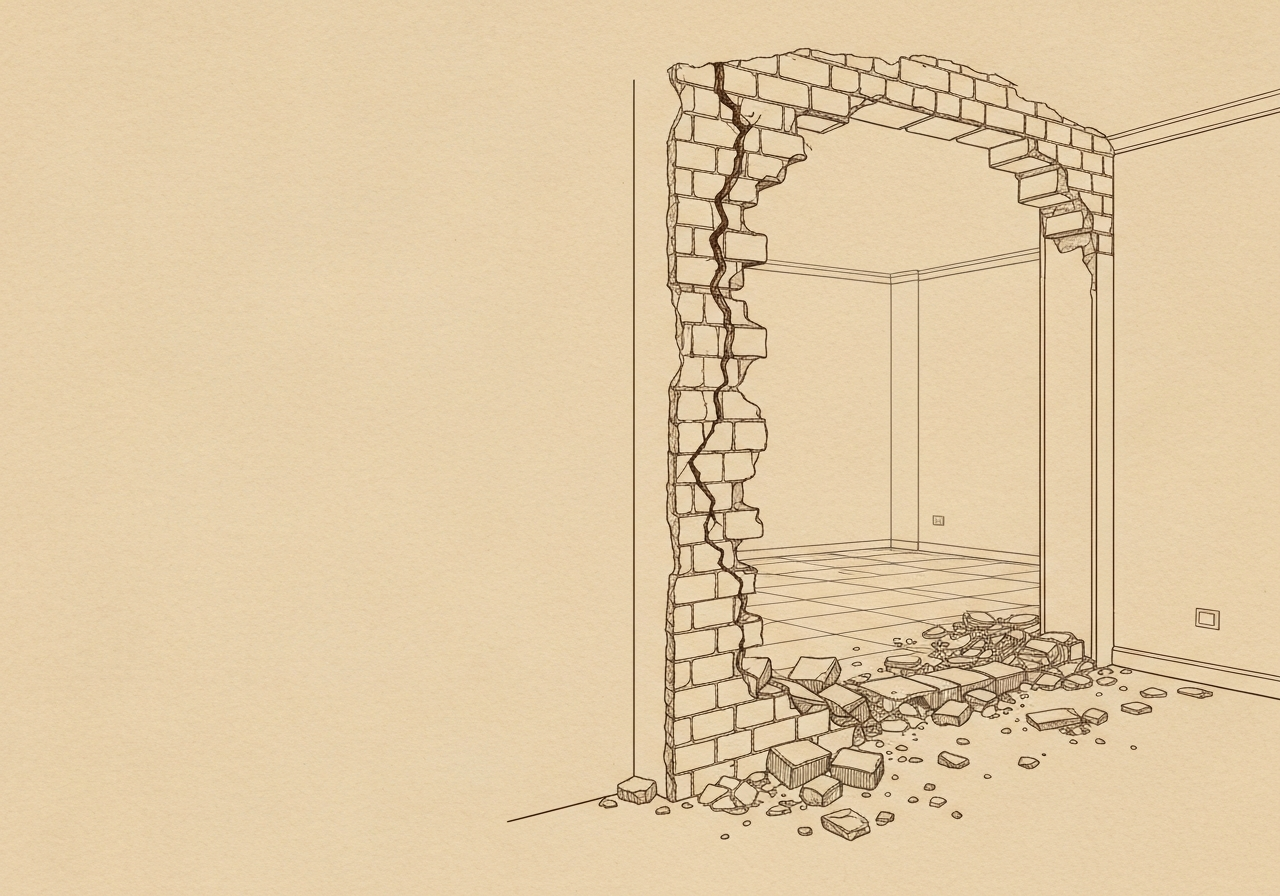
The Court invoked the Latin maxim sublato fundamento cadit opus — upon removal of the foundation, the work collapses. It is a fitting description of the relationship between the predicate offence and PMLA proceedings.
The Bench relied on a line of binding precedents. In Vijay Madanlal Choudhary v. Union of India, the Supreme Court held that if a person is finally acquitted of the scheduled offence, there can be no offence of money-laundering against that person or anyone claiming property linked to that offence. In Pavana Dibbur v. Directorate of Enforcement, the Supreme Court reinforced that if the prosecution for the scheduled offence ends in acquittal of all accused, no one can be prosecuted under Section 3 PMLA. In Parvathi Kollur v. State, the Court affirmed that the occurrence of the scheduled offence is a basic condition for proceeds of crime.
The Delhi High Court also relied on its own precedent where it held that when a competent court holds that no criminal offence has been committed, the charge of money-laundering cannot survive. The predicate offence is the foundation, not merely the trigger.
THE PLAY: If the accused in the predicate offence is acquitted and the acquittal is unchallenged, move immediately to quash the ECIR and all attachment orders. The PMLA machinery cannot stand on its own.
Why This Matters for Practitioners
This judgment is a clean, powerful tool for anyone whose property has been attached under PMLA based on a predicate offence that has since collapsed. The key facts are these: Jeevan Kumar was acquitted on 22 March 2013. The acquittal was never appealed. The ECIR was quashed on 15 January 2024. The attachment orders were quashed on 8 April 2024.
The timeline matters. The attachment survived for over a decade after the acquittal. The ED did not give up. The Appellate Tribunal did not give up. It took a direct challenge to the High Court, armed with the Vijay Madanlal Choudhary line of cases, to finally bring the matter to an end.
For advocates, the lesson is clear: do not wait for the ED to act. Once the predicate offence is extinguished — whether by acquittal, discharge, or quashing of the FIR — file an application before the High Court under Section 42 PMLA to quash the attachment. The Court will not defer the matter merely because an SLP is pending elsewhere.
For CFOs and founders, the takeaway is equally stark. If your company's assets are attached in a PMLA case, the first thing to check is the status of the predicate offence. If the main accused has been acquitted or discharged, and that order has become final, you have a strong case to get the attachment lifted. The ED cannot keep your property frozen on the basis of a crime that the courts have said never happened.
The Bottom Line
When Dr. Jeevan Kumar walked free in 2013, the foundation of the ED's case against Rajiv Channa crumbled. It took eleven years and a direct order from the Delhi High Court to make that official. The message is unmistakable: under PMLA, the predicate offence is not just a trigger — it is the load-bearing wall. When it falls, everything attached to it falls too.