SEBI loses appeal as SC says its jurisdiction is limited to questions of law
The Supreme Court dismissed SEBI's appeal against SAT's order reversing findings of stock manipulation, holding that the Tribunal's factual inferences don't raise legal questions under Section 15Z.
Dismissed.
SEBI's appeal
dismissed.
The Supreme Court dismissed SEBI's appeal against SAT's order reversing findings of stock manipulation, holding that the Tribunal's factual inferences don't raise legal questions under Section 15Z.
SEBI said Mega Corp inflated profits and manipulated shares. The Tribunal disagreed. The Supreme Court just told SEBI: we can't help you.
Between January and September 2005, Mega Corporation Limited — a company listed on the Bombay Stock Exchange — saw its share price leap from roughly Rs. 4.25 to Rs. 43.85. A ten-fold jump in nine months. The Securities and Exchange Board of India, the market regulator, took notice. It launched an investigation. What it found, it believed, was a carefully orchestrated fraud: inflated profits, misleading advertisements about new business ventures, and share prices propped up through deals with connected entities. SEBI passed an ex parte interim order (a temporary order issued without hearing the other side) against 56 entities, and eventually restricted the company from accessing the capital market for one year. Its directors were barred from dealing in securities. The company appealed to the Securities Appellate Tribunal. The Tribunal reversed SEBI on every single count. SEBI then took the fight to the Supreme Court. And lost again.
When a stock that rose ten-fold became a target
The story begins with a stock that behaved like a dream for anyone who bought early. Mega Corporation's shares rose from around Rs. 4 to nearly Rs. 44 in under a year. For SEBI, that kind of price movement in a relatively unknown company was a red flag. The regulator investigated under Sections 11 and 11B of the SEBI Act (the provisions that give SEBI its powers to protect investors and issue directions) read with the PFUTP Regulations, 2003 — the rules that prohibit fraudulent and unfair trade practices in the securities market.
SEBI's case had three legs. First, the company had allegedly inflated its profits. Second, it had issued misleading advertisements about new business ventures to attract investors. Third, it had manipulated its own share price through orchestrated transactions with connected entities. In February 2008, SEBI passed a final order: the company was restrained from the capital market for one year, and its promoter-directors were barred from dealing in securities.
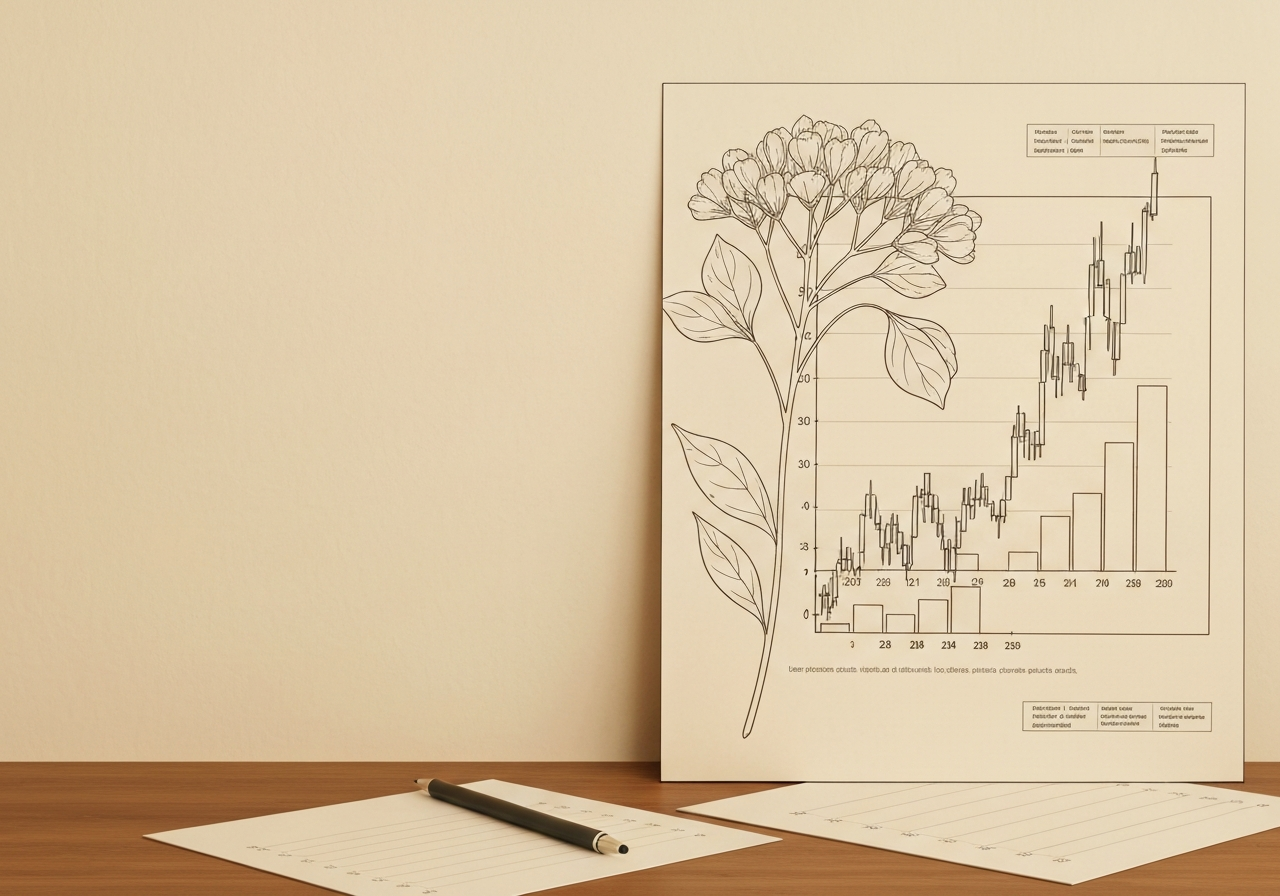
On the regulator's desk, the stock price chart told a story of its own — a jagged line climbing steeply from Rs. 4.25 to Rs. 43.85, each spike a potential marker of manipulation. The chart, printed on thick paper and annotated with dates, sat at the centre of SEBI's file, its trajectory the silent evidence the regulator believed proved its case.
The Tribunal looked at the same evidence. It said: SEBI didn't prove it.
Mega Corporation appealed to the Securities Appellate Tribunal under Section 15T of the SEBI Act (the provision that allows appeals against SEBI orders). The Tribunal examined the evidence SEBI had gathered — documents, transaction records, financial statements. And it concluded that SEBI had failed to establish its allegations. On all three grounds — unusual profits, misleading advertisements, and manipulated transactions — the Tribunal reversed SEBI's findings. The regulator's order was set aside.
The Tribunal's hearing room was filled with the rustle of paper as members sifted through stacks of financial documents — balance sheets, transaction ledgers, and correspondence between connected entities. The stack on the presiding officer's table was thick, each page a piece of the puzzle the Tribunal would ultimately find incomplete. The silence in the room was broken only by the occasional question, as the Tribunal worked through the evidence that SEBI had presented and found it wanting.
SEBI was not done. It appealed to the Supreme Court under Section 15Z of the SEBI Act (the provision that allows appeals to the Supreme Court from Tribunal orders, but only on questions of law). The question before the Court was narrow but critical: did the Tribunal's decision raise any question of law that the Supreme Court could examine?
The Supreme Court's answer: not every disagreement is a legal question
A bench of Justice L. Nageswara Rao and Justice Pamidighantam Sri Narasimha heard the appeal. The Court began by examining the scope of Section 15Z. The provision, it noted, limits the Supreme Court's jurisdiction to questions of law arising from the Tribunal's order. A question of law arises only when there is an erroneous construction of legal provisions or general principles of law. Not every interpretation of law by the Tribunal amounts to a question of law. The Tribunal's freedom to evolve and interpret laws for the structural evolution of sectoral regulation must be respected, the Court said, as a matter of policy and functional considerations.
The courtroom fell into a deep silence as the judgment was read. The bench's words echoed through the chamber: "The jurisdiction of this Court under Section 15Z of the SEBI Act is confined to questions of law arising from the order of the Tribunal." The weight of that statement settled over the room — a clear boundary drawn between the Tribunal's domain of facts and the Court's domain of law.
The Court then examined the Tribunal's findings. The Tribunal had drawn its own inferences from the documents on record. It had looked at the same evidence SEBI had relied on and reached a different conclusion. That, the Supreme Court held, was a factual determination — not a legal one. The Tribunal's conclusions were fact-based inferences. They did not raise questions of law that could be examined under Section 15Z. The appeal was dismissed.
The Court cited several precedents to support its reasoning on the limited scope of its jurisdiction under Section 15Z. Among them were Videocon International Ltd. v. SEBI, Clariant International Ltd. v. SEBI, and National Securities Depository Ltd. v. SEBI — all cases where the Supreme Court had held that its role under Section 15Z is confined to questions of law, not re-appreciation of facts. The Court also referred to Jones v. First Tier Tribunal, a UK Supreme Court decision, and T. Takano v. SEBI, a recent Indian case, to reinforce the principle that appellate courts must respect the factual findings of specialised tribunals.
One loose thread: the right to cross-examination
But the Court did not stop there. In its judgment, the Tribunal had made a general observation that there is a right to cross-examination in all SEBI proceedings. The Supreme Court set aside that observation. The question of whether a party in a SEBI proceeding has a right to cross-examine witnesses, the Court said, is not an absolute principle. It depends on the facts of each case. The Tribunal should not have laid down such an inviolable rule. The question of law relating to the right of cross-examination was left open to be decided in an appropriate case.
The Court's reasoning on this point drew from earlier decisions including K.L. Tripathi v. State Bank of India and Tara Chand Vyas v. Chairman & Disciplinary Authority, where it had been held that the right to cross-examination is not a universal requirement in every quasi-judicial proceeding. The Tribunal's obiter — a passing remark not essential to the decision — had gone too far, the Court concluded, and had to be corrected to prevent future confusion.
The Court's operative order was precise: the appeal was dismissed, but the Tribunal's general observation on cross-examination was set aside. Parties were directed to bear their own costs.
What this means: the Tribunal decides facts, the Supreme Court decides law
For SEBI, this judgment is a reminder that the Supreme Court is not a second fact-finding forum. If the Tribunal examines the evidence and reaches a plausible conclusion, the regulator cannot simply appeal on the ground that the Tribunal got the facts wrong. It must show that the Tribunal misapplied the law. For companies and directors facing SEBI action, the judgment reinforces the importance of the Tribunal as the primary appellate body on factual questions. The Supreme Court will not re-open factual findings unless they are perverse or based on no evidence.
The judgment also clarifies a significant procedural point: the scope of Section 15Z is narrow, and the Court will not entertain appeals that merely rehash factual disagreements dressed up as legal questions. The ratio decidendi — the binding principle of the decision — is clear: where the Tribunal's conclusions are based on its own inferences drawn from documents on record and are fact-based, they do not give rise to questions of law warranting interference under Section 15Z.
THE PLAY: If you are appealing a SAT order to the Supreme Court, frame your grounds around legal errors — not factual disagreements — or the Court will not entertain your appeal under Section 15Z.
The Court ended where it began: with a stock that rose ten-fold, and a regulator that could not prove why. The chart that had once seemed so damning now sat in a closed file, its steep line a reminder of the limits of regulatory power when evidence does not match suspicion.