She had a job. The Family Court said no maintenance. The High Court disagreed.
A Family Court denied a wife maintenance solely because she worked, but the High Court set aside the order, reminding all courts that a salary is not a disqualification without a multi-factor analysis.
3000
rupees.
A Family Court denied a wife maintenance solely because she worked, but the High Court set aside the order, reminding all courts that a salary is not a disqualification without a multi-factor analysis.
When a Job Becomes a Barrier: The Wife Who Was Denied Maintenance Because She Worked
Afrooza had a job. That was the problem.
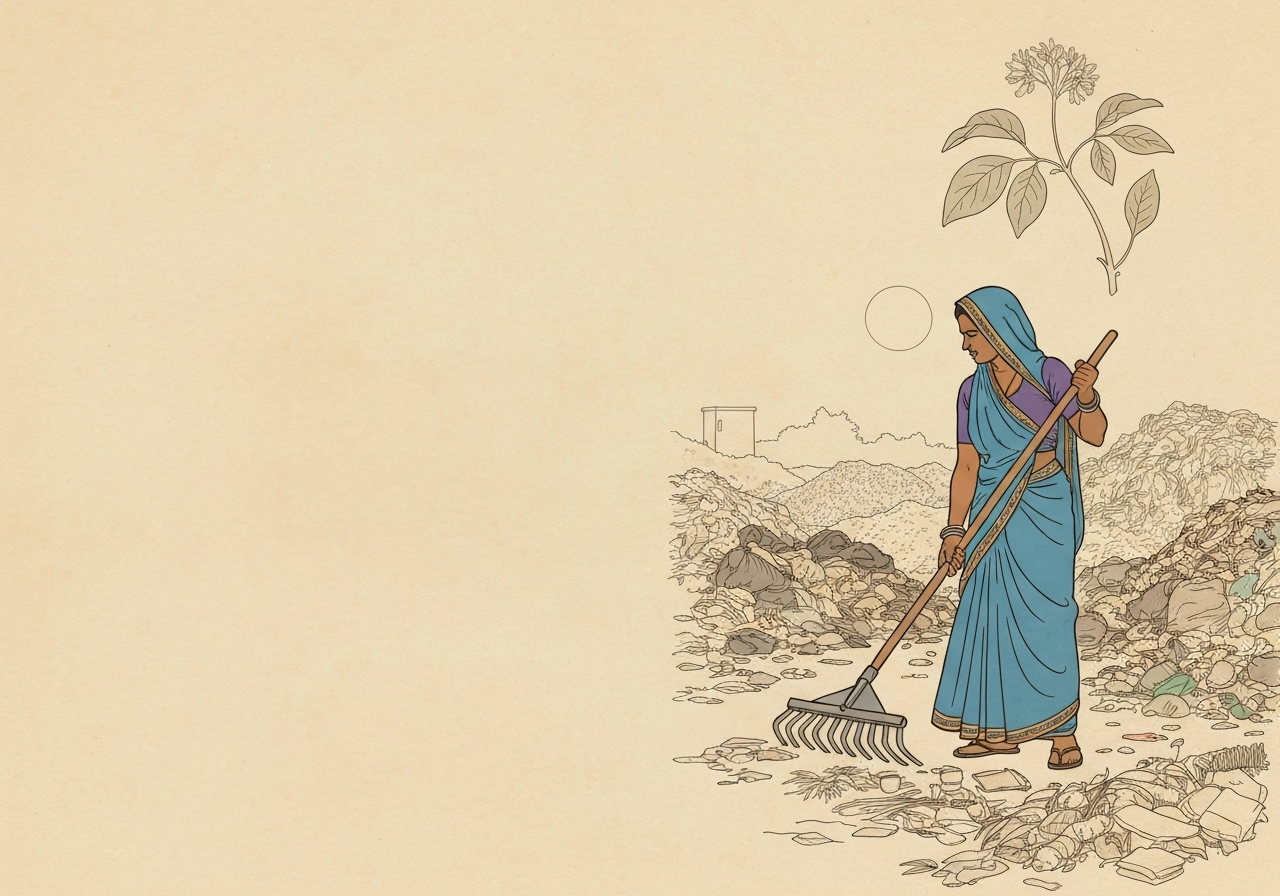
She worked as a labourer with the Srinagar Municipal Corporation. The money was not enough — she said so herself. But when she approached the Family Court in Srinagar seeking maintenance from her husband, Mohammad Aslam Dar, the court looked at her employment and said no. Her interim maintenance of Rs.3,000 was recalled. Her husband, a carpet weaver earning Rs.5,000 a month, was off the hook for her support.
For Afrooza and her minor child, the stakes were brutal: a mother fighting to keep her child fed, a Family Court that saw a salary and stopped asking questions, and a legal system that had forgotten its own rules.
The High Court of Jammu & Kashmir and Ladakh at Srinagar, in a crisp judgment by Justice Javed Iqbal Wani on October 25, 2024, did not mince words. The Family Court had failed to follow the Supreme Court's mandate. The order denying maintenance to the wife was set aside. The matter was sent back for a fresh hearing — this time, with the right questions asked.
What the Trial Court Did Right
The story begins on August 21, 2019, when Afrooza filed a maintenance petition under Section 488 of the Code of Criminal Procedure, 1973 (the equivalent of Section 144 of the Bharatiya Nagarik Suraksha Sanhita, 2023) before the Court of the 2nd Additional Munsiff in Srinagar.
Her case was straightforward. She was the lawfully wedded wife of Mohammad Aslam Dar. They had a child. She had been forced to leave the matrimonial home because of physical and mental torture. She had taken up a job as a labourer, but her earnings were insufficient to support herself and her child.
The husband admitted the marriage and the paternity of the child. But he claimed the wife had left voluntarily. He said he earned only Rs.5,000 a month as a carpet weaver. He pointed to her government salary and argued she did not need maintenance.
The trial court — the 2nd Additional Munsiff — took a balanced view. On October 29, 2019, it granted interim maintenance: Rs.3,000 per month to the wife and Rs.1,500 per month to the child. It was a modest sum, but it kept the family afloat while the case was pending.
The Family Court's Pivot
Then the case moved. Under Section 8 of the Family Courts Act, 1984, the proceedings were transferred to the Principal Sessions Judge, Family Court, Srinagar, on June 7, 2021.
The Family Court took a different view. On September 23, 2021, it passed a final order that changed everything for Afrooza.
The court dismissed the wife's maintenance claim entirely. It recalled the interim maintenance of Rs.3,000. The reason? She was employed. She had a job. She earned a salary from the Srinagar Municipal Corporation. That, in the Family Court's view, was enough to deny her any support from her husband.
The child's maintenance was enhanced to Rs.2,500 per month. But for the mother — nothing.
Afrooza was left with a choice: accept the order or fight. She chose to fight. She filed a criminal revision before the High Court of Jammu & Kashmir and Ladakh at Srinagar, registered as Crl R 23/2021.
The Argument That Changed Everything
Before the High Court, Afrooza's counsel argued that the Family Court had made a fundamental error. The mere fact that a wife is employed does not automatically disentitle her from claiming maintenance. The court must assess whether her income is sufficient to maintain the standard of living she was accustomed to in her matrimonial home. It must consider her reasonable needs, the status of the parties, and the sacrifices she may have made for the family.
The husband's counsel, presumably, defended the Family Court's order. The wife had a job. She had an income. Why should he pay?
Justice Javed Iqbal Wani saw the flaw immediately. The Family Court had not followed the law. It had not applied the criteria laid down by the Supreme Court in Rajnesh v. Neha and Anr. (AIR 2021 SC 569). It had not required affidavits of disclosure of assets and liabilities from both parties. It had not conducted the multi-factor analysis that the Supreme Court had mandated.
The High Court cited Aman Lohia v. Kiran Lohia (2021) 5 SCC 489, which held that Family Courts cannot do away with mandatory procedural requirements, particularly fairness and transparency. The inquiry before a Family Court is adjudicatory. It requires resolution of rival claims while adhering to statutory norms and principles of natural justice.
The Rule the Family Court Forgot
The Supreme Court in Rajnesh v. Neha laid down a clear framework for determining maintenance. The objective is to ensure that the dependent spouse is not reduced to destitution or vagrancy on account of the failure of the marriage. It is not a punishment to the other spouse.
The factors a court must consider include:
- The status of the parties
- The reasonable needs of the applicant
- Whether the applicant is educated or qualified
- The independent income source of the applicant
- The standard of living in the matrimonial home
- The employment history of the applicant
- Whether the applicant sacrificed employment for the family
- The litigation costs involved
And crucially, the Supreme Court mandated that both parties must file affidavits of disclosure of assets and liabilities. This is not optional. It is the foundation for an objective assessment.
The Family Court in Srinagar did none of this. It saw that Afrooza had a job. It stopped there. It did not ask whether her salary was enough. It did not ask what standard of living she had in her matrimonial home. It did not ask whether she had sacrificed her career for the family. It did not even ask the husband to disclose his assets.
THE TEST: A wife's employment is not a disqualification for maintenance. The Family Court must assess whether her income is sufficient to maintain the standard of living she was accustomed to in her matrimonial home, applying the multi-factor test from Rajnesh v. Neha. If the court fails to do this, the order is unsustainable.
What the High Court Did
Justice Javed Iqbal Wani allowed the revision petition. The impugned order of the Family Court, insofar as it declined maintenance to petitioner No.1 (Afrooza), was set aside. The enhanced maintenance of Rs.2,500 to the minor child was upheld — that part of the order was left undisturbed.
The matter was remanded to the Family Court for fresh consideration, specifically regarding the wife's maintenance claim. The Family Court was directed to reconsider the case in light of the observations made in the High Court judgment and the law laid down by the Supreme Court in Rajnesh v. Neha and Aman Lohia v. Kiran Lohia.
The parties were directed to appear before the Family Court on November 8, 2024.
Why This Matters in Practice
For advocates, this judgment is a reminder that the Rajnesh v. Neha framework is not a suggestion. It is binding law. Every Family Court in India must follow it. If a court denies maintenance to a wife solely on the ground of her employment, without conducting the multi-factor analysis, the order is vulnerable to challenge.
For CFOs and founders, the principle is broader. The judgment reinforces that financial independence does not automatically negate the right to support. In family law, as in corporate law, context matters. A salary is not the end of the inquiry. The question is whether that salary is adequate, given the standard of living and the needs of the dependent.
For Afrooza, the judgment means a second chance. She will go back to the Family Court. This time, the court will have to ask the right questions. It will have to require affidavits of disclosure. It will have to assess her needs, her husband's capacity, and the standard of living she was accustomed to. It will have to decide whether her job at the Srinagar Municipal Corporation is enough — or whether her husband must contribute.
The High Court did not decide the maintenance amount. It decided something more fundamental: that the process must be fair, transparent, and in accordance with the law.
The Bottom Line
If you are a Family Court judge, or if you appear before one, remember this: a wife's employment is not a shortcut to denying maintenance. You must apply the Rajnesh v. Neha criteria. You must require affidavits of disclosure. You must assess whether her income is sufficient. If you skip these steps, your order will not survive scrutiny.