She left after 2 weeks, returned for 1 day. Court says: desertion.
A wife walked out of her marriage in June 2009 and only came back once—for her mother-in-law's funeral. The Supreme Court granted divorce, ruling that a single condolence visit doesn't reset the desertion clock.
13
days.
A wife walked out of her marriage in June 2009 and only came back once—for her mother-in-law's funeral. The Supreme Court granted divorce, ruling that a single condolence visit doesn't reset the desertion clock.
She left the matrimonial home 13 days after the wedding. Then she came back exactly once—for one day.
The house smelled of incense and grief when she walked in for that one-night stay. Her mother-in-law had died. The wife, who had walked out in June 2009 with every belonging she owned, returned to Tezpur in December 2009 for the funeral. She stayed one night. Then she left before dawn. She never came back.
The question before the Supreme Court was this: can a single condolence visit reset the legal clock on desertion—the act of one spouse abandoning the other without consent or reasonable cause? Or was that day exactly what it looked like: a brief, necessary appearance for a death in the family?
June 30, 2009 — the day she packed
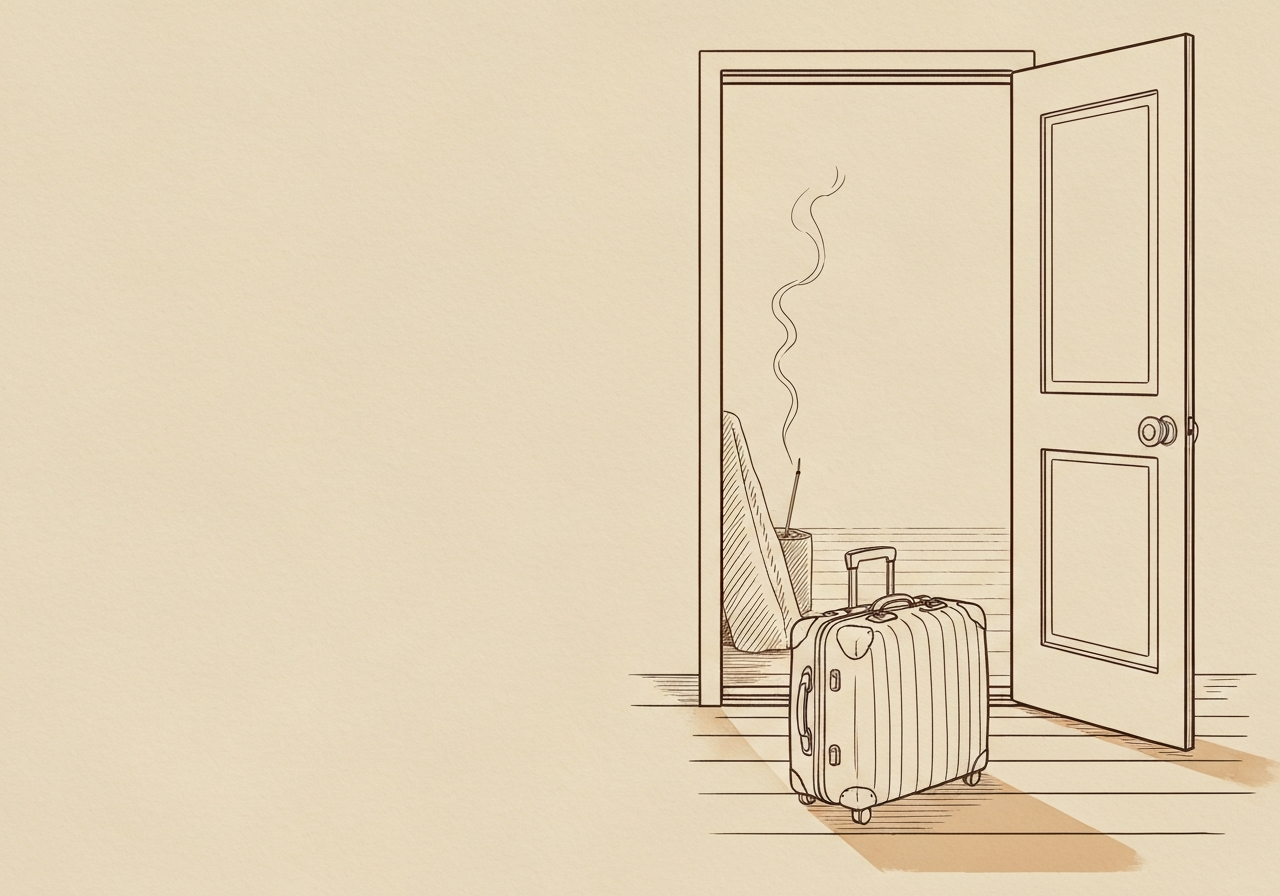
The wedding was on June 17, 2009, in Tezpur, Assam. The husband ran a business in town. The wife worked as a Lecturer in Gauhati, 180 kilometres away. Thirteen days later—on June 30, 2009—she packed her belongings into a single suitcase and left the house before dawn. The marriage was never consummated. The empty house that morning held only the silence of a union that had barely begun.
The husband waited two years and three months. Then, in September 2011, he filed for divorce. He asked the court to dissolve the marriage on two grounds under the Hindu Marriage Act, 1955: cruelty (Section 13(1)(ia)—conduct that makes cohabitation impossible) and desertion (Section 13(1)(ib)—abandonment without consent or reasonable cause).
The District Court in Tezpur dismissed his petition. The Gauhati High Court upheld that decision on August 14, 2019. Both courts said the husband had not proved his case. He appealed to the Supreme Court.
The case was numbered Civil Appeal No. 1339 of 2022, arising from Special Leave Petition (C) No. 22667 of 2019. The bench—Justice Abhay S. Oka and Justice Ajay Rastogi—took it up. Before delivering judgment, the court attempted mediation. It tried a video conference settlement. Both failed. The parties had lived separately since July 1, 2009—more than twelve years by the time the Supreme Court ruled. There was no marriage left to save.
The four things the law demands
Desertion under the Hindu Marriage Act is not simply living apart. The law requires four conditions. First, the fact of separation—the spouses must actually live separately. Second, animus deserendi—the intention of the deserting spouse to permanently end the marriage. Third, the deserted spouse must not have consented to the separation. Fourth, the deserted spouse's own conduct must not have given the other a reasonable cause to leave.
The husband argued all four were met. The wife had left voluntarily, taken everything she owned, and never expressed any intention to return. The single-day funeral visit, he said, was not a resumption of married life—it was a social obligation.
The wife argued the marriage had broken down for other reasons. She pointed to the husband's behaviour. But the key question remained: did the December 2009 visit break the continuity of desertion? If it did, the two-year period required for a desertion-based divorce would have to start over from that date.
What the Supreme Court saw
The bench examined the evidence. The wife had left on June 30, 2009. The husband had filed for divorce on September 26, 2011. That was a continuous separation of more than two years and two months.
Then the court asked the decisive question: did the one-day visit in December 2009 amount to a resumption of cohabitation—living together as husband and wife?
The answer was no.
The court held that a single-day visit occasioned by a death in the family, without any stated intention to resume married life, does not break the continuity of desertion. The wife had not moved back in. She had not indicated she wanted to reconcile. She had attended a funeral and left. The house smelled of incense and grief when she walked in for the one-night stay. The next morning, she was gone.
The court also noted that the husband had not consented to the separation. There was no evidence that his conduct had driven the wife away. The wife, for her part, had never filed a petition for restitution of conjugal rights (a legal request to restore the marriage relationship). She had not demonstrated any effort to resume the marriage. The file before the court felt thin—no letters, no messages, no legal steps from the wife to reclaim her married life.
On the cruelty ground, the court found that the husband had not proved his case. The divorce would rest entirely on desertion.
February 15, 2022 — the decree
The Supreme Court allowed the husband's appeal in part. It set aside the judgments of the District Court and the Gauhati High Court. The marriage was dissolved by a decree of divorce under Section 13(1)(ib) of the Hindu Marriage Act—the desertion provision.
But the court did not stop there. It directed the husband to pay permanent alimony of Rs. 15,00,000 to the wife. He was given eight weeks to deposit the amount. The wife could withdraw that sum, plus Rs. 50,000 already deposited by the husband during the proceedings.
The courtroom fell silent as the operative order was read. The citation—2022 LiveLaw (SC) 167—would now stand for a clear legal proposition: a single condolence visit does not revive a dead marriage.
The precedents that guided the court
In reaching its decision, the Supreme Court relied on two key precedents. In Lachman Utamchand Kirpalani v. Meena @ Mota—(1964) 4 SCR 331—the court had laid down the essential elements of desertion: factum of separation, animus deserendi, absence of consent, and no reasonable cause. The deserted spouse must prove all four.
In Darshan Gupta v. Radhika Gupta—(2013) 9 SCC 1—the court had clarified that whether desertion is established depends on the peculiar facts of each case. It is a matter of drawing an inference from the evidence on record. The deserted spouse's failure to file a petition for restitution of conjugal rights and failure to demonstrate any effort to resume the matrimonial relationship supports an inference of animus deserendi.
Applying these principles, the court found that the wife's single-day visit did not demonstrate any intention to resume cohabitation. The continuous desertion period exceeding two years before the petition's institution was established.
The procedural journey
The case had travelled through three levels of the judiciary. The District Court in Tezpur first dismissed the husband's petition. The Gauhati High Court upheld that decision on August 14, 2019. The Supreme Court then heard the appeal as Civil Appeal No. 1339 of 2022, arising from Special Leave Petition (C) No. 22667 of 2019.
At each stage, the husband argued that the wife had abandoned him without cause. At each stage, the wife maintained that the marriage had broken down for other reasons. But the Supreme Court, analyzing the statutory requirements of desertion—factum of separation, animus deserendi, absence of consent of deserted spouse, and no reasonable cause—found that the respondent-wife failed to demonstrate any intention to resume cohabitation after leaving on June 30, 2009.
THE PLAY: A spouse seeking divorce on grounds of desertion must prove continuous separation for two years—a single-day visit for a family event, without intent to resume married life, does not break that continuity.
The wife left with her belongings on June 30, 2009. She came back for one day. The court said that day did not matter.