She saw her family killed. But she didn't name the killers for days.
The only surviving eyewitness to a quadruple murder was also the most injured. She knew the attackers — but fear kept her silent. The Supreme Court had to decide if her delayed testimony could still convict.
16
years.
The only surviving eyewitness to a quadruple murder was also the most injured. She knew the attackers — but fear kept her silent. The Supreme Court had to decide if her delayed testimony could still convict.
Four members of her family were murdered in their sleep. She survived with seven cut wounds. But when police asked who did it, she said nothing — for days.
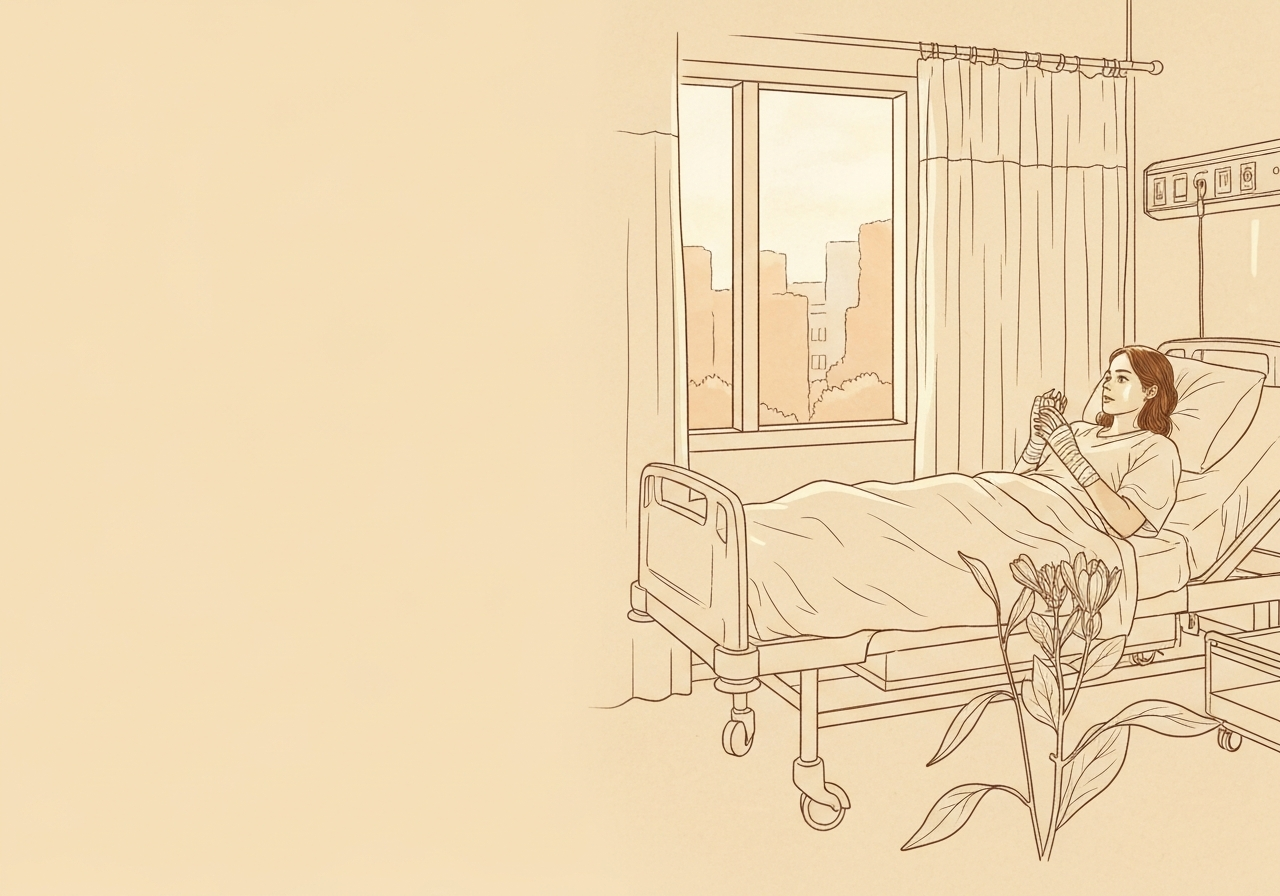
She lay in a hospital bed. Fingers severed. Neck slashed. The blood of her father, mother, brother, and brother-in-law still drying on her clothes. The police officer leaned close. Who did this?
She knew. She had seen every face in the dark. But she did not speak.
The killers were her uncle, her cousin, and two neighbours. They had walked into her home in the early morning of 25 August 2007, while the family slept on cots. They carried sharp-edged weapons. They cut throats. Four people died. Pinky — the daughter of the house — fought, screamed, and survived. But when the investigating officer arrived at her bedside, she held back. She was afraid that if she named them, they would come back to finish her.
It took days before she finally told the police what she had seen. That delay — those days of silence — became the central battlefield in a case that travelled all the way to the Supreme Court.
The night the family died
Vijay Pal Singh, his wife Smt Rajesh, their son Nishant, and son-in-law Mangal Singh were asleep on cots in their home in Muradnagar, Ghaziabad. It was the early hours of 25 August 2007. Pinky, Vijay Pal's daughter, was also asleep nearby.
The attackers entered quietly. They moved from cot to cot, cutting necks with sharp-edged weapons. Pinky woke to the sounds of struggle. She saw her uncle Braj Pal Singh, her cousin Ravi, neighbour Mukesh, and a man named Ajai alias Ajju standing over her family. She tried to stop them. They turned on her. She sustained seven cut lacerated wounds — including amputated fingers — before she lost consciousness.
When she woke, four members of her family were dead. The attackers had fled. But they had not gone far. They returned to the scene later that morning, pretending to be shocked relatives and neighbours who had just heard the news. Pinky saw them there, standing among the crowd, watching her.
That is why she did not speak. The people who had killed her family were now standing in her hospital corridor, asking the police how she was doing.
Why the silence was not a lie
The prosecution's case rested almost entirely on Pinky's testimony. She was PW-1 — the first prosecution witness. She was also the only surviving eyewitness. The defence argued that her initial silence destroyed her credibility. If she had truly seen the attackers, they said, she would have named them immediately. Her delay proved she was either lying or had been coached.
The Supreme Court rejected that argument outright. The bench — Justice B.R. Gavai and Justice Vikram Nath — held that Pinky's silence was not a sign of dishonesty. It was a sign of terror. The attackers were her own relatives and neighbours. They had just murdered her family. They were present at the hospital, pretending to be mourners. The court held that a reasonable person in her position would also be afraid to speak.
The court noted that Pinky had no reason to falsely implicate the accused and let the real killers go free. She had lost her entire immediate family. She had been grievously injured herself. Her testimony was consistent with her statement to the police under Section 161 CrPC (the initial witness statement recorded during investigation). Nothing in her cross-examination had weakened or demolished her account.
The court further held that where an eyewitness deliberately withholds the identity of assailants who are close relatives and neighbours out of justified fear for her own life, such delayed disclosure does not amount to improvement or unreliability. The accused cannot gain an advantage from it.
One witness is enough
The defence also argued that the prosecution should have examined other available witnesses — neighbours who might have heard the sounds of the attack, or other family members who had seen the accused at the scene. The prosecution's failure to call them, the defence said, created a gap in the case.
The Supreme Court dismissed this argument with a principle that has been part of Indian evidence law for decades: it is not the quantity of witnesses that matters, but the quality. A single reliable witness can sustain a conviction. The prosecution has the discretion to choose which witnesses to examine. As long as the witness who does testify is credible, the case does not collapse simply because others were not called.
Pinky's testimony was corroborated by medical evidence — the seven wounds on her body matched the pattern of the attack. Blood-stained weapons and a stolen mobile phone were recovered from the accused. The court found that these pieces of evidence, taken together, left no reasonable doubt about the guilt of the four men.
The missing Section 164 statement
Another defence argument focused on a procedural gap. Under Section 164 of the CrPC (the provision that allows a magistrate to record a witness's statement under oath before trial), the investigating officer had not produced Pinky for a formal recorded statement. The defence argued that this omission made her testimony unreliable.
The court held that this had no bearing on the case. The investigating officer, in his wisdom, had not considered it necessary to record a Section 164 statement. That decision did not affect the credibility of Pinky's testimony in court, where she was cross-examined at length. The purpose of a Section 164 statement is to lock a witness into a version early on, to prevent later contradictions. But where the witness's testimony is consistent with her earlier police statement and is not shaken in cross-examination, the absence of a Section 164 statement is irrelevant.
Death sentence or life?
The Trial Court in Ghaziabad had sentenced all four accused to death. The High Court of Judicature at Allahabad affirmed the conviction under all charges — Sections 302/149, 307 IPC and the Arms Act, 1959 — but commuted those sentences to life imprisonment. The High Court found that the case did not fall into the "rarest of rare" category that would justify the death penalty. The motive was property enmity and personal grudges — not a premeditated, cold-blooded massacre of the kind that warrants execution.
The State of Uttar Pradesh appealed to the Supreme Court, asking for the death penalty to be restored. The accused also appealed, arguing for acquittal.
The Supreme Court dismissed both sets of appeals. It upheld the conviction and the life sentences. One of the accused, Ajai alias Ajju, had died during the pendency of the appeal. His case was abated — meaning it was closed without a final decision on the merits. The remaining three appellants are in custody and will serve out their sentence.
What this means for eyewitness testimony
For practitioners, this judgment offers a clear principle: a delayed disclosure by an eyewitness does not automatically destroy credibility. The court must examine the reason for the delay. If the witness was in genuine fear — especially when the accused are relatives or neighbours who remain at large and present at the scene — the delay may actually strengthen the testimony, because it shows the witness was not eager to implicate anyone.
THE PLAY: When cross-examining a delayed eyewitness, focus on the consistency of the eventual account — not the gap itself — because courts will attribute silence to fear, not fabrication, when the accused are known to the witness.
The case also reaffirms that a single injured eyewitness, whose testimony is corroborated by medical evidence and recoveries, is enough to sustain a conviction for murder. The prosecution need not call every available witness. And the absence of a Section 164 CrPC statement does not weaken a case where the witness's testimony is consistent and unshaken.
The walk-off
Pinky lost her father, mother, brother, and brother-in-law in a single night. She carried seven wounds and a silence that lasted days. The Supreme Court believed her. The four men who killed her family will spend the rest of their lives in prison.
```