She signed a will at home. The court said she should have gone to the office.
The Supreme Court overturned a ruling that doubted a dying woman's mental capacity because the Sub-Registrar visited her house instead of her visiting his office.
Set aside.
After two courts.
Perverse reasoning.
The Supreme Court overturned a ruling that doubted a dying woman's mental capacity because the Sub-Registrar visited her house instead of her visiting his office.
The Sub-Registrar came to her bedside. The court called that suspicious. Bhagubai, an elderly widow, signed a will. By the next day, she was dead. And for years afterward, the document she had touched was treated by two courts as though it had been signed by a ghost.
The home visit that became a crime
Bhagubai was old, frail, bedridden. She had no children. Her husband was dead. The woman who cooked her meals, bathed her, stayed by her side through every fever — that was Chingubai, her sister's daughter. Not a servant. Not a neighbour. The only family Bhagubai had left.
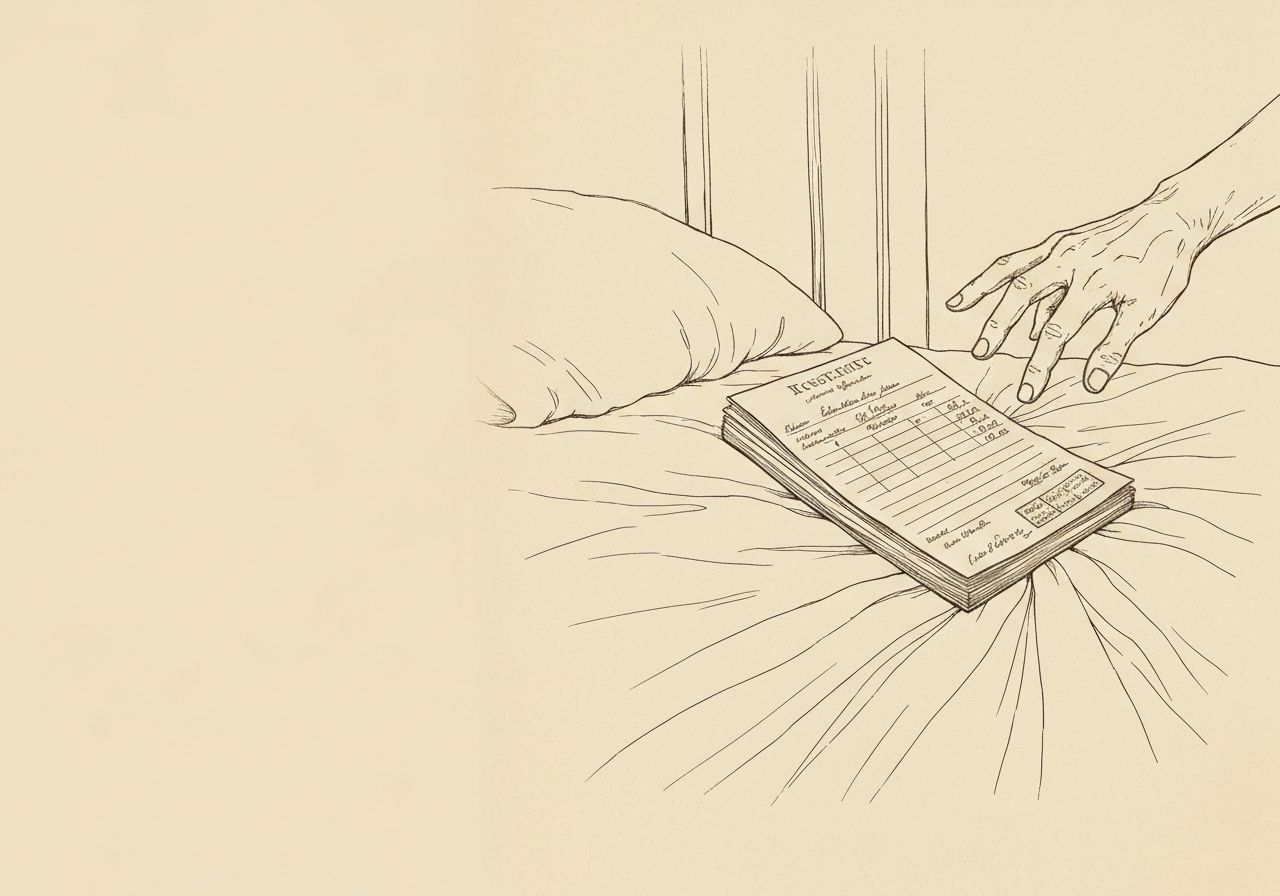
On the day the will was executed, Bhagubai called for a Sub-Registrar (a government officer authorised to register legal documents). He came to her house. The bed creaked as Bhagubai raised her hand to sign. The Sub-Registrar's ink-stamped register pressed against the bedsheet. He examined her. He satisfied himself that she understood what she was doing. He registered her will. The will left her property to Chingubai. The next day, Bhagubai died.
Then Tarabai appeared. She was living on Bhagubai's property — not as a tenant with a lease, not as a family member. She had simply occupied the land. She had no legal interest in it. Yet she challenged the will. Her argument: Bhagubai had been too weak, too ill, too confused to know what she was signing.
The contradiction the lower courts never saw
The trial court and the appellate court both rejected the will. Their reasoning had two pillars. First: no medical evidence — no doctor's certificate, no hospital record — showing that Bhagubai was in a "sound and disposing state of mind" (mentally capable of understanding what she was doing and making a deliberate choice) when she signed. Second: the Sub-Registrar had come to her house. If she was well enough to sign a will, the courts reasoned, she was well enough to visit his office. The home visit itself — that was suspicious.
Chingubai, the propounder (the person asserting the will is valid), argued that the Sub-Registrar had examined Bhagubai and found her capable. She pointed out that Tarabai was a stranger — a trespasser with no stake in the property. The smell of camphor from the sickroom, she might have argued, was proof enough that Bhagubai was being cared for, not coerced. The courts were not persuaded.
The lower courts also ignored a critical piece of evidence: prior litigation regarding the will — earlier court proceedings that had already acknowledged the document's existence and the circumstances of its execution. That material, the Supreme Court would later note, had been brushed aside entirely.
What the Supreme Court called "perverse"
When the case — Niranjan Umeshchandra Joshi v. Mrudula Jyoti Rao & Ors. — reached the Supreme Court, the bench did something unusual. It did not merely disagree. It called the lower courts' reasoning "perverse" — a finding so unreasonable that no reasonable person could have reached it on the same evidence.
The Court pointed out the contradiction. The lower courts had doubted Bhagubai's mental capacity because she was old and ill. But they had also criticised the Sub-Registrar for coming to her house — on the assumption that she was fit enough to go to his office. You cannot, the Supreme Court said, treat a woman as too feeble to sign a will and simultaneously too healthy to need a home visit. That is not legal reasoning. That is confusion dressed up as suspicion.
On the absence of medical evidence, the Court was equally clear: "There is no rule of law or of evidence which requires a doctor to be kept present when a will is executed." A will can be valid without a single doctor in the room. What matters is whether the person signing it understood what they were doing. That understanding can be proved through other evidence — the testimony of the Sub-Registrar who examined her, the circumstances of the execution, the consistency of the will with her known intentions.
The Court found that the lower courts had "allowed their findings to be influenced by such suspicion and conjectures as have no foundation in the evidence and have no relevance in the facts and circumstances of the case." In plain English: they had made up doubts that the evidence did not support.
The Supreme Court observed that the lower courts had questioned the propriety of the Sub-Registrar coming to Bhagubai's house for registration on the assumption that she was fit to go to the office, while simultaneously doubting her mental capacity. The Court emphasised that this suspicion was exacerbated by the lack of medical evidence. But it was not the absence of a doctor that invalidated the will — it was the lower courts' willingness to let suspicion substitute for evidence.
The full arc of the lower court reasoning
To understand why the Supreme Court intervened so decisively, it is necessary to trace the path the case took through the lower courts. The trial court, hearing the matter first, focused on two facts: Bhagubai was an old, helpless widow who died a day after execution, and there was a "complete absence of any medical evidence, of a doctor which would show that the testator was in a sound and disposing state of mind." The court concluded that the will was suspicious and dismissed it.
The appellate court affirmed. It too noted the absence of medical certification. It too pointed to the home visit as an irregularity. Neither court considered the possibility that a Sub-Registrar — a trained government officer — might be perfectly capable of assessing testamentary capacity without a doctor present. Neither court weighed the fact that Tarabai, the contestant, was a mere tenant or trespasser having no interest in the property. Neither court examined the prior litigation that had already dealt with the will's validity.
Chingubai, the propounder, argued that the challenge was thrown by a stranger to the family. She contended that the Sub-Registrar had examined the woman and was satisfied about her testamentary capacity before registration. The courts were not moved.
The law requires the propounder to prove the testator was in a sound disposing state of mind at the time of execution. While the absence of medical proof is not a formal defect, in cases where the testator's mind appears "very feeble and debilitated", its absence fuels suspicion. The Supreme Court found that the lower courts committed a serious error of law by ignoring material evidence — like the prior litigation regarding the will — and by relying on the lack of medical certification to cast doubt on capacity. This, the Court held, resulted in a perverse finding.
Why the missing doctor became a trap — and how to close it
This case does not say that medical evidence is irrelevant. It says something more subtle. When a testator (the person making the will) is old, ill, or frail, the absence of a doctor's certification does not automatically invalidate the will. But it does create an opening. A contestant can point to that absence and say: See? No doctor. How can we be sure she knew what she was doing?
That argument works only if other suspicious circumstances exist — if the will leaves property to a stranger, if it contradicts earlier promises, if the signing was done in secret. Here, none of those circumstances existed. Bhagubai left her property to the woman who had cared for her. The Sub-Registrar had examined her. The challenge came from a person with no legal right to the property. The lower courts had simply decided that an old, dying woman could not have a valid will — and then searched for reasons to justify that decision.
The Supreme Court set aside the judgments of the High Court and the appellate court. It held that Chingubai had proved that Bhagubai was in a disposing state of mind when she signed the will. The will stood.
THE PLAY: When a testator is old or ill, do not rely solely on the Sub-Registrar's satisfaction — record a video of the execution, or obtain a brief doctor's note on the same day, to close the door that an opponent will otherwise try to walk through.
The walk-off
The Sub-Registrar came to her bedside. The Supreme Court said that was not suspicious at all — it was exactly what a dying woman needed.