Steel plant yard is not a public place, rules Andhra Pradesh High Court.
A logistics firm deployed 36 vehicles inside a CISF-guarded steel plant yard and the Andhra Pradesh High Court ruled that a restricted industrial compound is not a public place for motor vehicle tax
36
vehicles.
A logistics firm deployed 36 vehicles inside a CISF-guarded steel plant yard and the Andhra Pradesh High Court ruled that a restricted industrial compound is not a public place for motor vehicle tax
When a Steel Plant’s Yard is Not a ‘Public Place’: The Tax Lesson for Logistics Firms
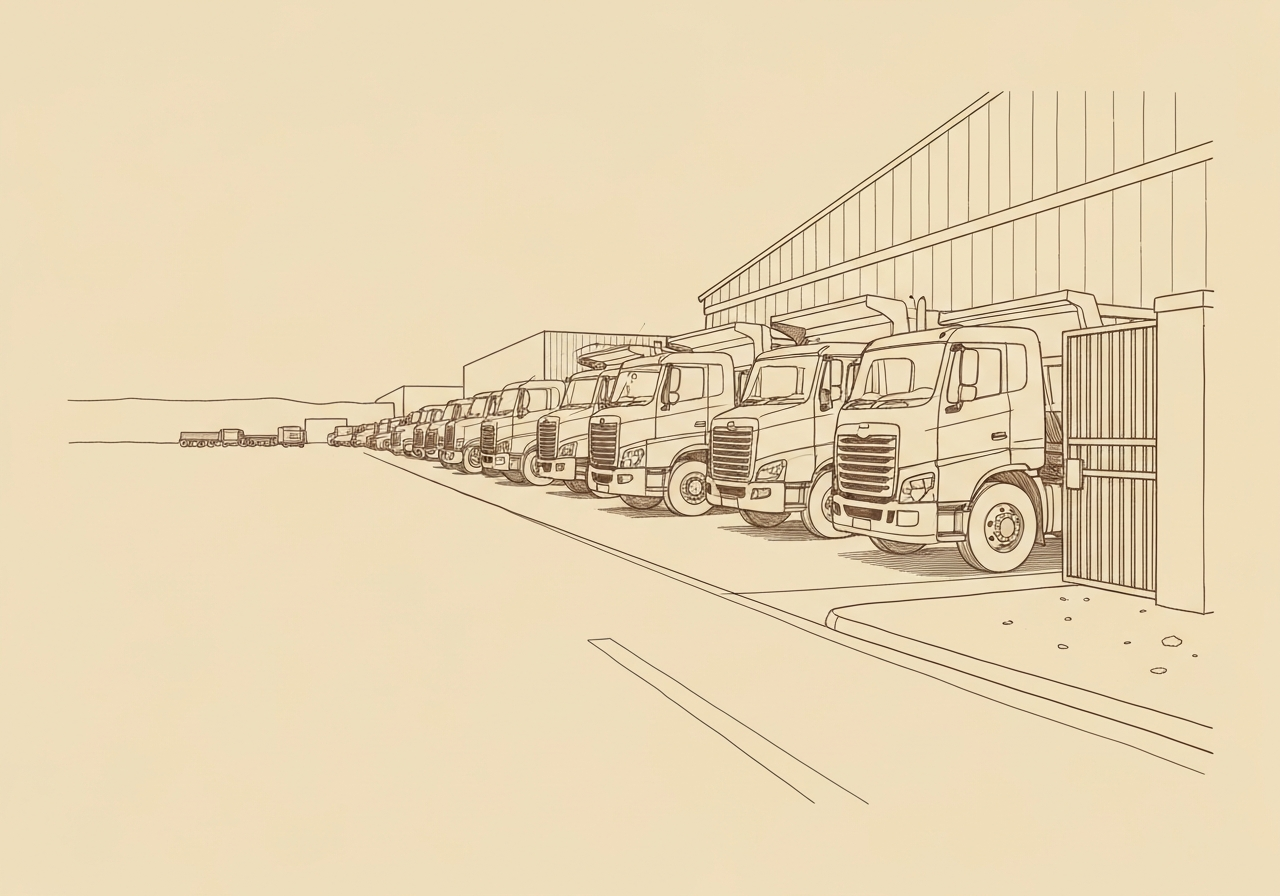
Tara Chand Logistics Solutions Limited had a simple problem. It ran 36 vehicles inside the Central Dispatch Yard of the Visakhapatnam Steel Plant, a facility owned by Rashtriya Ispat Nigam Limited (RINL). The yard was enclosed by compound walls, guarded by the Central Industrial Security Force (CISF), and no member of the public could just walk in. From April 2021, those vehicles never touched a public road. Yet the Andhra Pradesh transport authorities demanded motor vehicle tax, arguing that RINL’s premises was a ‘public place’ because RINL was a government company. The company paid under protest and then fought back. The High Court of Andhra Pradesh, in a judgment delivered on 13 June 2023 by Justice V. Sujatha, not only set aside the demand but ordered a full refund. The case is Tara Chand Logistics Solutions Limited v. State of Andhra Pradesh & Ors. (WP No.38285 of 2022), and it delivers a crisp, practical rule: if your vehicles operate inside a restricted industrial compound and never use public roads, you cannot be taxed for them — regardless of who owns the land.
The Contract, the Yard, and the Tax Demand
Tara Chand Logistics Solutions Limited won a 4.5-year contract with RINL for handling iron and steel materials at the Central Dispatch Yard inside the Visakhapatnam Steel Plant. The company deployed 36 vehicles exclusively within that yard. The yard was not a public thoroughfare. It was a secured, enclosed area with restricted access. From April 2021, the vehicles stopped plying on public roads entirely.
On 7 December 2020, the company wrote to the Licensing Officer (the 3rd Respondent, the Regional Transport Officer) seeking exemption from motor vehicle tax. It argued that since the vehicles were used only inside the restricted yard, they were not “used or kept for use in a public place” under Section 3 of the Andhra Pradesh Motor Vehicles Taxation Act, 1963. The authorities did not respond. Instead, on 16 November 2021, they raised a demand through Vehicle Check Reports (VCRs).
The company filed its first writ petition (W.P.No.6206/2022) before the High Court. On 26 April 2022, the Court disposed it off with a direction: the respondents must consider the exemption representations, give a hearing, and pass a reasoned order within eight weeks. The 3rd Respondent complied — but rejected the exemption on 14 June 2022. The reasoning: RINL is a government company, therefore its premises is a “public place.” The company appealed to the 2nd Respondent (the Appellate Authority), which rejected the appeal on 27 August 2022 on three grounds: (i) Rule 12-A of the AP Motor Vehicles Taxation Rules requires complete non-use of the vehicle, (ii) no stoppage intimation had been filed, and (iii) RINL premises is a public place.
By then, the total tax demand had reached a significant amount. The company paid under protest and filed the present writ petition.
What Each Side Argued
The petitioner’s case was straightforward. The vehicles were used exclusively within the Central Dispatch Yard — a restricted, enclosed, CISF-secured area. No member of the public had a right of access. Therefore, the yard was not a “public place” under Section 2(34) of the Motor Vehicles Act, 1988. Consequently, the vehicles were not “used or kept for use in a public place” under Section 3 of the Taxation Act. The company relied on a line of High Court decisions from Bombay, Madras, and Gujarat, and the Supreme Court’s landmark ruling in Travancore Tea Estates Co. Ltd. v. State of Kerala (Civil Appeal Nos.437-438 and 1460 of 1970, decided on 03.06.1980).
The respondents — the State of Andhra Pradesh, the Transport Commissioner, and the RTO — countered with two main arguments. First, RINL being a government company, its premises was a “public place” because the public had a right of access to government property. Second, the company had not filed a stoppage intimation under Rule 12-A, which requires the registered owner to inform the licensing officer in writing before the quarter for which tax is due that the vehicle shall not be used. Without that intimation, the vehicle was deemed to be “kept for use” and liable to tax.
The Doctrine the Court Applied: Tax is Compensatory, Not a Property Tax
Justice Sujatha began by examining the constitutional foundation. Entry 57 of List II (State List) of the Seventh Schedule to the Constitution empowers states to levy “taxes on vehicles suitable for use on roads.” The Supreme Court in Travancore Tea Estates had held that this tax is compensatory in nature — it must have a nexus with the use of public roads. If vehicles do not use public roads, they cannot be taxed, even if they are registered. The Court quoted the Supreme Court’s observation that Section 3 of the Taxation Act, which uses the phrase “used or kept for use in a public place,” must be construed as “used or kept for use on the public roads of the State.” A rebuttable presumption of use exists, but the owner can claim a non-user certificate.
The Court then turned to the definition of “public place” under Section 2(34) of the Motor Vehicles Act, 1988: “a road, street, way or other place, whether a thoroughfare or not, to which the public have a right of access, and includes any place or stand at which passengers are picked up or set down by a stage carriage.” The key phrase is “right of access.” The Central Dispatch Yard, the Court noted, was a highly restricted area. It was enclosed by compound walls, secured by CISF, and no member of the public could enter without authorisation. The mere fact that RINL was a government company did not transform this restricted industrial compound into a public place.
The Court drew support from three High Court decisions. In Tata Motors Limited v. Dy. Regional Transport Officer (WP No.8001/2008, Bombay HC, 11.03.2010), the Bombay High Court held that vehicles used exclusively on factory premises are entitled to exemption. In Neyveli Lignite Corporation Ltd. v. Government of Tamil Nadu (WP No.6787/1998, Madras HC, 19.09.2005), the Madras High Court held that even if outsiders are allowed inside, private roads of a corporation are not “public roads” for taxation purposes. In Srinath Travels Agency v. State of Gujarat (SCA No.18553/2014, Gujarat HC), the Gujarat High Court held that vehicles used exclusively within restricted airport premises do not operate in a “public place.”
The Court also addressed the Rule 12-A argument. The respondents had argued that since no stoppage intimation was filed, the vehicles were deemed to be “kept for use” and liable to tax. The Court noted that the respondents’ own counter affidavit had acknowledged that Rule 12-A is not the sole method for granting exemption. The Court implicitly accepted that alternative evidence of non-use on public roads — such as the company’s representations and the undisputed fact that the vehicles never left the yard — could ground an exemption claim even without formal intimation.
The Bottom Line: A Refund and a Clear Rule
The Court allowed the writ petition. It set aside the orders dated 14 June 2022 and 27 August 2022 that had rejected the exemption. It directed the respondents to refund the entire amount paid by the petitioner upon application. No order as to costs.
THE PLAY: If your vehicles operate exclusively within a restricted industrial compound, factory, or secured premises — and never use public roads — you are entitled to exemption from motor vehicle tax. You do not need to file a formal stoppage intimation under Rule 12-A if you can prove non-use on public roads through other evidence. And the government’s ownership of the premises does not make it a “public place.”
Why This Matters for Practitioners, CFOs, and Founders
For advocates, this judgment is a clean application of the compensatory theory of motor vehicle taxation. The key takeaway is that the definition of “public place” under the Motor Vehicles Act is not a magic wand that the state can wave over any government-owned property. The test is whether the public has a right of access, not whether the public can theoretically enter with permission. The judgment also clarifies that Rule 12-A is not the exclusive route to exemption — alternative evidence of non-use can suffice.
For CFOs and founders of logistics companies, this is a practical cost-saving tool. If your fleet operates inside a factory, a steel plant, a port, an airport, or any secured industrial zone, you should immediately review your tax liability. The moment your vehicles stop using public roads, you should file representations for exemption. If the authorities reject them on the ground that the premises is a “public place,” you now have a binding High Court precedent to cite. The amount that Tara Chand Logistics recovered is not an anomaly — it is the logical consequence of a tax that is meant to compensate for road usage, not to be a property tax on vehicles.
For startup founders in the logistics and supply chain space, the lesson is even simpler. Do not assume that because your vehicles are registered, they are taxable. The tax follows the road, not the registration. If your vehicles never touch a public road, you should not pay a rupee in motor vehicle tax. And if the tax authorities demand it, you now know exactly which judgment to wave at them.