Summoned to hand over a paper, grilled like a witness – Supreme Court says no
Haqiqullah was called to produce a Power of Attorney. The other side cross-examined him on the whole case. The Supreme Court shut it down.
"A person summoned to produce a document does not become a witness by the mere fact of producing it."
The rule the Supreme Court appliedVishwa Vijay Bharati v. Fakhrul Hasan — 2024 LiveLaw (SC) 123
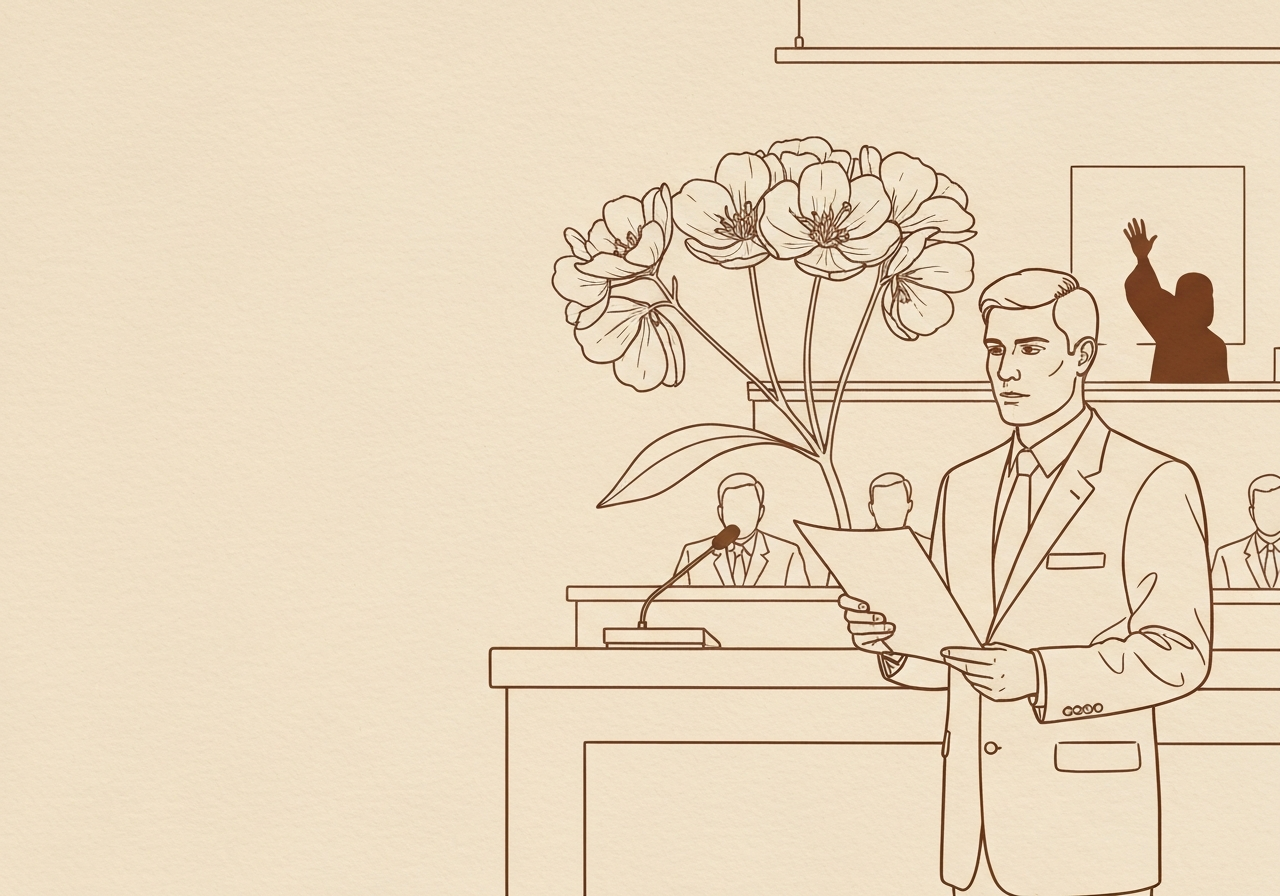
Haqiqullah was called to produce a Power of Attorney. The other side cross-examined him on the whole case. The Supreme Court shut it down.
He was only asked to bring a document to court. Then the lawyer started questioning him about the entire dispute. In a quiet courtroom, a man named Haqiqullah stood holding a Power of Attorney — a piece of paper authorising someone to act on behalf of another. He had been summoned for one reason: to hand that paper over. The lawyer's voice rose as he fired questions about the case itself. The judge's pen paused mid-note. What followed was something the Supreme Court would later call a clear overreach.
When the lawyer forgot the difference
The case, Vishwa Vijay Bharati v. Fakhrul Hasan, began in a trial court. One side needed a specific document — a Power of Attorney (a written authorisation that lets one person act for another in legal or financial matters). The court issued a summons to Haqiqullah, the person holding that document. His job was simple: show up, produce the paper, and leave. The summons itself was a thin sheet, bearing the court's seal, calling him for a single, narrow purpose.
But the opposing side had other plans. Once Haqiqullah was in the witness box, the lawyer began asking him questions — not about the document, but about the entire dispute. The merits of the case. The facts. The allegations. Haqiqullah was grilled as though he were a party to the suit, not a man who had merely walked in with a folder. The lawyer's tone grew sharper with each question, pressing for answers about events Haqiqullah may not have even witnessed. The courtroom fell silent as the witness hesitated, caught between a document he held and questions he had no business answering.
The trial judge allowed it. The cross-examination proceeded. And that decision eventually travelled all the way to the Supreme Court.
The one question that mattered
Could a person summoned only to produce a document be cross-examined on the merits of the case? That was the single issue before the Supreme Court. The answer would determine whether Haqiqullah had been treated fairly — and whether the trial court had misread a fundamental rule of evidence.
The respondent — the side that had done the cross-examining — argued that the questioning was permissible. Once a person is in the witness box, they said, the other side has the right to test their credibility. The document was produced; why not ask about everything else? The argument had a surface logic, but it ignored a critical distinction in the law.
The petitioner — the side that had summoned Haqiqullah — disagreed sharply. They pointed to Section 139 of the Evidence Act (the provision that governs what happens when someone is called only to produce a document). That section, they argued, draws a clear line: producing a document does not make you a witness. And if you are not a witness, you cannot be cross-examined on the case. The petitioner's counsel stood firm, insisting that the trial court had allowed a procedural shortcut that violated the very purpose of the rule.
What Section 139 actually says
Section 139 of the Evidence Act is a short but precise rule. It states that a person summoned to produce a document does not become a witness by the mere fact of producing it. The person "cannot be cross-examined unless and until he is called as a witness."
The logic is straightforward. A document production is a mechanical act — you hand over a paper, you answer a few questions about its identity or custody, and you are done. It does not turn you into a person whose testimony on the entire case can be tested through cross-examination. If the other side wants to question you on the merits, they must first call you as a witness in the usual way — by summoning you as a witness, putting you on oath, and giving you the chance to give your own account.
The trial judge, the Supreme Court noted, had overlooked this distinction. Haqiqullah was summoned only to produce the Power of Attorney. He was never called as a witness. Yet the court allowed the other side to cross-examine him on the entire dispute — effectively treating him as a witness without following the procedure that would have made him one. The judge's oversight, the Supreme Court observed, had turned a simple document production into an interrogation.
Why the Supreme Court shut it down
The Supreme Court held that the respondent could not take advantage of summoning a person merely for document production under Section 139 to cross-examine him on the merits of the case. The court's reasoning was rooted in the precise nature of testimonial evidence — the difference between handing over a paper and giving testimony about facts.
The court observed, "A person summoned to produce a document does not become a witness by the mere fact of producing it." This single sentence captured the heart of the dispute. The court made clear that the procedure for document production is not a backdoor for cross-examination. If a person is intended to be impeached — that is, if the other side wants to challenge their credibility or use their statements against them — that person must be called as a witness in the proper manner. Their statement must be introduced as evidence through the usual process. Merely having them produce a document, which is a reactive step, does not lay the foundation for a broad cross-examination for impeachment purposes.
The court did not mince words. The learned trial judge, it said, had overlooked the clear limitation in Section 139. Haqiqullah could not become a witness in the case by the mere fact of document production. The cross-examination on the merits was therefore impermissible. The judgment was crisp, leaving no room for ambiguity.
What this means for every lawyer and litigant
The judgment is a reminder that procedure exists to protect people, not to trap them. A summons to produce a document is not an open invitation to interrogate the person holding it. If the other side wants to question someone on the facts of the case, they must follow the correct route: call that person as a witness.
For practitioners, the lesson is simple. Before you start cross-examining a document producer, ask yourself: was this person called as a witness? If the answer is no, stop. The law does not allow it. The distinction is not a technicality — it is a safeguard. A person who walks into court holding a paper should not leave having been treated as a party to the dispute.
This case also highlights the precise nature of testimonial evidence in Indian law. The Evidence Act draws careful lines between different roles in a courtroom: the witness who gives testimony, the party who is sued, and the person who merely produces a document. Blurring those lines undermines the fairness of the trial. A document producer who is cross-examined on the merits without being called as a witness is denied the protections that a witness would have — the right to prepare, the right to be examined in chief, and the right to have their own account heard before being challenged.
THE PLAY: If you want to cross-examine someone on the merits, call them as a witness — do not hide behind a document production summons under Section 139 of the Evidence Act.
The court ended where it began: with a man who walked in holding a paper, and a lawyer who forgot the difference between producing a document and being a witness. The file felt thin in Haqiqullah's hands as he left the courtroom — a single Power of Attorney, the reason he had come, and the only thing he should have been asked about.