Supreme Court orders sale of ancestral shops to pay wife's maintenance
After five years of defiance, failed auctions, and jail time for in-laws, the Court invokes Article 142 to transfer property to the wife.
1.25
crores.
After five years of defiance, failed auctions, and jail time for in-laws, the Court invokes Article 142 to transfer property to the wife.
The husband fled to Australia and remarried. His parents spent 10 months in jail. The wife still got nothing — until the Supreme Court did something it rarely does.
For five years, the wife had been chasing a ghost. Her husband had left for Australia, obtained an ex-parte divorce (a divorce granted without her participation), married another woman, and fathered two children. He had stopped responding to Indian courts entirely. Meanwhile, his parents — the petitioners before the Supreme Court — had been arrested, jailed for nearly a year, and released on bail. And the wife still hadn't received a single rupee of the maintenance she was owed.
The question hanging over this case was brutal in its simplicity: What happens when a court orders a husband to pay maintenance, and he simply refuses — flees the country, stops participating, and leaves his aging parents to face the consequences?
When the marriage unravelled
The husband married the second respondent around 2012-13. He was working in Australia at the time. Within two years, the marriage broke down. What followed was not one legal proceeding but many — a cascade of cases filed in different courts, each one adding to the pile. In the Family Court at Bilaspur, the wife's petition lay on the desk — a thin file that would grow thick with orders, each one unenforced.
The wife approached the Family Court in Bilaspur seeking maintenance. In November 2016, the court granted her interim maintenance of ₹1 lakh per month — a significant sum, but one that reflected the husband's earnings in Australia. The husband challenged this order before the Chhattisgarh High Court, but his revision petition was dismissed for non-prosecution (he simply stopped showing up). The wife, meanwhile, sought an enhancement, and in April 2021, the High Court raised the amount to ₹1,27,500 per month.
But the orders existed only on paper. The husband had already left India. He obtained an ex-parte divorce in Australia, remarried, and started a new family. He had no intention of paying. At each hearing, the chair where he should have sat remained empty — a silent marker of his absence.
The in-laws in the crosshairs
When the husband himself was beyond the reach of Indian courts, the legal machinery turned to his parents — the petitioners in this case. They were charged under multiple sections of the Indian Penal Code, including Sections 420 (cheating), 406 (criminal breach of trust), and 468 (forgery). They were also directed to deposit ₹40 lakhs towards the mounting maintenance arrears.
They failed to do so. The Supreme Court had granted them bail in July 2019 — but only after they had already spent 10 months in custody. The condition of depositing ₹40 lakhs had not been met earlier, and the court was losing patience.
By this point, the arrears had ballooned. Five years of unpaid maintenance at ₹1,27,500 per month, plus the earlier ₹1 lakh per month, plus interest and costs — the total stood at approximately ₹1.25 crores.
Why the auctions failed
The court had tried the conventional route. In September 2021, the Supreme Court ordered the attachment of 11 ancestral shops owned by the family. The father-in-law consented to the attachment. The shops were to be sold, and the proceeds used to pay the wife.
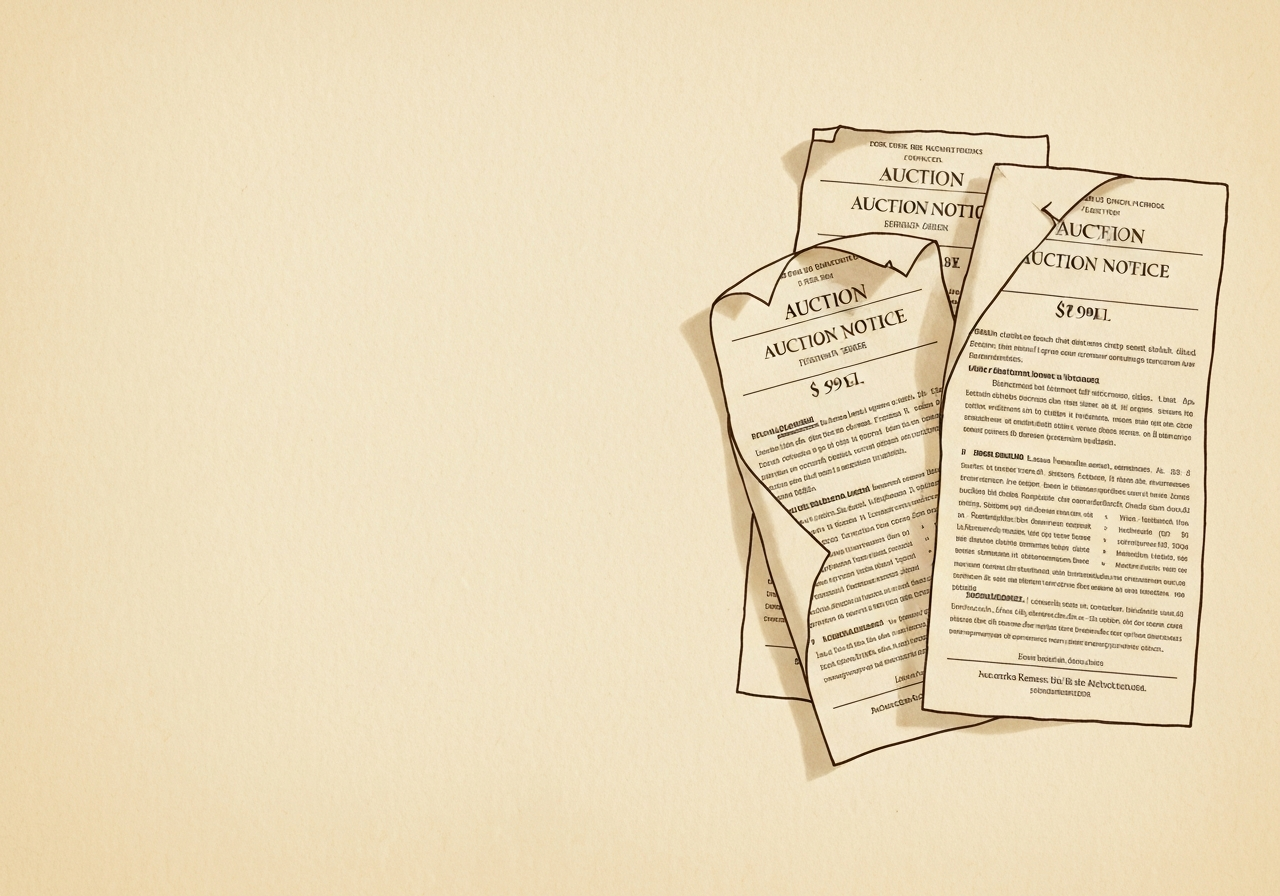
But the shops were occupied by tenants. When the executing court tried to auction them, no one bid. Three separate auction attempts failed — each time, the auction notice was pasted on the dusty shop walls, and each time, it drew no interest, flapping in the breeze as passers-by ignored it. The shops were valuable, but they were also illiquid — tied up in lease agreements, with tenants who had no intention of vacating.
A mediation settlement memo was also signed, promising ₹1.29 crores. It was never paid. Contempt proceedings were initiated. Still, nothing. The gym's rental ledger showed columns of unpaid income that was supposed to be deposited, yet the wife's account remained empty.
The court was facing a paradox: it had the power to order payment, but it could not force a buyer to appear at an auction. The conventional execution machinery — attachment, auction, sale — had failed completely.
What Article 142 allowed the court to do
This is where the Supreme Court did something unusual. It invoked Article 142 of the Constitution — a provision that gives the Supreme Court the power to pass any order necessary to do "complete justice" in any case before it. Article 142 is rarely used in family maintenance matters. It is typically reserved for cases involving constitutional interpretation, public interest, or extraordinary circumstances where the existing legal framework is inadequate.
The court reasoned that when a maintenance order remains persistently unexecuted — despite imprisonment of the judgment debtor's family, attachment of properties, and multiple failed auctions — and when the judgment debtor himself has displayed "obdurate defiance of court orders," the court could not simply throw up its hands. It had to fashion a remedy that actually worked.
The bench — Justice S. Ravindra Bhat and Justice Aravind Kumar — crafted what it called a "cascading enforcement mechanism." It had three stages, each one more aggressive than the last.
The three-stage remedy
Stage one: Sale of six shops. The court directed that six contiguous shops (municipal numbers 26 to 31) be sold by the Registrar of the Delhi High Court. The proceeds would be placed in a fixed deposit, with the interest disbursed to the wife. This bypassed the local executing court entirely — the Registrar, an officer of the High Court, would handle the sale directly, avoiding the problems that had plagued the earlier auction attempts.
Stage two: Continued attachment of rental income. The court also ordered that the rental income from a gymnasium called Fitness Factory Gym — which was located on another attached property — would continue to be collected and held in a separate account. This income would go towards the balance of ₹1.25 crores if the shop sale proceeds fell short.
Stage three: Potential conveyance to the wife. If the arrears remained unpaid within one year, the Registrar would ask the wife whether she wanted the first-floor premises of the attached property to be conveyed to her directly — meaning she would become the owner of the property itself. If she opted for conveyance, the deed would be executed and symbolic possession given. If she preferred a sale, the property would be auctioned within 18 months.
This was the court's way of saying: We have tried everything else. Now we are giving you the property itself.
Why this matters for every maintenance case
For practitioners, this judgment is a reminder that the Supreme Court's power under Article 142 is not theoretical. When a husband flees the country and the conventional machinery of attachment and auction fails, the court can — and will — order the sale of ancestral property, the attachment of rental income, and even the direct transfer of immovable property to the wife.
The key takeaway: the court is willing to bypass the local executing court entirely and appoint the Registrar of a High Court to conduct the sale. This removes the bottleneck of local court delays and tenant-related complications.
THE PLAY: When a maintenance debtor flees the jurisdiction and conventional execution fails, move the Supreme Court under Article 142 for a cascading enforcement mechanism — sale through a High Court Registrar, continued attachment of rental income, and potential direct conveyance of property to the claimant.
The walk-off
The shops will be sold. The gym rent will be collected. And if the arrears remain unpaid, the wife will become the owner of the property itself — a remedy the court fashioned because the husband thought he could simply disappear.