Supreme Court Single Judge Can't Grant Divorce? Larger Bench to Decide
A couple settled their divorce case, but a single judge of the Supreme Court referred the matter to the Chief Justice, questioning if one judge can grant divorce under Article 142.
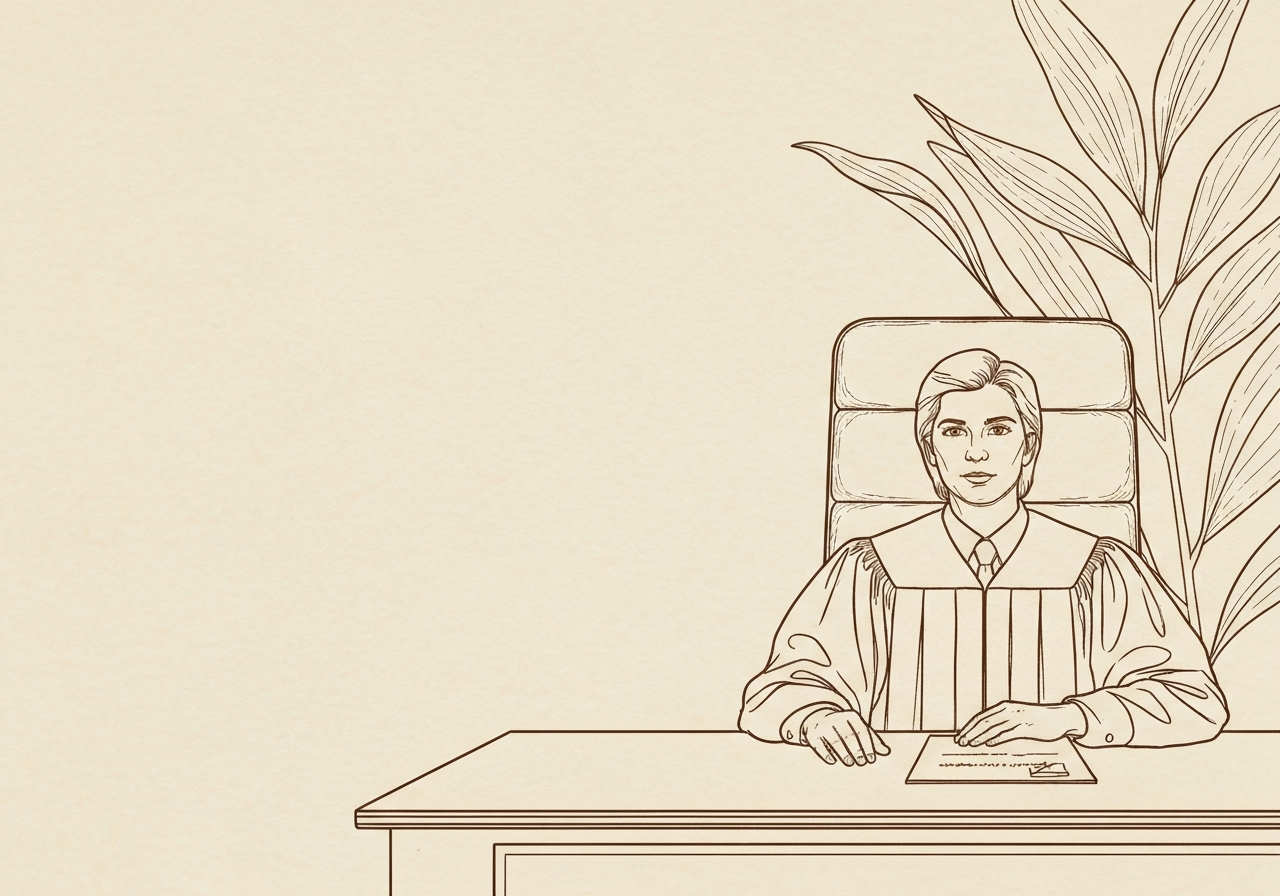
Deferred.
Settlement signed.
Divorce deferred.
A couple settled their divorce case, but a single judge of the Supreme Court referred the matter to the Chief Justice, questioning if one judge can grant divorce under Article 142.
They agreed to divorce, signed a settlement, and asked the Supreme Court to end their marriage. But the single judge stopped and said—not yet, not alone.
On a February afternoon in 2022, Justice Krishna Murari sat in his chambers at the Supreme Court of India, looking at a file that should have been routine. A husband and wife had settled their differences. They had signed a joint application under Article 142 of the Constitution (a special power that lets the Supreme Court pass any order needed to do "complete justice" in a case before it). They wanted one thing: a decree of divorce by mutual consent. The judge had the power to grant it. But he didn't.
The question that stopped him was deceptively simple: can a single judge of the Supreme Court grant a divorce under Article 142? And because that question had already been sent to a larger bench for a final answer, Justice Murari did something unusual—he sent the couple's case straight to the Chief Justice of India, asking for a larger bench to be formed.
When a settlement isn't enough
The story begins with a marriage gone wrong. The wife—identified in court records as Anamika Varun Rathore (also known as Anamika Singh Bhadouria)—filed a transfer petition (a legal request to move a case from one court to another) before the Supreme Court in 2018. The husband, Varun Pratap Singh Rathore, was the respondent.
For three years, the case moved slowly. Then, in October 2021, something changed. The couple reached a settlement. They signed a Settlement Agreement dated 27th October 2021, agreeing to end their marriage by mutual consent. Both parties then filed a joint application under Article 142, asking the Supreme Court to convert their settlement into a formal divorce decree.
On paper, this looked straightforward. The Supreme Court has used Article 142 for decades to grant divorces in settled cases, bypassing the long waiting periods required by marriage laws. But this time, the single judge noticed a problem.
The question that wouldn't go away
Justice Murari noted that a similar question had already been raised in another case—Transfer Petition (Civil) No. 908 of 2019—where an order dated 1st March 2021 had referred the issue to a larger bench. The question: does a single judge of the Supreme Court have the jurisdiction to grant a divorce decree under Article 142 based solely on a settlement agreement between the parties?
This is not a trivial question. Article 142 gives the Supreme Court extraordinary powers to do "complete justice" in any case before it. But the Constitution also envisions that certain questions—especially those involving the interpretation of fundamental powers—should be decided by benches of greater strength. A single judge's order under Article 142 can set a precedent that binds lower courts across India. If the power to grant divorce under Article 142 is questionable, every single-judge divorce granted in the past could face legal challenge.
The husband and wife's lawyers argued that the settlement was genuine, that both parties consented freely, and that the court should simply grant the divorce. But the judge was not convinced that he could decide the matter alone.
Why a single judge hesitated
Justice Murari's order is brief—barely a page—but its implications are significant. He wrote: "Since the question as to whether a Single Judge of this Court can exercise powers under Article 142 of the Constitution of India to grant a decree of divorce on the basis of a settlement agreement has been referred for adjudication by a larger bench, let this matter be placed before the Hon'ble Chief Justice of India for nominating an appropriate Bench for disposal of the matter."
The judge did not express an opinion on whether a single judge could or could not grant the divorce. He simply acknowledged that the question was already pending before a larger bench and that it would be inappropriate for him to decide the issue in this case while the larger question remained unresolved.
This is a classic example of judicial restraint—a judge recognizing the limits of his own authority and deferring to a higher constitutional process. It also reflects the Supreme Court's internal discipline: when a legal question has been flagged for a larger bench, individual judges do not pre-empt that decision by ruling on the same issue in other cases.
The legal machinery at work
The case was originally filed as a Transfer Petition under Section 25 of the Code of Civil Procedure (a provision that allows the Supreme Court to move a case from one court to another for the sake of convenience or justice). But by the time it reached Justice Murari, the transfer petition had become secondary. The real issue was the joint application under Article 142.
Article 142 is one of the most powerful tools in the Supreme Court's arsenal. It says: "The Supreme Court in the exercise of its jurisdiction may pass such decree or make such order as is necessary for doing complete justice in any cause or matter pending before it." Courts have interpreted this to mean that the Supreme Court can override procedural hurdles—including waiting periods in divorce laws—when the parties genuinely agree and the court finds it just to do so.
But the question of who can exercise this power—a single judge or only a division bench—has never been definitively settled. The reference to a larger bench suggests that the Supreme Court itself is unsure, and wants a clear rule.
What happens next
The Chief Justice of India will now decide which bench hears the case. It could be a division bench of two judges, or a larger bench of three or more. The larger bench will first decide whether a single judge can grant divorce under Article 142. If the answer is yes, Justice Murari—or another single judge—could then grant the divorce in this case. If the answer is no, the matter would have to be heard by a bench of at least two judges.
For the couple, this means more waiting. They signed their settlement in October 2021. By February 2022, when Justice Murari passed his order, they had already waited four months. Now they must wait for the Chief Justice to form a bench, and then for that bench to decide the jurisdictional question before their divorce can be granted.
For the legal community, the stakes are higher. If the larger bench rules that a single judge cannot grant divorce under Article 142, every single-judge divorce decree granted in the past could be vulnerable to challenge. If it rules that a single judge can, the practice continues as before—but with clearer legal backing.
THE PLAY: If you are seeking a divorce by mutual consent through the Supreme Court under Article 142, ensure your case is listed before a bench of at least two judges until the larger bench settles the single-judge question.
The couple left the courtroom with their settlement in hand, but no divorce decree. The judge had done what judges sometimes must—he stepped aside, and let a bigger question be answered first.