The Article 21 test that now governs every hysterectomy under a government scheme.
The Supreme Court has made the MoHFW guidelines on unnecessary hysterectomies binding on every state, with blacklisting and criminal liability for non-compliance, targeting a violation that disproportionately affects Dalit, Adivasi, and backward community women.
Blacklisted.
After ten years.
Hospitals blacklisted.
The Supreme Court has made the MoHFW guidelines on unnecessary hysterectomies binding on every state, with blacklisting and criminal liability for non-compliance, targeting a violation that disproportionately affects Dalit, Adivasi, and backward community women.
The women who lost their wombs — and what the Supreme Court did about it
Dr. Narendra Gupta, a public health advocate, walked into the Supreme Court of India in 2013 with a disturbing claim. Thousands of women in Bihar, Chhattisgarh, and Rajasthan — most of them Dalit, Adivasi, or from backward communities — had undergone unnecessary surgical removal of the uterus. Hysterectomies. Major surgery. Performed under government health insurance schemes, often in private hospitals. The women could have been treated with simpler, non-invasive methods. Instead, they lost an organ. Their health suffered. Their lives changed forever. The Court took the petition seriously. Ten years later, on April 5, 2023, a Bench led by Chief Justice Dr. Dhananjaya Y. Chandrachud, with Justice J.B. Pardiwala concurring, delivered a judgment that did more than just dispose of a PIL. It set down a framework that every State and Union Territory must now follow — or face consequences.
What the State investigations actually found
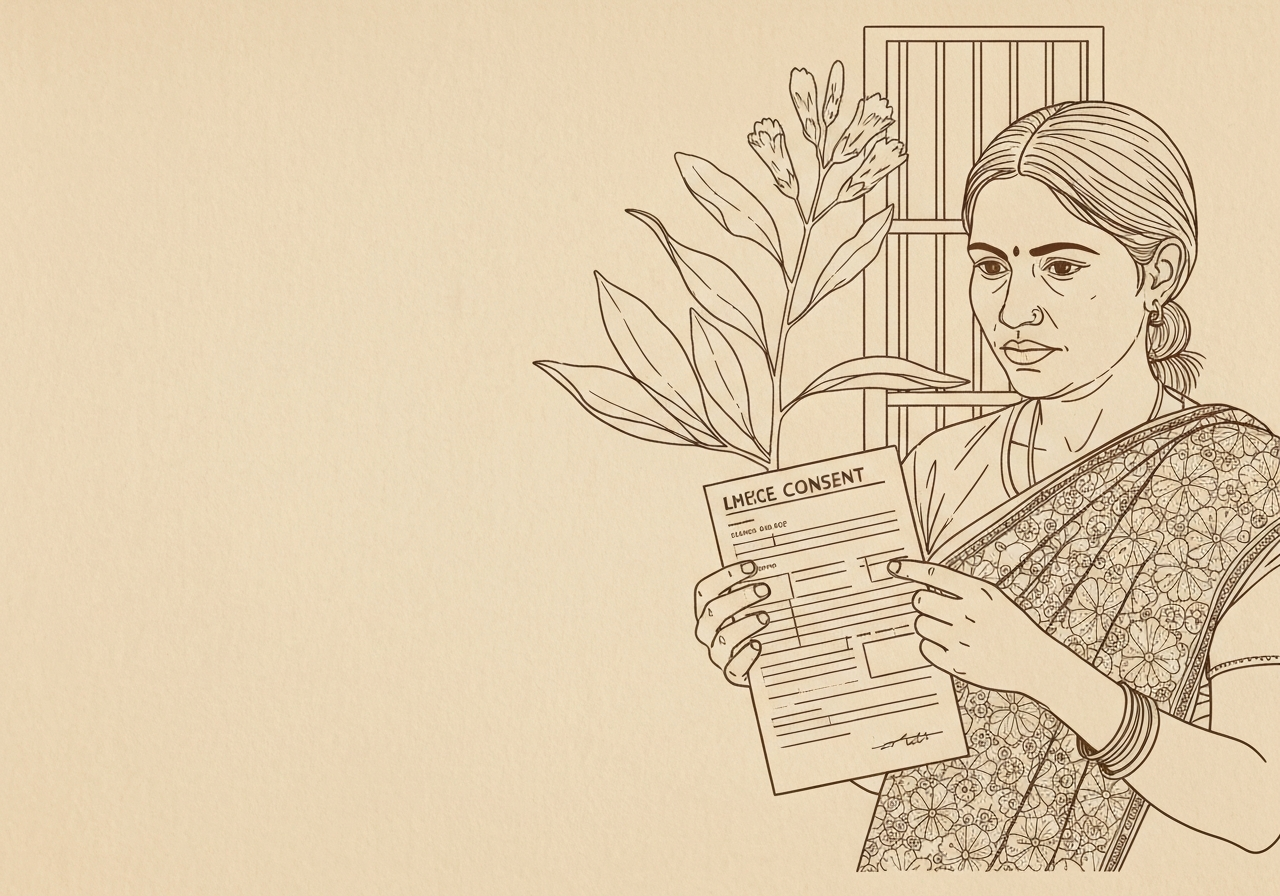
The petition, filed under Article 32 of the Constitution, alleged that the Rashtriya Swasthya Bima Yojana (RSBY) and other government schemes were being exploited. Private hospitals were performing hysterectomies on women who did not need them. The surgeries were billed to the government. The women — poor, illiterate, often from remote villages — were never told what was being done to them. They signed consent forms they could not read. They went home without a uterus, often without understanding why.
The Supreme Court directed the Union government to respond. The Ministry of Health and Family Welfare (MoHFW) filed a counter-affidavit. So did the States of Bihar, Rajasthan, and Chhattisgarh. Their findings were damning. Investigations confirmed that the allegations were substantially true. Hospitals were blacklisted. FIRs were registered. But the damage was already done. Thousands of women had already been operated upon. The Court noted that most of these women belonged to Scheduled Castes, Scheduled Tribes, or Other Backward Communities. The violation had a clear socio-economic dimension.
The right the Court invoked
The Bench did not need to look far for the constitutional foundation. Article 21 of the Constitution guarantees the right to life. The Supreme Court has long held that the right to health is an intrinsic element of that right. In this case, the Court stated it plainly: "Life, to be enjoyed in all its diverse elements, must be based on robust conditions of health. Subjecting women to unnecessary hysterectomies constitutes a serious violation of their fundamental rights."
That was the touchstone. The Court was not dealing with a medical negligence claim or a contractual dispute. It was dealing with a fundamental rights violation — systematic, state-funded, and deeply gendered.
The Guidelines that became the law
By 2022, the Union government had issued a set of Guidelines to prevent unnecessary hysterectomies. These Guidelines proposed setting up monitoring committees at the district, state, and national levels. They required that non-invasive methods be tried first. They mandated that women be properly informed about the reason for the surgery and its likely consequences. They also required that informed consent be obtained in a language the patient understood.
The Supreme Court examined these Guidelines. It found them adequate. But adequacy on paper is not enough. The Court needed to ensure that every State and Union Territory actually adopted and implemented them. So it did what it does best: it issued directions.
What the Court ordered — and why it matters
The operative order is straightforward, but its implications are far-reaching. The Court directed:
- All States and Union Territories shall adopt the MoHFW Guidelines within three months and report compliance to the Union government.
- All States and Union Territories shall implement the Guidelines without delay.
- All public and private hospitals must be made aware of the Guidelines.
- Stringent action must be taken for blacklisting hospitals once it is detected that any unnecessary hysterectomy was carried out, or the procedure was performed without the informed consent of the patient.
- The Union government shall take all necessary steps in accordance with the Guidelines.
The petition was disposed of. But the Court made it clear: this is not the end. Compliance must be reported. Failure to comply will invite consequences.
THE PLAY: Every hospital performing hysterectomies under government schemes must now ensure that the procedure is medically necessary, that non-invasive alternatives have been tried, and that the patient has given informed consent in a language she understands. Failure to do so will result in blacklisting — and potentially, criminal liability.
The socio-economic dimension the Court flagged
The judgment did not stop at the legal framework. The Bench noted, almost as an aside, that most of the affected women belonged to Scheduled Castes, Scheduled Tribes, or Other Backward Communities. This observation, while technically obiter, carries significant weight. It signals that the Court is alive to the intersectional nature of the violation. Poor women, illiterate women, women from marginalized communities — they are the ones who suffer most when the healthcare system is exploited. The Court's direction to blacklist hospitals is a direct response to that reality. It is not just about medical ethics. It is about protecting the most vulnerable.
The informed consent requirement
One of the most important aspects of the judgment is the emphasis on informed consent. The Court noted the petitioner's submission that women must be properly informed about the reason for the hysterectomy and its likely consequences. The Bench did not merely note this submission — it endorsed it. The operative order explicitly requires that hospitals be blacklisted if a hysterectomy is performed without the informed consent of the patient. This is a significant development in medical consent jurisprudence. It means that consent is not a formality. It must be real, informed, and voluntary. And if it is not, the hospital faces consequences.
What this means for advocates, CFOs, and founders
For advocates, this judgment is a reminder that Article 21 is not a theoretical guarantee. It has real teeth. The Court has now laid down a clear framework for holding hospitals accountable. Any PIL or writ petition alleging unnecessary hysterectomies can now cite this judgment as binding precedent. The Guidelines are no longer optional — they are mandatory.
For CFOs of hospitals — especially those operating under government schemes — this judgment is a warning. The days of performing unnecessary surgeries for profit are over. The Court has directed blacklisting. That means loss of empanelment, loss of revenue, and potentially, loss of reputation. Compliance is not optional. It is a legal requirement.
For founders of healthcare startups, this judgment is an opportunity. The Court has mandated that non-invasive methods be tried first. That creates a market for diagnostic tools, treatment protocols, and patient education platforms that help doctors avoid unnecessary surgeries. The Guidelines also require monitoring committees. That means data collection, reporting, and compliance tracking. Startups that can provide these services will find a ready market.
The bottom line
Every hospital in India that performs hysterectomies — whether public or private, whether under a government scheme or not — must now ensure that the procedure is medically necessary, that non-invasive alternatives have been exhausted, and that the patient has given informed consent in a language she understands. The Supreme Court has spoken. The Guidelines are the law. And the consequences for non-compliance are severe.