They didn't cite a single precedent. The court still rewrote the protection playbook.
A Division Bench in Nainital issued no landmark precedent, yet its administrative directive could save countless couples from filing writ petitions for basic safety.
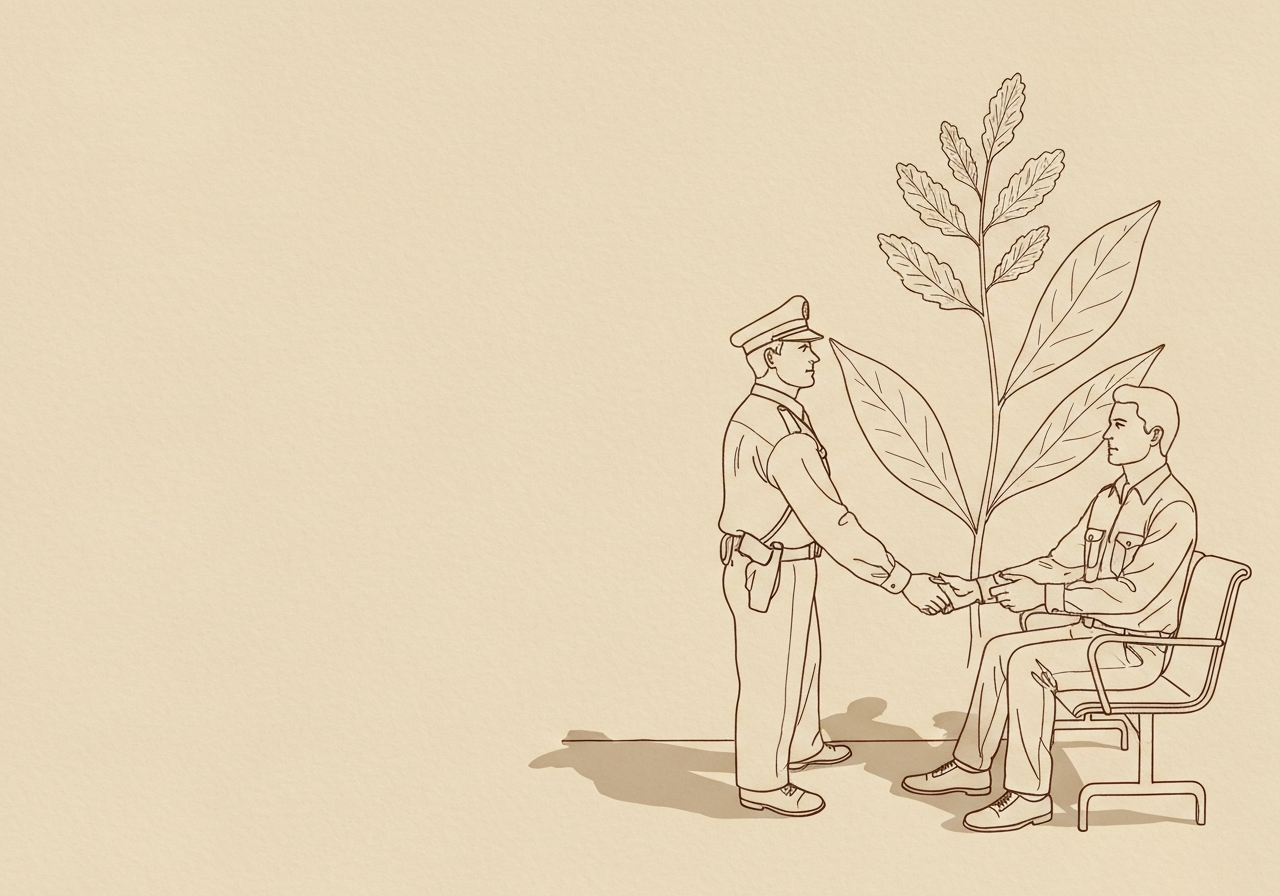
Protected.
Two adults.
No writ needed.
A Division Bench in Nainital issued no landmark precedent, yet its administrative directive could save countless couples from filing writ petitions for basic safety.
Two Adults, One Petition, and a High Court’s Directive to the Police
When Shubhi Sharma and her partner walked into the High Court of Uttarakhand at Nainital, they weren’t asking for a declaration of rights. They were asking for something far more basic: protection. Both were adults. Both were in a consensual relationship. And both, according to their petition, faced threats from their own families who opposed that relationship. The stakes were simple but severe — life and liberty under Article 21 of the Constitution.
The court, presided over by a Division Bench of Justice Ritu Bahri (Chief Justice) and Justice Pankaj Purohit, didn’t examine the facts of the case. It didn’t need to. Instead, it did something that will matter for every couple in Uttarakhand who finds themselves in the same position: it told the police to do their job, and it told the State to make it easier for couples to ask for help without running to court first.
What the Petition Actually Said
The petitioners — Shubhi Sharma and another individual — invoked the High Court’s writ jurisdiction under Article 226 of the Constitution. They claimed that their families were threatening them because of their relationship. The court noted that both parties were major. That single fact — majority — was the legal fulcrum. Once you are an adult, the Constitution guarantees your right to choose your partner, and the State must protect that choice from private interference.
The court didn’t reproduce the exact text of the petition. It didn’t need to. The core was clear: two adults, a relationship, family opposition, and a fear for safety. The remedy sought was a direction to the police to provide protection.
The Order That Changed the Game
On March 15, 2024, the court disposed of Writ Petition (Crl.) No. 270 of 2024 with two specific directions.
First, the court directed the Senior Superintendent of Police, Haridwar — the respondent no. 2 — to examine the contents of the writ petition and, if necessary, provide protection to the parties. That’s standard fare in such cases. But the second direction was the real shift.
Second, the court directed the State of Uttarakhand to issue general instructions enabling similarly situated parties — consenting adult couples facing family opposition — to directly approach the Senior Superintendent of Police for protection, without having to file a writ petition in the High Court.
That’s the part that matters. The court essentially said: “We shouldn’t have to be the first stop for every couple in trouble. The police should be.”
Why the Court Didn’t Need Precedents
Notice something striking about this judgment: the precedent registry is empty. No case law was cited. No Supreme Court rulings were discussed. That’s not a weakness — it’s a feature. The court was operating on first principles. Article 21 guarantees the right to life and personal liberty. Article 226 gives the High Court the power to enforce that right. When two adults face threats because of their relationship, the State’s duty to protect them is self-evident. You don’t need a precedent to tell you that.
But the court went a step further. It didn’t just order protection for these two petitioners. It ordered the State to create a mechanism so that future couples wouldn’t have to file a writ petition at all. That’s the difference between a case-specific order and a systemic direction.
The Doctrine That Mattered: Protection Without Litigation
The ratio decidendi here is deceptively simple. The court held that where both parties to a relationship are adults, and they face threats from families opposing their relationship, the police authorities — specifically, the Senior Superintendent of Police — are duty-bound to examine the matter and provide protection if needed.
That’s Ratio 1. But Ratio 2 is the one that practitioners should note: the State should issue general instructions creating a direct mechanism for consenting adult couples facing family opposition to approach the SSP for protection, without necessarily having to approach the High Court.
In plain language: the High Court is telling the State to build a front door so couples don’t have to break down the back door of the court every time.
THE PLAY: If you are an advocate representing a consenting adult couple facing family threats in Uttarakhand, your first move should no longer be a writ petition. It should be a representation to the SSP under the general instructions the State is now directed to issue. If the police fail to act, then you approach the High Court.
What This Means for Practitioners
For advocates in Uttarakhand, this judgment creates a clear procedural pathway. Before March 15, 2024, the standard practice was to file a writ petition under Article 226, get an interim order, and then serve it on the police. That process takes time, money, and judicial resources. Now, the court has directed the State to create a mechanism where the SSP can act on a direct representation.
For CFOs and founders — yes, this matters to you too. If your company has employees in Uttarakhand who face personal security threats from family members due to their relationships, this judgment gives you a clear administrative route. You don’t need to engage a litigation lawyer immediately. You can approach the SSP directly. That saves time and legal costs.
For the State of Uttarakhand, the direction is clear: issue general instructions. The court didn’t specify the format — it could be a circular, a standing order, or a standard operating procedure. But the obligation is unambiguous. The State must act.
The Bottom Line
This judgment is not a landmark in the traditional sense — it doesn’t break new constitutional ground. But it is a practical, administrative fix to a recurring problem. The High Court of Uttarakhand has told the police: “You don’t need a court order to protect two adults. Just do your job.” And it has told the State: “Make it easy for them to ask.”
For every couple in Uttarakhand who fears their own family, this judgment means one thing: you don’t have to file a case to get protection. You can walk into the SSP’s office and ask. And the SSP must listen.