Two men were convicted of murder. The Supreme Court just freed them — here's why the 'last seen' theory failed.
The deceased was last seen walking with the accused. But the time gap between that sighting and the discovery of the body was too large. The Court said: 'A person may walk beside a stranger for considerable distance without even talking.'
27
years.
The deceased was last seen walking with the accused. But the time gap between that sighting and the discovery of the body was too large. The Court said: 'A person may walk beside a stranger for considerable distance without even talking.'
They were seen walking together on a public street. Hours later, a body was found. The Supreme Court just ruled that's not enough to convict — and explained why.
On a winter afternoon in 1997, in the cold hills of Pithoragarh district, a man was seen walking with two others. By the next morning, his body lay in the verandah of a shop — the silence of the verandah broken only by the discovery. For twenty-seven years, Suresh Chandra Tiwari and Bhuwan Chandra Punetha carried the weight of that sighting — first a life sentence, then seven years, then a final appeal to the Supreme Court. The question was simple: does "I saw them together" equal "they killed him"?
The Court's answer, delivered in November 2024, is a masterclass in why circumstantial evidence demands more than suspicion. It is also a warning to every trial court that treats the "last seen" theory as a shortcut to conviction.
When a walk becomes a crime
The prosecution's case had no eyewitness to the murder. No confession. No weapon with fingerprints. What it had was a chain of circumstances — and the first link was the most damning: the deceased was allegedly seen walking with the two accused on the afternoon before his body was discovered on February 3, 1997. The winter air that afternoon held no hint of what was to come.
There was more. The accused were reportedly seen on a pathway near the shop at night. A bag containing meat was found near the body — its weight a silent accusation. Bloodstained stones were allegedly recovered after the accused pointed them out to the police; the stones' rough texture offered no forensic story. The trial court in Pithoragarh convicted both men under Sections 302 and 34 IPC (murder with common intention) and Section 201 IPC (causing disappearance of evidence), sentencing them to life imprisonment.
The High Court of Uttarakhand at Nainital partially agreed. It altered the conviction from murder to culpable homicide not amounting to murder under Section 304 Part I IPC (causing death without the intention to kill but with knowledge that the act was likely to cause death) and reduced the sentence to seven years. But the core finding — that the accused were guilty — remained intact.
The problem with 'last seen'
By the time the case reached the Supreme Court, the appellants' lawyers had one central argument: the circumstances did not prove guilt beyond reasonable doubt. The Court, comprising Justice Manoj Misra and Justice J.B. Pardiwala, agreed to examine whether each link in the chain of circumstantial evidence was strong enough to exclude every hypothesis consistent with innocence.
The first and most important link was the "last seen" evidence. The prosecution argued that since the deceased was last seen alive with the accused, the burden shifted to the accused to explain what happened. The defence countered that the time gap between the sighting and the discovery of the body was too large — hours had passed, and the possibility of someone else intervening could not be ruled out.
The Court turned to its own precedents, including the landmark Sharad Birdhichand Sarda v. State of Maharashtra (1984), which laid down the five golden principles for circumstantial evidence cases. That judgment requires that the circumstances must form a complete chain pointing unerringly to guilt — and the "last seen" circumstance alone cannot carry that weight unless the time gap is so small that no other person could have committed the crime. The Court also drew on Hanumat Govind Nargundkar v. State of Madhya Pradesh (1952), which established that in circumstantial evidence cases, the circumstances must be proved beyond reasonable doubt and must unerringly point to the guilt of the accused, excluding every hypothesis consistent with innocence.
Why walking together means nothing
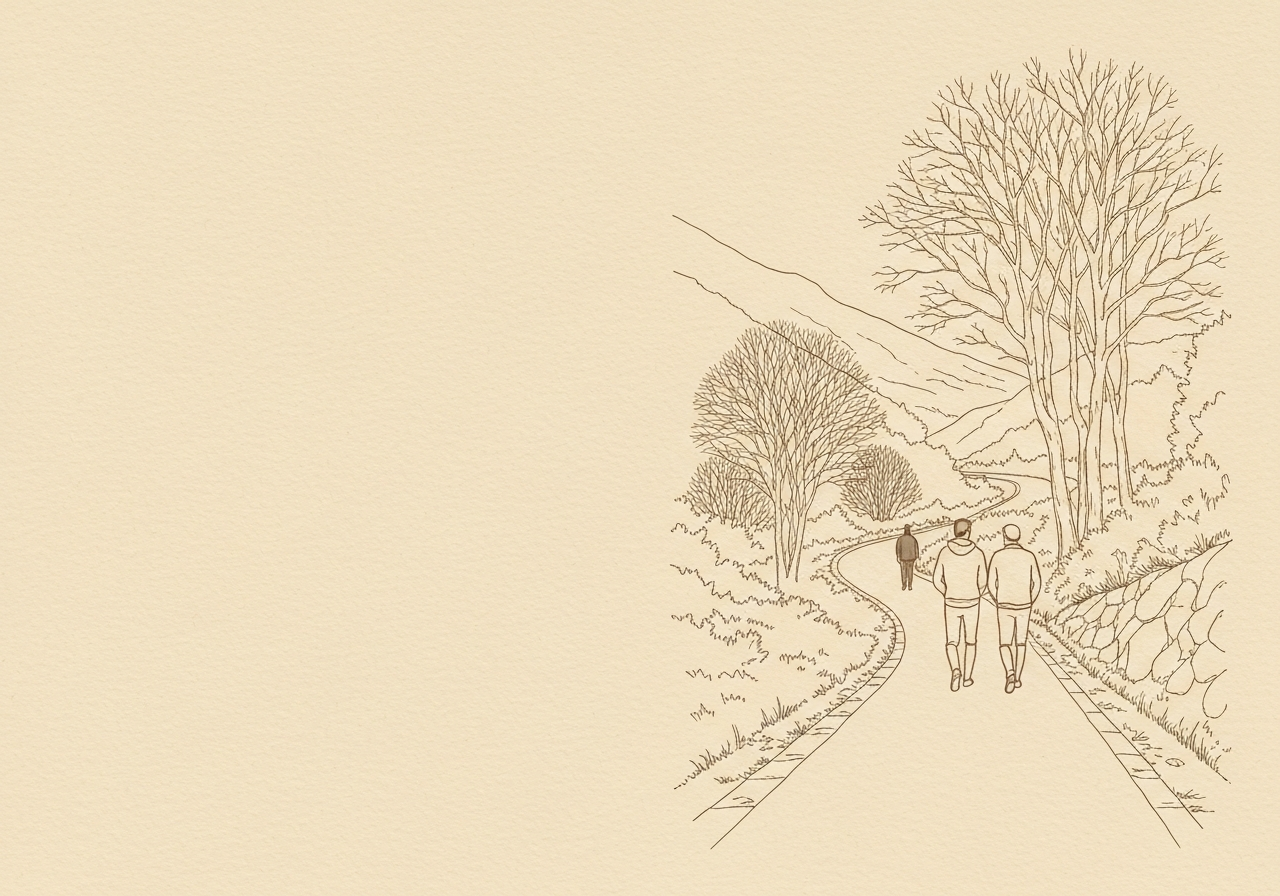
Here, the Court made an observation that cuts to the heart of how we interpret everyday human behaviour in criminal trials. "If two or more persons are seen walking on a public street either side by side or behind one another, it is not a circumstance from which it may be inferred with certainty that they were together or in each other's company," the bench observed. "A person may walk beside a stranger for considerable distance without even talking."
This is not a technical legal point. It is a recognition that human movement on a public road is ambiguous. Two people walking in the same direction at the same time is not evidence of companionship, let alone conspiracy. The Court held that without temporal and spatial proximity — meaning the sighting must be very close in time and place to the discovery of the body — the "last seen" theory collapses.
In Sharad Birdhichand Sarda, the Court had emphasized that the chain of circumstances must be so complete that there is no escape from the conclusion of guilt. The present case fell short of that standard. The time gap between the afternoon sighting and the morning discovery was too wide, and the intervening hours could have seen any number of actors.
The disclosure that wasn't a discovery
The second link in the prosecution's chain was the recovery of bloodstained stones allegedly at the pointing out of the accused. This is where Section 27 of the Indian Evidence Act, 1872 (a provision that allows information given by an accused person leading to the discovery of a fact to be admitted as evidence) becomes critical.
The Court found a fatal flaw: the recovery had already occurred before the disclosure statement was recorded. The police had the stones. Then they got the accused to "point out" the spot. Section 27 does not permit this. It only allows information that leads to a discovery — not information that merely confirms what the police already found. The Court called this an attempt to "convert a simple case of recovery into a case of discovery of fact." The disclosure statement was therefore inadmissible.
Even if the recovery had been valid, the Court noted another gap: the prosecution failed to connect the stones to the crime. There was no forensic evidence linking the stones to the victim's injuries. No medical opinion that the stones could have caused the wounds found on the body. Without that connection, the recovery was meaningless — the stones remained just stones, their rough surface telling no story of violence.
The Court's reasoning here echoes Devi Lal v. State of Rajasthan (2019), where it held that recovery at the instance of the accused is inconsequential unless the recovered article is connected to the crime through forensic or medical evidence. Similarly, in Nizam v. State of Rajasthan (2016), the Court emphasized that the discovery must be pursuant to the information given by the accused, and not a mere confirmation of what was already known.
The meat bag and the night sighting
The remaining circumstances were equally weak. The bag of meat found near the body — its weight suggesting something ordinary, not criminal? The Court found no evidence connecting it to the accused. The sighting of the accused on a pathway near the shop at night? The Court noted that being present in a general area at night, without more, does not point to guilt. People walk on pathways. That is what pathways are for.
The Court applied the test from Hanumat Govind Nargundkar: in a case based on circumstantial evidence, the circumstances must be proved beyond reasonable doubt and must unerringly point to the guilt of the accused, excluding every hypothesis consistent with innocence. None of the circumstances in this case met that standard. The chain was broken at every link.
The High Court's error on intention
The Supreme Court also addressed a separate legal error by the High Court. The High Court had converted the conviction from murder (Section 302 IPC) to culpable homicide not amounting to murder (Section 304 Part I IPC) on the ground that the injuries might have been caused by a single blow — which, the High Court reasoned, meant there was no intention to kill.
The Supreme Court disagreed. The post-mortem revealed multiple injuries, including incised head wounds with an underlying skull fracture. These injuries showed a clear intention to cause death or at least such bodily injury as was likely to cause death. The High Court had no basis to assume a single blow scenario, especially when neither the accused nor the evidence suggested any exception under Section 300 IPC (the section that defines murder and lists its exceptions). The Court held that converting the conviction without any plea or evidence supporting an exception was unjustified.
But this finding did not matter in the end — because the Court had already decided that the prosecution failed to prove the accused were the perpetrators at all.
What this means for every criminal trial
For practitioners, the judgment offers three clear rules. First, the "last seen" theory requires a tight time gap — hours of separation break the chain. Second, a disclosure statement under Section 27 is only valid if it leads to a discovery that had not already been made by the police. Third, recovered objects must be connected to the crime through forensic or medical evidence, not just by proximity to the body.
The Court also reinforced the principles from Sharad Birdhichand Sarda and Hanumat Govind Nargundkar, reminding lower courts that circumstantial evidence is not a collection of suspicious facts, but a chain that must be complete. Each link must be proved beyond reasonable doubt, and the chain must point unerringly to guilt. Santosh @ Bhure v. State (GNCT) of Delhi (2023) was also cited, further cementing the requirement that the circumstances must exclude every hypothesis of innocence.
THE PLAY: If you are defending a client in a circumstantial evidence case where the prosecution relies on "last seen," demand proof of the exact time gap and argue that any gap large enough for a third person to have intervened breaks the chain.
The Court ended where it began: with two men walking on a public street, and a body found hours later. The difference is that now, those two men are free — the cold hills of Pithoragarh no longer holding the weight of a wrongful conviction.