When a witness seems shaky, can the court still trust them?
The court says credibility isn't just about how someone testifies—surrounding facts matter too.
"not confined only to the way in which the witnesses have deposed"
The Supreme Court's rule on judging witness credibilityRam Chandra Rambux v. Champabai & Ors.
The court says credibility isn't just about how someone testifies—surrounding facts matter too.
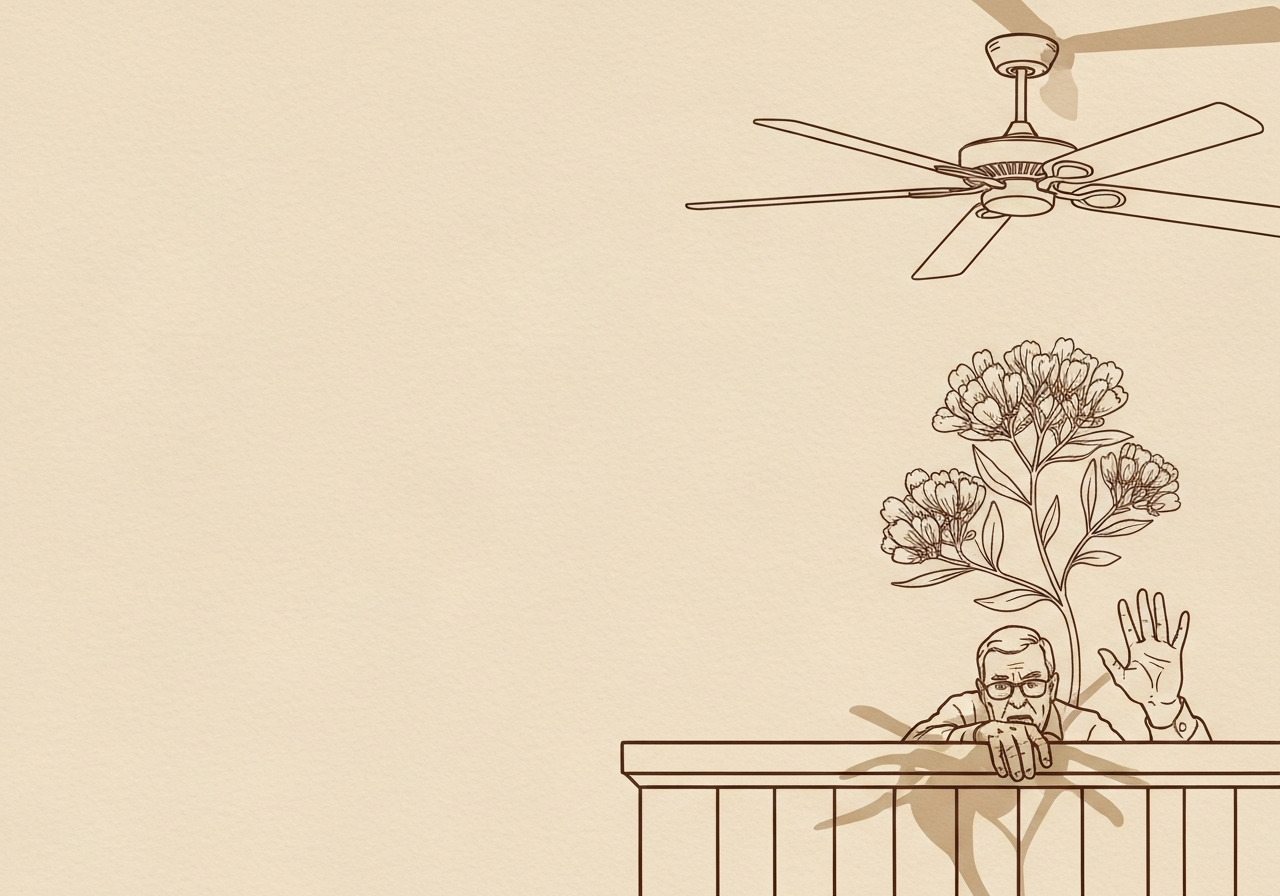
A witness stumbles on the stand. The judge looks beyond their words—and finds a hidden truth. In a small courtroom, the air thick with the rustle of paper and the low hum of a ceiling fan, a key witness faltered. Their testimony was riddled with contradictions, their voice dropping to a whisper as the lawyer's pen tapped impatiently on the table. The judge had a choice: dismiss the witness entirely, or dig deeper into the story behind the shaky words.
The case, Ram Chandra Rambux v. Champabai & Ors., posed a single, urgent question: When a witness seems unreliable on the surface, can a court still trust them? The answer, delivered by the bench, reshaped how Indian courts evaluate testimony—not as a performance to be judged, but as a puzzle to be solved.
When the witness faltered
The facts began with a property dispute. Ram Chandra Rambux claimed ownership of a piece of land. Champabai and others contested it. At the heart of the battle was a witness—someone who had seen the transaction, or so it seemed. On the stand, that witness appeared nervous. Their answers came haltingly. At times, they contradicted themselves. The lawyer for the party relying on the witness pounced, arguing that such a witness could not be believed.
The trial court had to decide: Was this witness a liar, or just a poor speaker? The judge looked at the deposition—the written record of the witness's testimony—and saw inconsistencies. But the judge also looked at something else: the circumstances surrounding the witness's life. Had they been pressured? Were they old or ill? Did they have a motive to lie? The court began to piece together a broader picture.
The trap of judging by appearance alone
This is where the law often trips up. In many courtrooms, a witness's credibility is judged by their demeanor—how they sit, speak, or avoid eye contact. A confident witness is believed; a trembling one is doubted. But the Supreme Court (the highest court in India) had already warned against this trap. In Ram Chandra Rambux v. Champabai, the bench articulated a principle that would echo through future judgments: credibility is not a performance review.
The court held that a judge is "not confined only to the way in which the witnesses have deposed or to the demeanor of witnesses." Instead, the judge must look at "surrounding circumstances" and "probabilities"—the logical likelihood of events—to form a correct idea of a witness's trustworthiness. This means that even a witness who stammers, forgets dates, or appears confused can still be believed, if the facts around their testimony make sense.
Why the court looked beyond the stand
The reasoning was practical. A witness might be terrified of the courtroom itself. The air in the room felt heavy, the bench looming above them like a silent judge of its own. They might be intimidated by the lawyers or the judge. Their memory might fail on small details while being rock-solid on the core event. The court said that judging a witness solely by their demeanor is like judging a book by its cover—you miss the story inside.
Instead, the court must ask: Does the witness's account fit with the other evidence? Are there documents, photographs, or other witnesses that support their version? Is there a motive for them to lie, or a reason for them to tell the truth? These "surrounding circumstances" become the real test of credibility. The witness's shaky voice becomes irrelevant if the facts align.
The legal turn: What each side argued
The party relying on the witness argued that the witness's testimony should be accepted, despite its flaws. They pointed to the surrounding circumstances—the witness had no personal grudge against either party, and their account matched the physical evidence on the land. The opposing party countered that a witness who contradicts themselves cannot be trusted. They cited the rule that a court must scrutinize such testimony with "great care."
The court agreed with the opposing party on one point: shaky testimony must be examined carefully. But it rejected the idea that a flawed deposition automatically means a false witness. The bench said that careful scrutiny does not mean automatic rejection. It means looking at the whole picture—the witness's words, their behavior, and the world around them.
What the court did: A new rule for credibility
The judgment laid down a clear test. A court may consider a witness's demeanor and the way they deposed, but it is not bound by them. The real question is whether the witness's account is probable—whether it makes sense given the facts of the case. If the surrounding circumstances support the witness, their testimony can be accepted even if they were a poor performer on the stand.
The bench observed that "it is open to the court to look into surrounding circumstances" to judge credibility. This is not a licence to ignore contradictions. It is a recognition that human beings are not perfect narrators. A witness who is honest may still be nervous, forgetful, or inarticulate. The court's job is to separate the honest nervousness from the deliberate lie.
Why this matters for every trial
For lawyers and judges, this principle changes how they prepare and evaluate cases. A lawyer can no longer win by simply making a witness look bad on cross-examination. They must also attack the surrounding circumstances—the logic of the witness's story. For a judge, it means writing judgments that explain not just what the witness said, but why it is believable given the facts.
A second illustration: The principle in action
Consider a hypothetical drawn from the same logic—a civil suit over a loan. A witness, the lender's clerk, testifies that he saw the borrower sign the promissory note. On cross-examination, the clerk stammers, forgets the date, and admits he was not wearing his reading glasses that day. The opposing party argues the witness is unreliable. But the court, following Ram Chandra Rambux, looks at the surrounding circumstances: the clerk has worked for the lender for twenty years, has no personal stake in the outcome, and the borrower's signature on the note matches other documents on file. The court accepts the testimony, not because the clerk was a polished performer, but because the probabilities—the logical likelihood of events—support his account.
This is the heart of the principle. A witness who appears weak on the stand may still be telling the truth. The court's task is not to judge a performance, but to weigh evidence in the light of all the facts. The witness's trembling hands, their halting speech, their forgotten dates—these are not disqualifications. They are pieces of a larger puzzle that the judge must assemble.
The broader landscape: How other courts have applied this
The principle from Ram Chandra Rambux has been cited in numerous subsequent decisions. In cases ranging from property disputes to family matters, courts have repeatedly held that a witness's demeanor is only one factor among many. The Supreme Court has reiterated that "surrounding circumstances" and "probabilities" must be given due weight. This has practical consequences: a trial judge cannot simply say, "The witness appeared nervous, so I reject their testimony." The judge must explain why the circumstances make the testimony improbable. This forces a deeper, more reasoned analysis in every judgment.
For example, in a case where a widow testified about her husband's will, the trial court noted that she broke down on the stand and could not recall the exact date of the document. The opposing party argued that her testimony was worthless. But the appellate court, citing Ram Chandra Rambux, pointed to the surrounding circumstances: the widow had been married for forty years, the will was found among her husband's personal papers, and the witnesses to the will had confirmed its execution. The court accepted her testimony, holding that her emotional state did not undermine her credibility. The principle had saved her case.
These examples show that the rule is not an abstract theory. It is a practical tool that judges use every day to separate truth from falsehood. It protects honest witnesses who are poor communicators, and it prevents courts from being misled by polished liars. The witness who speaks smoothly, with perfect confidence, may be fabricating a story. The witness who stumbles may be telling the truth under duress. The court must look beyond the surface.
The human element: Why demeanor can deceive
Psychologists have long known that demeanor is a poor indicator of truthfulness. Nervousness can be caused by the courtroom itself—the formal setting, the intimidating questions, the fear of being disbelieved. Some people are naturally articulate; others struggle to express themselves even when they are telling the truth. A confident liar can fool a judge who relies only on demeanor. A truthful witness who is anxious or inarticulate can be unfairly disbelieved.
The court in Ram Chandra Rambux implicitly recognized this. By directing judges to look at surrounding circumstances and probabilities, the court shifted the focus from the witness's performance to the logic of their account. This is a more reliable method of determining truth. It requires the judge to engage with the evidence, to ask whether the witness's story makes sense given the other facts in the case. It is harder work than simply watching a witness's body language, but it produces fairer results.
For the legal system, this principle is a safeguard against injustice. It ensures that a witness is not rejected simply because they are a poor performer. It forces courts to consider the full context of the testimony. And it reminds everyone—lawyers, judges, and litigants—that the search for truth is not a beauty contest. It is a patient examination of facts, circumstances, and probabilities.
THE PLAY: When a witness's testimony is shaky, do not stop at their demeanor—examine the surrounding circumstances and probabilities to decide if their account is trustworthy.
The court ended where it began: with a witness who stumbled, and a judge who chose to look deeper. The principle from Ram Chandra Rambux v. Champabai & Ors. remains a cornerstone of Indian evidence law, a quiet revolution in how courts assess the most human of all legal materials—the testimony of a witness. It is a reminder that justice is not about appearances, but about truth, patiently uncovered.