When will witnesses lie, judges can still save a will
Even if every attesting witness gives vague or conflicting testimony, a court may look at the circumstances and uphold the document. The law does not require their positive affirmation.
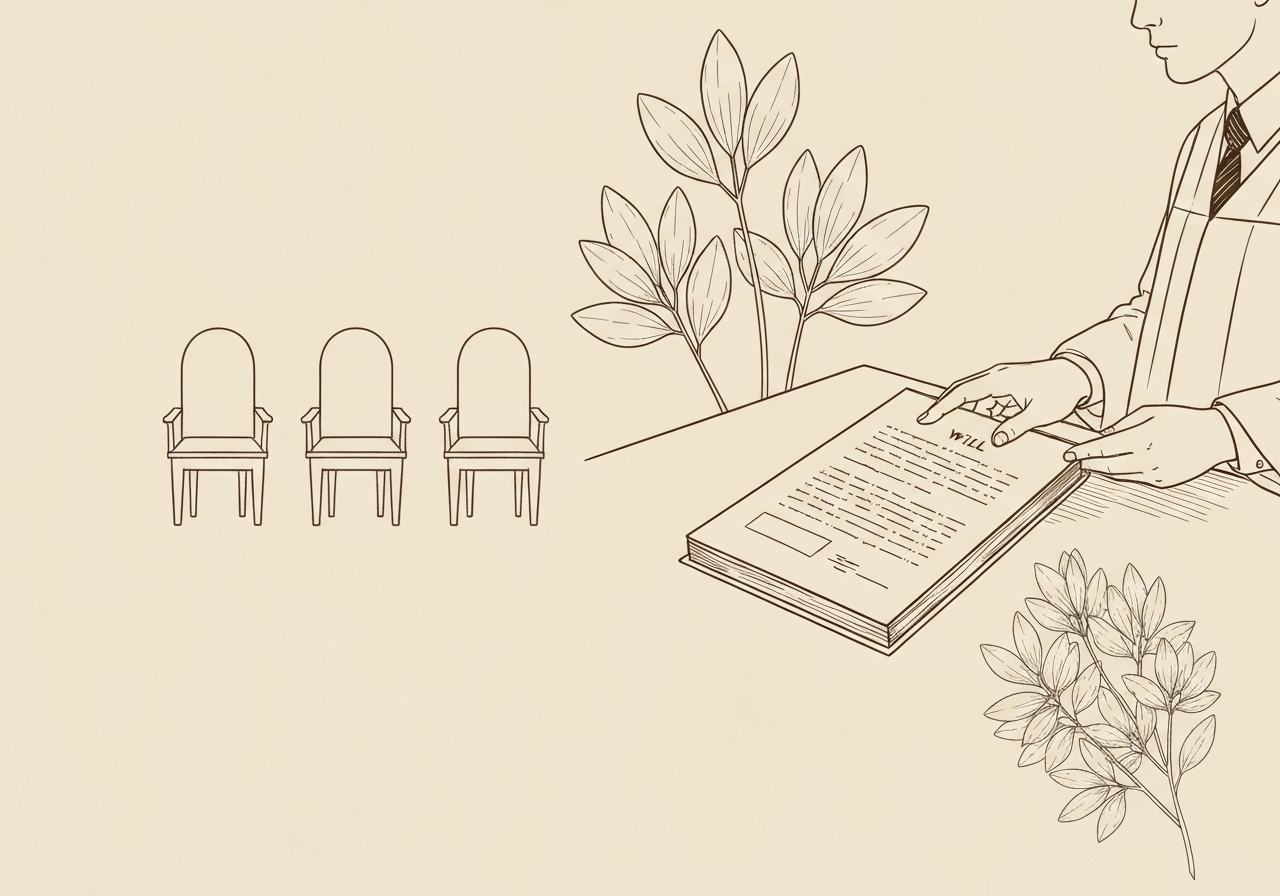
Upheld.
Witnesses faltered.
Will survived.
Even if every attesting witness gives vague or conflicting testimony, a court may look at the circumstances and uphold the document. The law does not require their positive affirmation.
Three witnesses said the will was signed in different rooms. The judge threw out their testimony—and kept the will alive.
It is a scene that plays out in inheritance disputes across India: a family member produces a will, and the other side attacks it. The attesting witnesses—the people who watched the testator (the person making the will) sign—take the stand. And then, something goes wrong. One witness cannot remember the room. Another gives a different account. A third says they signed but did not actually see the testator put pen to paper. On paper, the will looks dead.
But is it?
In Lalitaben Jayantilal Popat v. Pragnaben Jamnadas Kataria, the Court confronted exactly this question: can a will survive when every single attesting witness gives testimony that is vague, doubtful, or directly conflicting? The answer, it turns out, is yes—and the reasoning reveals a crucial safety valve built into the law of evidence.
When witnesses cannot agree
The case turned on a will whose validity was challenged. The attesting witnesses—the people whose job is to confirm that the testator signed it voluntarily in their presence—gave evidence that was, in the Court's own words, "vague or doubtful or even conflicting." One witness said the will was signed in the morning, in the front room of the house. Another witness said it was signed in the afternoon, in the back room. A third witness could not recall the room at all, or the time of day. The signatures were not disputed, but the circumstances around them were a mess. The trial court had to decide: does a will fail simply because the witnesses cannot agree on the details?
The answer the Court gave was a firm no.
The old rule from Blake v. Knight
The Court drew on an observation by Sir Herbert Jenner Fusty in the English case Blake v. Knight, a decision that has shaped how courts treat defective witness testimony. The question posed in that case was whether a court must "pronounce against the validity of the will" if the witnesses "will not swear positively" or cannot agree on what happened.
The answer, the Court said, is that positive, affirmative statements by attesting witnesses are "not absolute requisites to the validity of the will." In other words, the law does not demand that every witness give a perfect, consistent account. A will is not a fragile thing that shatters the moment a witness hesitates.
The judge is not trapped by a lying witness
This is where the legal principle gets interesting. The Court held that when attesting witnesses give evidence that is "vague or doubtful or even conflicting," the court is not trapped by that failure. Instead, the court "may take into consideration the circumstances of the case and judge from them collectively whether the requirements of the Statute were complied with."
What does this mean in practice? The court is allowed to look at the whole picture—not just the witnesses' words. It can examine the physical document itself. It can look at the signatures, the dates, the handwriting. It can consider who was present and what the family dynamics were. It can weigh other evidence—such as a lawyer's file notes (memos recording the signing process) or a doctor's records (confirming the testator's mental fitness) that support the will. The courtroom itself contributes to the mood: the judge sits behind a high bench, the file lies open, its pages carrying the weight of a family's future. The silence as a witness falters, the rustle of paper as the judge turns to the will itself—these are the moments that shape a decision.
More strikingly, the Court said that the judge is entitled to regard the attesting witnesses' testimony as being "at fault," "of a suspicious character," or even "wilfully misleading the Court." This is a powerful tool. It means a judge can decide that the witnesses are lying, confused, or simply unreliable—and then disregard their testimony entirely.
Section 71: The escape hatch
This principle is the foundation for what Section 71 of the Evidence Act (a provision that allows a court to prove a document through other evidence when attesting witnesses fail) does. Section 71 is not a loophole. It is a deliberate design choice by the legislature. The law recognises that witnesses can be bought, intimidated, forgetful, or simply wrong. A will should not be destroyed by a witness's failure any more than a contract should be destroyed by a typist's error.
The Court's logic creates a clear pathway: if the attesting witnesses are unreliable, the judge may "disregard their testimony and pronounce in favour of the will" by considering "other evidence or of the whole circumstances of the case." This is the judicial latitude that Section 71 exists to protect.
Practical examples of 'other evidence'
What does "other evidence" look like in a real courtroom? Consider a lawyer's file notes—handwritten memos made at the time of signing, recording the testator's demeanour, the presence of witnesses, and the sequence of events. Or a doctor's record from the same period, showing the testator was of sound mind and not under medication that could cloud judgment. Even a family photograph from the day, showing the testator seated with witnesses, can serve as circumstantial proof. The Court's reasoning allows these fragments to be pieced together into a coherent picture—one that may be more reliable than the testimony of witnesses who have changed their story.
Another example: the physical will itself. If the signatures are smooth and consistent, if the date matches the testator's known handwriting, if the document is free of obvious tampering—these are circumstances the judge can weigh. The Court's logic permits the judge to treat the document as a silent witness, speaking through its own features.
The trial court's dilemma
Imagine the scene in the trial court. The case is called. The will is produced. The attesting witnesses are sworn in. The first witness speaks confidently: the will was signed in the morning, in the front room of the house. The second witness hesitates: no, it was the afternoon, in the back room. The third witness shrugs: he cannot remember the room or the time at all. The lawyer for the challenger pounces: these witnesses are unreliable, the will must fail. The lawyer for the propounder (the person supporting the will) argues that the signatures are undisputed, the document is genuine, and the witnesses are merely confused by the passage of time.
The judge sits in silence, listening. The file on the desk contains the will itself, a few pages of affidavits, and nothing more. There is no lawyer's note, no doctor's record. The judge must decide based on the witnesses' words and the document alone. This is the moment when the principle from Lalitaben becomes decisive. The judge is not forced to accept the witnesses' failure as the end of the matter. Instead, the judge can look at the will—its signatures, its dates, its internal consistency—and decide that the document is genuine despite the witnesses' confusion. The judge can conclude that the witnesses are "at fault" or "of a suspicious character" and disregard them entirely.
This is not a theoretical exercise. In countless Indian courts, judges face this exact dilemma. The Lalitaben principle gives them the tools to do justice—to uphold a genuine will even when the witnesses have failed their duty.
Why this matters for lawyers
For lawyers handling will disputes, this case is a reminder that witness testimony is not the only battlefield. A well-drafted will with clear signatures, a consistent narrative, and supporting circumstantial evidence can survive even the most hostile witness examination. The judge is not a passive recipient of witness statements—the judge is an active fact-finder who can weigh the totality of the evidence.
THE PLAY: When attesting witnesses give conflicting or vague testimony, do not concede the will's validity—argue the court may disregard their evidence and uphold the will based on the surrounding circumstances and other available proof.
The three witnesses could not agree on which room the will was signed in, or what time of day it happened. The judge looked at the document, the signatures, and the circumstances—and kept the will alive.