Wife left for her parents' home during pregnancy. Husband called it cruelty. The Supreme Court disagreed.
The husband filed for divorce claiming cruelty because his wife stayed at her parents' home after a complicated pregnancy and her father's death. The court said that's not cruelty—and his appeal was too late anyway.
16
years.
The husband filed for divorce claiming cruelty because his wife stayed at her parents' home after a complicated pregnancy and her father's death. The court said that's not cruelty—and his appeal was too late anyway.
She went to her mother's house when the pregnancy got complicated. Her father died. The husband filed for divorce, calling it cruelty.
The Family Court in Tamil Nadu agreed with him. The High Court did not. And when the case reached the Supreme Court in April 2022, the bench had to answer a question at the heart of marriage law: can a wife's decision to stay with her parents during a medical emergency ever be called cruelty under the Hindu Marriage Act?
When the pregnancy turned complicated
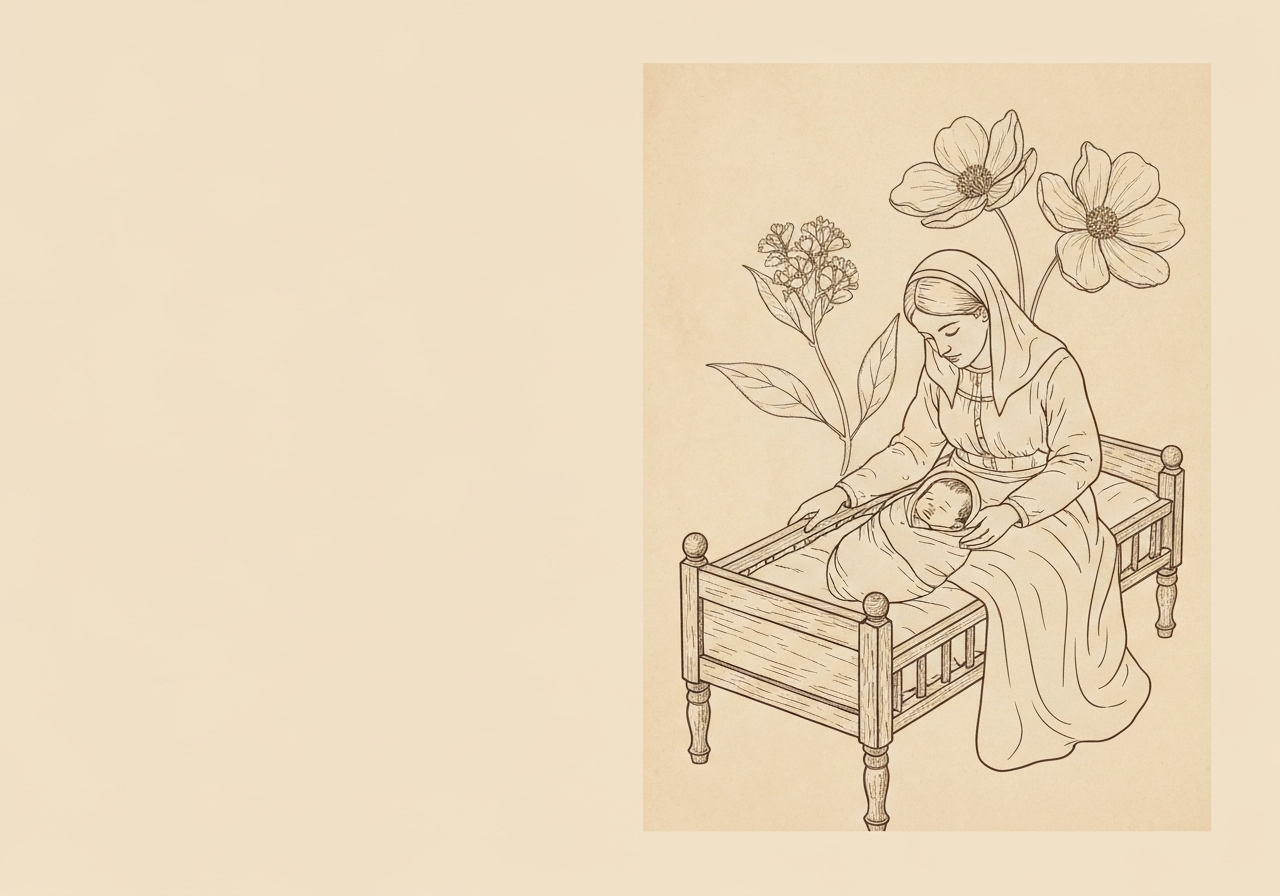
The couple married in August 1999. By January 2000, the wife was pregnant and her body was struggling. She went to her parents' home — the place women across India have always gone when they need care that a husband's household cannot provide. The pregnancy was complicated. Then, in February 2001, her father died.
She stayed. Grieving. Recovering. Caring for a newborn in the only home she had left.
Her husband saw it differently. In March 2001 — barely a month after her father's death — he walked into the Family Court and filed for divorce. His ground? Cruelty under Section 13(1)(ia) of the Hindu Marriage Act, 1955 (the legal provision that allows a spouse to end a marriage when the other spouse has caused severe mental or physical suffering). The specific cruelty he alleged: strained relations between his sister and the wife.
The Family Court says yes
The Family Court heard the petition. The husband's case was straightforward: his wife had left him, stayed away, and this amounted to cruelty. The judge agreed. In July 2004, the Family Court granted the divorce. The decree was issued.
The wife appealed to the Madras High Court under Section 19 of the Family Courts Act, 1984 (the provision that allows a party to challenge a Family Court's decision in the High Court). Meanwhile, the husband did something that would later haunt his case: he remarried in October 2004, convinced the appeal period had expired and the divorce was final. He believed the legal door had closed.
He was wrong.
The High Court reversed the Family Court's decision. It found no cruelty. A wife going to her parents' home during a complicated pregnancy, staying through her father's death — this was not cruelty. The husband appealed to the Supreme Court.
Two questions, one marriage
The Supreme Court had to decide two things. First: was there cruelty at all? Second: was the wife's appeal to the High Court filed too late?
The husband's lawyers argued that the appeal under Section 19 of the Family Courts Act was time-barred. They pointed to Section 29(3) of the Limitation Act, 1963, which says that the general limitation rules do not apply to proceedings under the Hindu Marriage Act. If that were true, the wife's appeal was filed too late and the divorce should stand.
The wife's lawyers countered with a different reading. Section 19 of the Family Courts Act, they said, is a special law. Section 29(2) of the Limitation Act makes the general limitation rules (Sections 4 to 24) applicable to special laws unless they are expressly excluded. And Section 12 of the Limitation Act (the rule that excludes the time needed to obtain a certified copy of the court's order when calculating the limitation period) had not been excluded. The wife had waited for that certified copy — days spent at the court registry, filling forms, paying fees, watching clerks stamp documents. Once you added back those days, the appeal was well within time.
Why the appeal survived
The Supreme Court agreed with the wife. It held that Section 19 of the Family Courts Act is indeed a special law under Section 29(2) of the Limitation Act. The word "proceedings" in Section 29(3) — which saves marriage and divorce matters from the general limitation rules — refers only to original proceedings (the first hearing of a case), not to appeals. Appeals are governed by the general rules, including Section 12.
The court also rejected the husband's argument that Section 20 of the Family Courts Act (which gives the Act overriding effect over other laws) somehow excluded Section 12 of the Limitation Act. There was no inconsistency between the two provisions. Both could stand together.
The appeal was within time.
The cruelty that wasn't
On the substance, the Supreme Court upheld the High Court's finding. The court's reasoning, as recorded in the judgment, was that a wife leaving for her parents' home due to a complicated pregnancy, a difficult delivery, and her father's death does not constitute cruelty under Section 13(1)(ia) of the Hindu Marriage Act. Strained relations between the wife and the husband's sister, without more, are not enough to prove that the wife caused the husband mental suffering severe enough to end a marriage.
No cruelty. No divorce.
What about the second marriage?
This is where the judgment delivers its sharpest procedural point. The husband had remarried in October 2004, believing the appeal period had expired. But Section 15 of the Hindu Marriage Act (the provision that tells a divorced person when they can remarry) says a person cannot remarry until the time for appeal has expired and, if an appeal is filed, until the appeal is finally decided. The Supreme Court held that an appeal is "presented" under Section 15 the moment it is filed or lodged with the court — it does not need to come up for hearing on the judicial side. The wife had filed her appeal. The husband's second marriage was contracted in contravention of Section 15.
The court did not directly address the validity of the second marriage. But the procedural consequence was clear: you cannot rush to remarry while your spouse's appeal is alive, no matter how confident you are that the appeal will fail.
The irretrievable breakdown argument
The husband's lawyers made one final attempt. They asked the Supreme Court to use its power under Article 142 of the Constitution (the extraordinary power that allows the Supreme Court to do complete justice in any case before it) to dissolve the marriage on the ground of irretrievable breakdown — the idea that even if no one was at fault, the marriage was dead and should be buried.
The court left that question open. It did not rule on whether Article 142 could be invoked to grant a divorce on this ground in the absence of cruelty. The question was raised, but the court did not answer it.
THE PLAY: If you are a spouse facing a divorce petition, remember this: leaving the marital home for a medical emergency — your own pregnancy, a parent's illness, a death in the family — is not cruelty. The law does not punish you for being human.
The husband's appeal was dismissed. The High Court's judgment stood. The wife had never been cruel. She had only been a daughter who went home when she needed her mother.
```