Wife refused to move for husband's job. Court: Not cruelty.
After 21 years of marriage, she stayed back with their kids. The Supreme Court says that's not desertion—and won't grant divorce even after decades of separation.
40
years.
After 21 years of marriage, she stayed back with their kids. The Supreme Court says that's not desertion—and won't grant divorce even after decades of separation.
She said no to relocating after 21 years of marriage. The Supreme Court just ruled that isn't cruelty. On a crisp October morning in 2023, a bench of two judges looked at a man who was 89 and a woman who was 82, and asked themselves a question that would define the limits of Indian matrimonial law: Can a marriage that has been dead for decades still be saved — and should the court force it to stay alive?
The answer, delivered by Justice Aniruddha Bose and Justice Bela M. Trivedi, was a quiet earthquake in family law. The Supreme Court refused to grant divorce to a retired Wing Commander whose wife had refused to move cities for his job in 1984. The marriage had been over in every practical sense for nearly 40 years. The court said: that doesn't matter.
When she stayed back in Amritsar
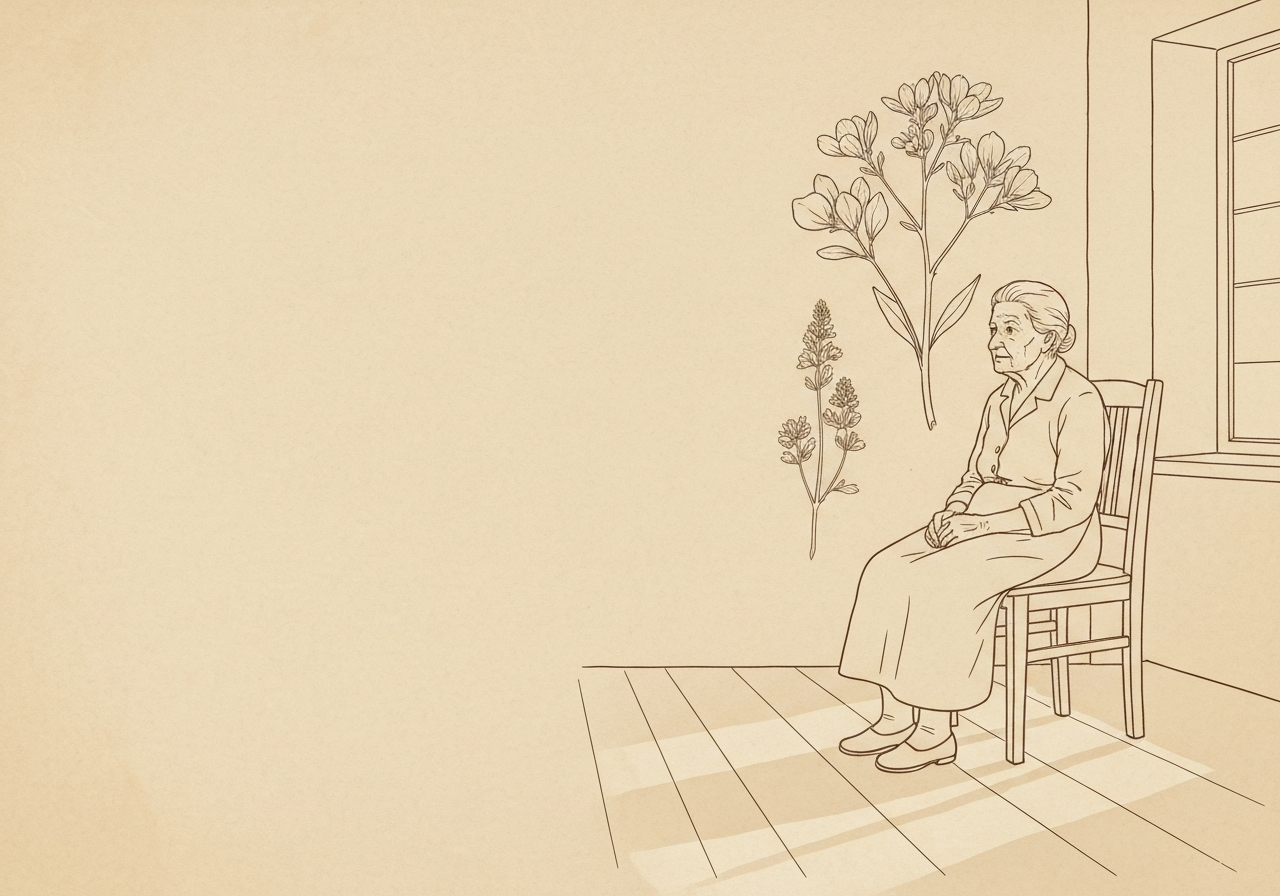
Dr. Nirmal Singh Panesar, a retired Wing Commander in the Indian Air Force, married Paramjit Kaur in 1963 according to Sikh rites. For 21 years, they lived together in what appeared to be a conventional military family. They had three children. The home was in Amritsar. Life had a rhythm.
Then came 1984. Dr. Panesar was transferred to Madras — now Chennai — and he asked his wife to come with him. She refused. She wanted to stay in Amritsar with their children. The children were settled in school, she argued. Her life, her community, her support system was in Punjab.
What followed was not a shouting match or a single dramatic fight. It was a slow, grinding separation that never became a formal divorce. Dr. Panesar moved to Madras alone. His wife stayed in Amritsar. The children grew up. The decades passed. By the time the case reached the Supreme Court, the husband was about 89 years old and the wife about 82. They had not lived together for nearly 40 years.
The divorce petition that took 27 years
In 1996 — 12 years after the separation — Dr. Panesar filed for divorce. He filed a petition under Section 13(1)(ia) (cruelty — behaviour that makes it impossible to live with the other spouse) and Section 13(1)(ib) (desertion — when one spouse abandons the other without good reason and with the intention to end the marriage permanently) of the Hindu Marriage Act, 1955.
The trial court — the District Court in Chandigarh — granted the divorce on February 5, 2000. Dr. Panesar had won. But his wife appealed to the High Court of Punjab and Haryana. A Single Bench reversed the trial court's decision on December 21, 2000, finding that neither cruelty nor desertion had been proved. Dr. Panesar then filed a Letters Patent Appeal — an appeal to a larger bench within the same High Court. The Division Bench confirmed the Single Bench's order on February 18, 2009. The divorce was denied.
Dr. Panesar then approached the Supreme Court. The case number was Civil Appeal No. 2045 of 2011. It had been pending for 12 years before it was finally heard in October 2023.
Why the High Court said no
The High Court's reasoning was deeply rooted in the facts of a long marriage. The court looked at the 21 years the couple had lived together before the wife refused to relocate. It asked: Was her refusal to move to Madras an act of cruelty? Was it desertion?
To prove desertion under Section 13(1)(ib), the husband had to show two things: first, that the wife had physically separated from him, and second, that she had the intention to permanently end the marriage — what the law calls animus deserendi (the intention to abandon the marriage permanently). The High Court found that the wife's refusal to move was not driven by a desire to end the marriage. She wanted to stay with her children in their settled home. That is not desertion. That is a choice between two competing obligations — to her husband and to her children.
On cruelty, the court applied a similar logic. Cruelty under Section 13(1)(ia) is not defined in the statute. Courts have interpreted it as conduct that causes such mental or physical suffering that it becomes impossible for the spouses to live together. The High Court held that a single refusal to relocate — after 21 years of marriage, with children in school — does not cross that threshold. It was not cruelty. It was a disagreement.
What the Supreme Court heard
Dr. Panesar's lawyers argued two things. First, they said the High Court had got the facts wrong — the wife's refusal was indeed cruelty and desertion. Second, they argued that even if the High Court was right on the law, the marriage had irretrievably broken down. The couple had been separated for nearly 40 years. There was no chance of reconciliation. The Supreme Court should use its extraordinary power under Article 142 of the Constitution (the power to do "complete justice" in any case before it) to dissolve the marriage anyway.
The wife's lawyers opposed both arguments. They said the concurrent findings of the High Court — that there was no cruelty and no desertion — were based on evidence and should not be disturbed. On the Article 142 point, they made a deeply personal argument. The wife, then 82 years old, told the court she did not want to die with the stigma of being a divorcee. She was still willing to care for her husband. She had maintained the sacred relationship throughout their separation. She wanted to die as a married woman.
The judgment: No cruelty, no desertion, no Article 142 divorce
The Supreme Court dismissed the appeal. It upheld the concurrent findings of the High Court that cruelty and desertion were not established. The court held that a wife's refusal to relocate to a new posting city, after 21 years of settled matrimonial life with children, does not demonstrate animus deserendi — the intention to abandon the marriage. And it does not constitute cruelty.
Then the court turned to the Article 142 argument. This was the harder question. The court had the power to grant divorce even if the legal grounds were not made out. In several earlier cases — including Naveen Kohli v. Neelu Kohli (2006) and Shilpa Sailesh v. Varun Sreenivasan (2023) — the Supreme Court had used Article 142 to dissolve marriages that were clearly dead, even when one spouse opposed the divorce.
But the court drew a line. It said the power under Article 142 must be exercised to do "complete justice" — not to do what seems fair in the abstract. Here, granting divorce would not be complete justice to the wife. She had maintained the marriage as a sacred bond throughout her life. She was willing to care for her husband even after decades of separation. She expressed deep personal sentiment against the stigma of divorce. Granting dissolution would constitute injustice to her, not justice.
The court also warned against treating "irretrievable breakdown of marriage" as a strait-jacket formula. Just because a marriage has broken down does not mean the court must grant divorce under Article 142. The institution of marriage in Indian society has a special importance. The court must respect that.
Why this case matters for every marriage
This judgment is a powerful reminder that the law does not treat marriage as a contract that can be cancelled when it becomes inconvenient. The Hindu Marriage Act requires specific grounds — cruelty, desertion, adultery, and others — before a court can grant divorce. A long separation, by itself, is not enough.
For practitioners, the takeaway is clear: if you are filing for divorce on grounds of desertion, you must prove not just physical separation but also the intention to permanently end the marriage. A spouse who stays behind for the children, or for a job, or for aging parents, is not necessarily deserting the marriage. And a single act of refusal — even one that leads to decades of separation — may not amount to cruelty.
THE PLAY: Before filing for divorce on grounds of desertion or cruelty, gather evidence that the other spouse intended to permanently end the marriage — not just evidence that they lived separately.
The court ended where it began: with a wife who said no to moving, and a husband who waited 27 years for an answer he never got.