Woman's second marriage was not bigamy, Supreme Court rules
A woman married at 17, then again after a panchayat divorce. Her brother-in-law cried foul. The court found the allegations had no legs to stand on.
3
years.
A woman married at 17, then again after a panchayat divorce. Her brother-in-law cried foul. The court found the allegations had no legs to stand on.
She was married at 17, then again after a village council divorce. Her brother-in-law wanted her dead husband's job. So he filed a police complaint.
By the time the case reached the Supreme Court, the woman had lost her second husband, buried him, and raised their son alone. She had also been dragged through a criminal trial for a crime she never committed: bigamy — marrying a second person while the first marriage is still legally valid.
The question before the court was simple. Could a woman be prosecuted for bigamy when her first marriage was contracted as a minor, never consummated, and dissolved by a village panchayat years before she remarried?
When the panchayat said the marriage was over
In 2009, a girl named Shakuntala Prajapati — she would later change her name to Shafiya Khan — was married at age 17 to a man named Shiv Gobind Prajapati. The marriage was never consummated. Five years later, in 2014, the couple approached their Village Panchayat — a local community council that resolved the matter in the village square — and obtained a divorce. Both parties agreed the marriage was over.
Shakuntala moved to Lucknow to study. There, she met Mohd. Shameem Khan. They fell in love. In December 2016, they married under Sharia law. In September 2017, she gave birth to a son.
Tragedy struck two months later. Her husband died in December 2017.
The brother-in-law's complaint
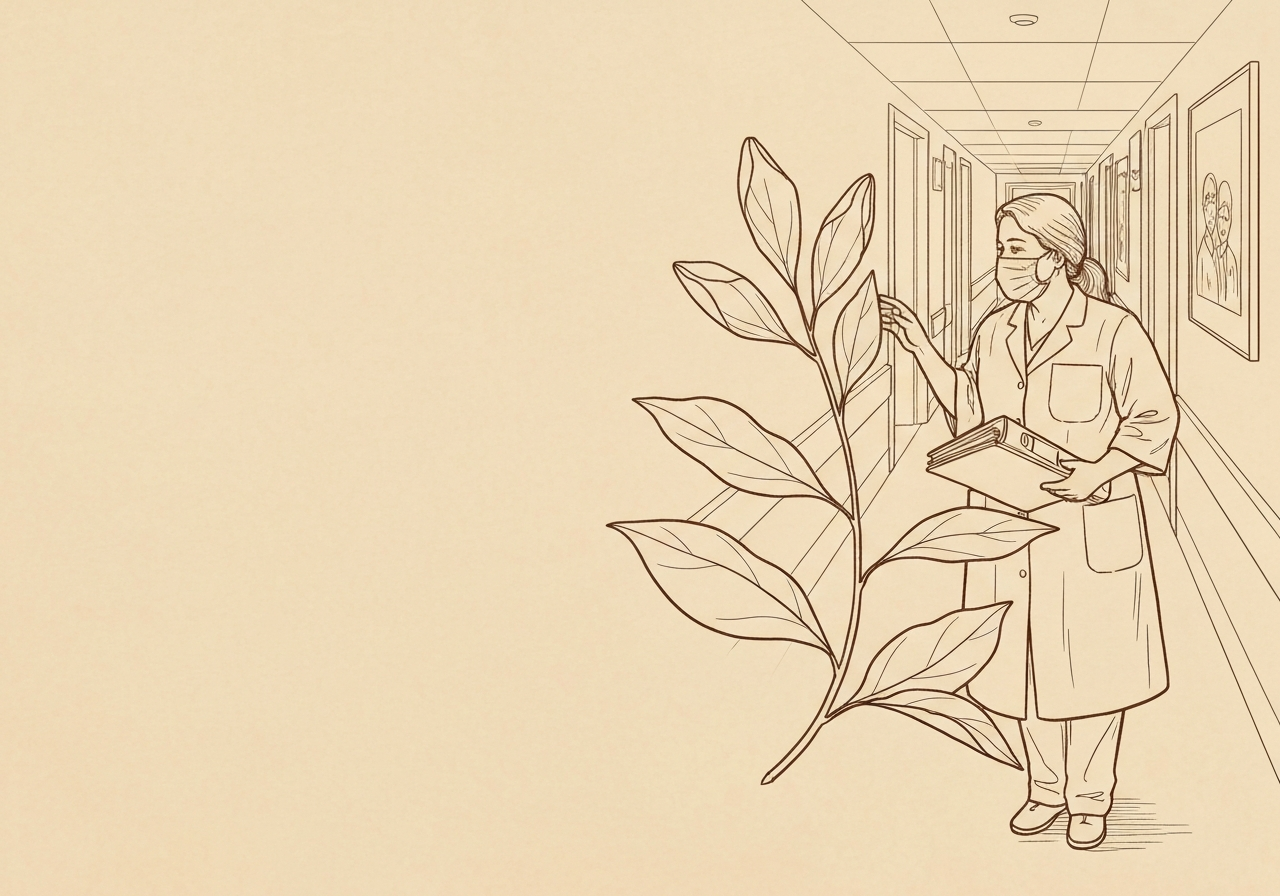
As the legally wedded widow, Shafiya Khan received her husband's terminal benefits — the money and entitlements due to a deceased employee's family. She also got a compassionate appointment — a government job given to a dependant of a deceased employee — at King George Medical University in Lucknow. The hospital corridors, with their familiar smell of antiseptic and old files, became her new workplace.
Her husband's brother — the respondent in the case — wanted those benefits for himself. So he filed a police complaint.
The brother-in-law alleged that Shafiya Khan had committed bigamy — marrying Mohd. Shameem Khan without legally divorcing her first husband. He also accused her of forging the marriage certificate, cheating, and harassing the family.
In July 2019, the police registered an FIR — a written complaint that starts a police investigation — under multiple sections of the Indian Penal Code: Sections 494 and 495 (bigamy and concealment of a former marriage), Section 416 (cheating by personation — pretending to be someone else to deceive), Section 420 (cheating), Section 504 (intentional insult to provoke a breach of peace), and Section 506 (criminal intimidation).
Later, the chargesheet — the final police report that lists the accused and the offences — added Sections 467, 468, and 471 (forgery of valuable security, forgery for cheating, and using a forged document as genuine).
Why the High Court said no
Shafiya Khan approached the Allahabad High Court under Section 482 of the Code of Criminal Procedure, 1973 — the High Court's inherent power to shut down a case that should never have been filed. She argued that the entire criminal case was baseless. Her first marriage was voidable — capable of being declared invalid — because she was a minor at the time. Under Section 5 of the Hindu Marriage Act, 1955, a valid marriage requires the bride to be at least 18. Under Section 3 of the Prohibition of Child Marriage Act, 2006, a child marriage — one where either party is underage — is voidable at the option of the minor party.
She had exercised that option. The Village Panchayat had dissolved the marriage in 2014. She was free to remarry.
The High Court disagreed. It refused to quash the proceedings — to cancel the criminal case — and dismissed her petition in September 2021.
She appealed to the Supreme Court.
The Supreme Court's test: Bhajan Lal and the bare allegations
The Supreme Court bench — Justice Ajay Rastogi and Justice Abhay S. Oka — applied the principles laid down in the landmark case State of Haryana v. Bhajan Lal (1992). In that case, the Supreme Court had listed seven categories of cases where criminal proceedings could be quashed under Section 482 CrPC. One of them was this: where the allegations in the FIR, even if taken at face value, do not make out any offence at all.
The court also cited Neeharika Infrastructure Pvt. Ltd. v. State of Maharashtra (2021), which reaffirmed that while courts should not conduct a mini-trial at the quashing stage, they must still examine whether the FIR contains even a prima facie — on first glance — case.
The bench found that the allegations against Shafiya Khan were "completely bald and unsupported by any material" — lacking any supporting evidence. The brother-in-law had not produced a single document to show that her first marriage was still valid. The Village Panchayat divorce, though not a formal court decree, had been accepted by both parties. The first marriage had never been consummated. She had remarried years after the panchayat divorce.
More importantly, the court noted, the documentary evidence on record — the death certificate, the marriage certificate under Sharia law, the compassionate appointment letter — all contradicted the brother-in-law's allegations. The prosecution had no case. The bench read its conclusion in a low, steady voice: allowing the proceedings to continue would constitute an "abuse of process" of law.
What the court held: no offence, abuse of process
On February 10, 2022, the Supreme Court allowed the appeal. It quashed the entire criminal proceedings — the FIR, the chargesheet, and all subsequent court orders — as an abuse of the legal process.
The court held that even if every word of the FIR was taken as true, no offence of bigamy was made out. The first marriage was voidable under the child marriage laws. The woman had obtained a panchayat divorce. She had remarried in good faith. The brother-in-law's complaint was a malicious attempt to grab her husband's benefits.
The court also held that the High Court had erred in refusing to exercise its inherent powers under Section 482 CrPC. Where the allegations are "completely bald and unsupported by any material," and the documentary evidence contradicts them, allowing the criminal proceedings to continue would be a travesty of justice.
Why this matters for practitioners
This judgment reinforces a crucial principle: criminal courts are not collection agencies for family disputes. A complainant cannot weaponise the criminal justice system to settle personal scores or grab property. The Bhajan Lal principles remain the strongest shield against malicious prosecutions.
Senior criminal lawyer Rohan Desai, who has handled multiple quashing petitions, explains the practical import: "The Supreme Court has sent a clear signal. If a complainant files an FIR with nothing but bald assertions — no documents, no witnesses, no material to back up the allegations — the court must step in. The High Court's reluctance to do so in this case was a serious error. Practitioners must aggressively place documentary evidence at the quashing stage. A marriage certificate, a death certificate, a panchayat resolution — these are not just paper. They are the difference between freedom and a decade of litigation."
Another perspective comes from Priya Sharma, a criminal defence lawyer based in Delhi. "The real lesson here is about the burden on the complainant. In family disputes, especially those involving property or benefits, malicious complaints are routine. The brother-in-law in this case didn't just file a false case — he forced a widow to fight for three years, all while she was grieving and raising a child alone. The Supreme Court's judgment is a reminder that the criminal law is not a toy for personal vendettas."
The procedural journey itself tells a story of resilience. From the FIR registered at PS Bazar Khala, Lucknow in July 2019, to the chargesheet filed in March 2021, to the High Court's dismissal in September 2021, and finally the Supreme Court's intervention in February 2022 — the woman spent over two and a half years under the shadow of a criminal case. Each stage required a lawyer, a filing fee, a court appearance. The weight of the case file — thin as it was on evidence — must have felt heavy on her shoulders.
For the bench, the decision was straightforward. The ratio decidendi — the principle on which the case was decided — was clear: where the allegations in the FIR and the chargesheet, even taken at face value, do not prima facie disclose the commission of any offence, and the documentary evidence on record contradicts the allegations, allowing continuation of criminal proceedings would constitute abuse of process of law warranting quashing under Section 482 CrPC.
The court applied this principle with precision. The first marriage was voidable under Section 5 of the Hindu Marriage Act, 1955 — which sets conditions for a valid Hindu marriage — and Section 3 of the Prohibition of Child Marriage Act, 2006 — which declares child marriages voidable at the option of the minor party. Since the woman was a minor at the time of her first marriage, that marriage was never legally sound. The panchayat divorce, while informal, merely confirmed what the law already recognised: the marriage was not binding.
The second marriage, under Sharia law in December 2016, was therefore not bigamous. The woman had no subsisting marriage when she remarried. The brother-in-law's complaint, filed in July 2019, was based on a legal fiction — the idea that the first marriage was still valid — that had no basis in law or fact.
The court also addressed the forgery allegations. The chargesheet had added Sections 467, 468, and 471 IPC — forgery of valuable security, forgery for cheating, and using a forged document as genuine. But the court found no material to support these charges. The marriage certificate under Sharia law was not forged; it was a genuine document reflecting a real ceremony. The compassionate appointment letter was issued by a government university after due verification. The brother-in-law's allegations were, in the court's words, "completely bald."
The judgment also serves as a cautionary tale for trial courts and High Courts. The Allahabad High Court had dismissed the woman's petition under Section 482 CrPC without properly examining the documentary evidence. The Supreme Court corrected this error, reiterating that the inherent powers under Section 482 CrPC exist precisely for cases like this — where continuing the proceedings would be a waste of judicial time and a source of grave injustice.
THE PLAY: When challenging a criminal case at the quashing stage, always place the documentary evidence — marriage certificates, divorce deeds, death certificates — before the court. If the documents contradict the FIR allegations, the court must quash the proceedings.
THE TEST: Ask yourself: if every word of the FIR is true, does it still make out an offence? If the answer is no, the case must be quashed. This is the Bhajan Lal test, and it is the strongest shield against malicious prosecutions.
WHAT THIS MEANS: For every lawyer handling a family dispute that has spilled into the criminal courts, this judgment is a weapon. File a quashing petition. Place the documents. Cite Bhajan Lal. The Supreme Court has spoken — bald allegations cannot sustain a criminal case.
The woman who was married at 17, widowed at 27, and dragged through a criminal trial for three years, finally walked free. Her brother-in-law's complaint had no legs to stand on. The Supreme Court made sure of that.