You can’t ambush a witness in court — this 1893 rule says why
The Rule in Browne v. Dunn forces lawyers to give witnesses a fair chance to explain before calling them liars. Here’s how it keeps trials honest.
1893
years.
The Rule in Browne v. Dunn forces lawyers to give witnesses a fair chance to explain before calling them liars. Here’s how it keeps trials honest.
A lawyer planned to tear apart a witness — but first, he had to warn him it was coming.
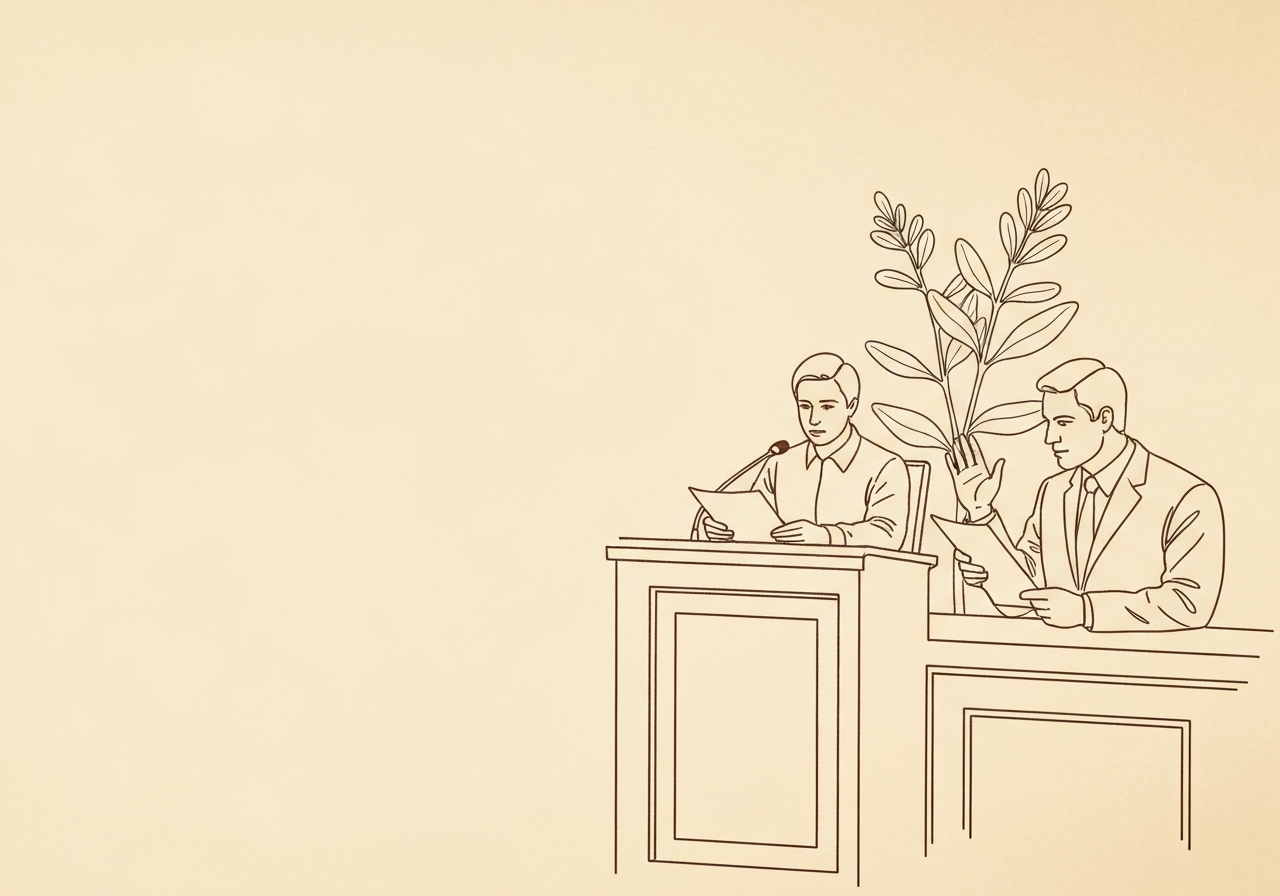
A witness had just finished his evidence-in-chief. He felt he had done well. Then the opposing counsel rose. The cross-examination began — a slow, circling attack that suggested, without ever saying it directly, that the witness was lying. The witness had no idea what was coming. He could not defend himself because he did not know which part of his story was under fire. Then came the final blow — a document, a prior statement, a contradiction. The witness was already off the stand. He never got to explain.
That scenario is exactly what the Rule in Browne v. Dunn (1893) 6 R. 67 was built to stop. The House of Lords ruling established a fundamental rule of practice in cross-examination: if a lawyer intends to later contradict or impeach a witness's evidence — to suggest the witness is not a "witness of truth" — the lawyer must give that witness a fair chance to explain during cross-examination itself. You cannot ambush a witness after they have left the box.
When the lawyer held his fire
The facts of Browne v. Dunn itself are sparse. But the principle it set is one of the most cited rules in common law evidence. A lawyer had cross-examined a witness without directly challenging his version of events. Later, the lawyer argued that the witness's evidence should be disbelieved — but the witness had never been told, during cross-examination, that his honesty was in question.
Lord Halsbury, delivering the leading opinion, observed that counsel intending to impeach a witness must afford that witness an opportunity to explain the purported inconsistency. The rule applies when counsel suggests the witness is not a "witness of truth". The court called it "essential to fair play and fair dealing with the witness". A witness, the court said, "must be afforded the opportunity of making any explanation which is open to him while he is in the witness box."
The logic is simple. A witness might have a perfectly good explanation for an apparent contradiction. Perhaps he misheard the question. Perhaps the document the lawyer is about to produce is incomplete. Perhaps a different context resolves the inconsistency. But if the lawyer never raises the issue during cross-examination, the witness never offers that explanation. The court hears only the lawyer's version. The witness's side is lost forever.
Lord Halsbury's reasoning went deeper. He was concerned not merely with procedure but with the substance of fairness. The rule exists because a witness stands alone in the box, facing a trained adversary. The witness may be nervous, may be unschooled in the law, may not realise that a particular line of questioning is building toward a devastating contradiction. The lawyer, by contrast, has prepared the case, knows the documents, and controls the pace. To allow the lawyer to withhold the contradiction until after the witness has stepped down is to exploit that imbalance. The House of Lords would not permit it.
The court also recognised that the rule serves the court's own search for truth. A judge or jury hearing only one side of a contradiction — the lawyer's side, presented after the witness has left — is deprived of the witness's explanation. That explanation might be compelling. It might reveal that the apparent contradiction is no contradiction at all. The court needs to hear both versions to decide where the truth lies. The rule in Browne v. Dunn ensures that the court gets that full picture.
When the rule bends — but does not break
The House of Lords recognised limits. In certain cases, where notice has been "so distinctly and unmistakably given," it may not be necessary to tediously recapitulate the point. If a lawyer's entire line of cross-examination makes it obvious that a particular fact is under attack, the witness has fair notice even without an explicit question. The rule does not demand mechanical repetition — it demands fairness.
What constitutes "distinct and unmistakable" notice depends on the circumstances. A lawyer who spends twenty minutes probing a witness's memory of a specific date, asking about lighting conditions, distance, and obstructions, has given clear notice that the identification is in doubt. The witness knows what is coming. The lawyer need not add: "I am now going to suggest you are mistaken about the date." The context itself provides the warning.
But a lawyer who asks only general questions — "Were you there? Did you see anything?" — and then later produces a contradictory document has not given notice. The witness had no reason to know that a particular detail was under attack. The rule requires more than a vague sense that the cross-examiner is sceptical. It requires that the witness understand, with reasonable clarity, which specific fact or assertion is being challenged.
This nuance was later explored in R v. Wakely (1990) 93 ALR 79, a High Court decision that set parameters for cross-examination. The court held that the limits of cross-examination are not susceptible of precise definition. There is no single test of general relevance that a trial judge can apply at the start of cross-examination to determine whether a particular question should be allowed. A connection between a fact elicited during cross-examination and a fact in issue may only become apparent after other evidence is heard.
The High Court's logic in Wakely reflects the practical reality of trial work. A lawyer may not know, at the moment of asking a question, where that question will lead. A seemingly minor point — a witness's estimate of time, a description of a car's colour — may later connect to a crucial inconsistency. The court in Wakely did not want to tie the lawyer's hands by demanding that every question pass a pre-determined test of relevance. Instead, the court allowed flexibility, trusting that the trial judge could manage the process as the evidence unfolded.
What Wakely reinforces: effective cross-examination can sometimes secure a witness's assent to a seemingly irrelevant proposition. This allows counsel flexibility when dealing with statements that may be ambiguous or require layers of context to expose an inconsistency. The rule in Browne v. Dunn does not prevent a lawyer from building a case step by step — it only prevents the lawyer from withholding the final contradiction until after the witness is gone.
The two cases together — Browne v. Dunn and R v. Wakely — create a balanced framework. The first demands fairness to the witness. The second gives the lawyer room to manoeuvre. Neither dominates the other. A trial judge must apply both, weighing the witness's right to explain against the lawyer's need to build a case methodically.
What the rule demands in the courtroom
For a trial lawyer, the rule imposes a clear duty. If you plan to argue that a witness is lying, or that a witness's account is contradicted by other evidence, you must put that challenge to the witness during cross-examination. You must give the witness a chance to explain. If you do not, the court may refuse to let you make that argument later. The witness's silence on the point — because you never asked — cannot be used against him.
The rule applies across civil and criminal trials. In a civil case: a plaintiff's witness says he saw the defendant at the scene. The defendant plans to call an alibi witness who places the defendant elsewhere. The defendant's lawyer must ask the plaintiff's witness: "Are you sure it was my client? Could you be mistaken?" If the lawyer does not ask, the court may not allow the alibi evidence to be used to contradict the witness.
In a criminal trial, the stakes are higher. A prosecutor who intends to suggest that a defence witness is lying must put that suggestion directly. A defence lawyer who plans to argue that a prosecution witness has fabricated evidence must confront the witness with that allegation. The rule protects the witness's right to be heard on the very point that could destroy their credibility.
The consequences of violating the rule can be severe. A trial judge may exclude the contradictory evidence altogether, ruling that the lawyer's failure to put the point to the witness has made it unfair to admit it. Alternatively, the judge may recall the witness for further cross-examination, allowing the explanation that should have been given earlier. In some cases, the judge may comment to the jury about the lawyer's conduct, warning them that the missing explanation may be significant. An appellate court may even order a new trial if the violation was serious enough to affect the outcome.
These consequences are not theoretical. Courts across common law jurisdictions have applied the rule in Browne v. Dunn for more than a century. It is not a relic of Victorian procedure — it is a living principle that judges enforce every day.
Why a 131-year-old rule still governs every trial
More than 130 years after Browne v. Dunn, the rule remains a cornerstone of trial fairness. It is not a technicality — it is a recognition that a witness is a person, not a piece of evidence to be manipulated. A witness accused of lying deserves to know the accusation and to answer it. A lawyer who ambushes a witness is not being clever; the lawyer is violating the basic principle that a trial is a search for truth, not a game of gotcha.
The rule is taught in every law school and cited in every major trial. Its logic is universal, from the House of Lords to the High Court of Australia, and it governs every courtroom where a witness takes the stand.
The rule also reflects a deeper understanding of human nature. A witness who is surprised by a contradiction may stumble, may appear evasive, may lose composure — not because he is lying, but because he is caught off guard. The rule protects against that unfair inference. It ensures that a witness's demeanour under attack is tested only after the witness knows what the attack is.
For the lawyer, the rule is a discipline. It forces preparation. A lawyer who intends to impeach a witness must think through the cross-examination in advance, must decide which points to raise and how to raise them. The lawyer cannot simply wait for the witness to leave and then pounce. The rule demands that the lawyer show his hand — at least enough to give the witness a fair chance to respond.
And for the witness, the rule is a shield. It says: you will not be ambushed. You will not be condemned in your absence. You will have your say on the very point that threatens your credibility. That is what fairness means in a courtroom.
THE PLAY: Before you cross-examine a witness on a point you intend to use against them later, ask yourself: have I given this witness a fair chance to explain? If the answer is no, you are not ready to ask the question.
The witness never saw it coming — and that is exactly why the rule exists.