You can't object to how a document was proved after it's been admitted
The Privy Council ruled that if you don't object when a document is marked as an exhibit, you can't complain about it later in appeal. The reason: fair play.
Waived.
Objection too late.
Silence in court.
The Privy Council ruled that if you don't object when a document is marked as an exhibit, you can't complain about it later in appeal. The reason: fair play.
He waited until appeal to say the Will was proved the wrong way. The court said: you should have spoken up when it was first shown.
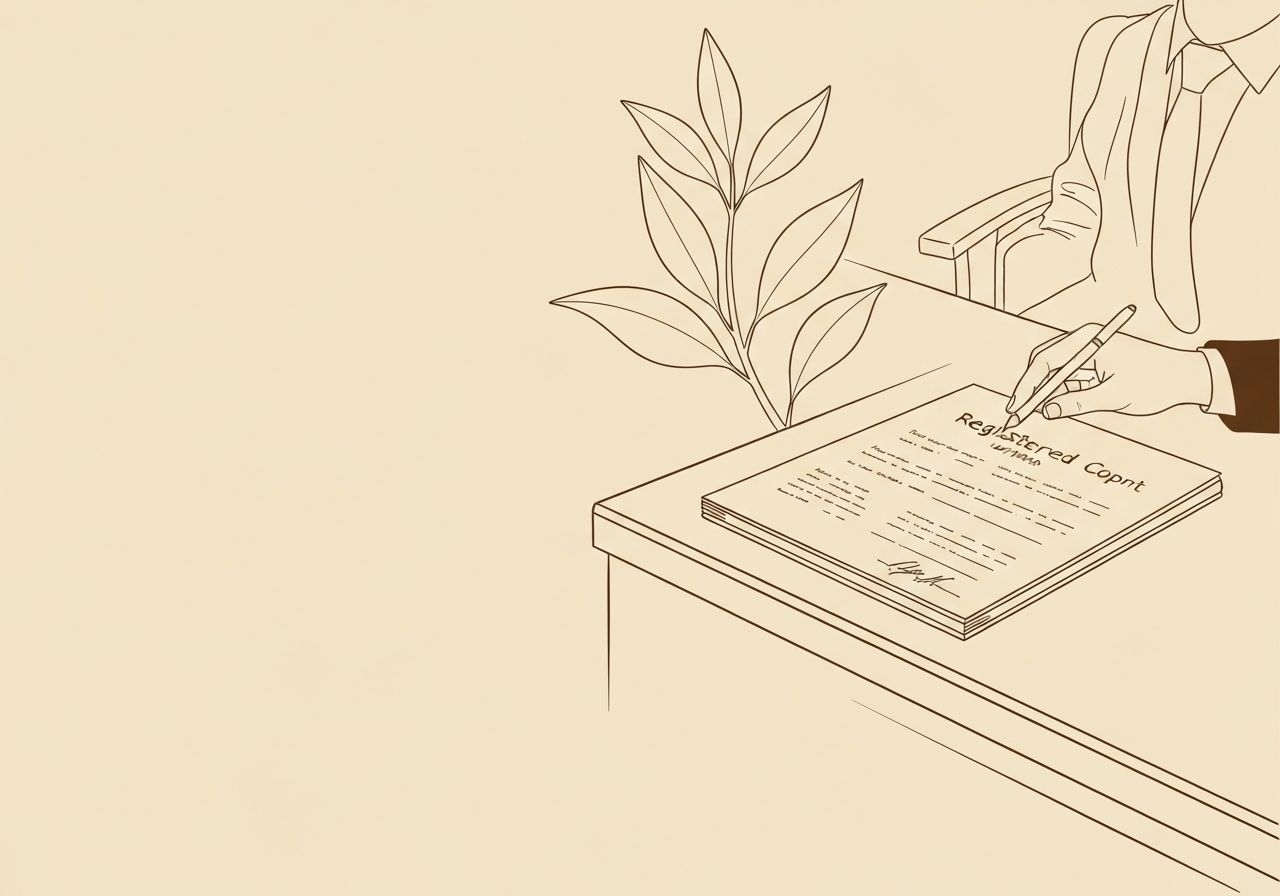
The trial judge slid the registered copy of the Will across the bench and marked it as an exhibit. The man who now objected sat through that moment—his lawyer shuffled papers but said nothing. He watched the document enter the record. The courtroom was silent but for the scratch of the judge's pen. Only after the judgment went against him did he argue that the copy should never have been admitted—that the "sufficient foundation" for secondary evidence (evidence that is a copy of the original, allowed only when the original cannot be produced) had not been laid.
The Privy Council shut him down. The rule was simple, and it was brutal: if you do not object to how a document is proved at the time it is first shown, you cannot complain about it later.
When the Will became a problem
The case reached the Privy Council—at the time, the highest court of appeal for India—from a dispute over a Will. One side produced a registered copy. The other side did not object. The trial judge admitted the copy, marked it as an exhibit, and proceeded. The file felt thin; the objection, if it existed, had been buried in the silence of the courtroom.
Only after losing did the objecting party raise the issue. In appeal, he argued that the copy had been admitted without the proper legal foundation—that the person who produced it had not first shown that the original Will could not be found, which is a requirement under the law of evidence before a copy can be used.
The Privy Council was unimpressed. The bench observed that if the objection had been made at the trial, the judge "would probably have seen that the deficiency was supplied." But because the party kept quiet, he lost the right to complain. The judgment was read in a silent chamber; the words fell like a gavel.
Two kinds of objections
This principle was later clarified by the Supreme Court in R.V.E. Venkatachalam Gounder v. Arulmigu Viswesaraswami & V.P. Temple & Anr. The Court divided objections to documentary evidence into two clear categories.
The first category covers documents that are inherently inadmissible—for example, a document that is irrelevant to the case, or one that the law requires to be registered but was not registered. These objections go to the very admissibility of the document itself. They can be raised at any stage, even in appeal, because no amount of proper procedure can make an inherently inadmissible document admissible. The objection here is like a crack in the foundation—it cannot be plastered over later.
The second category covers objections to the mode of proof—that is, objections about how the document was proved, not about whether the document could ever be proved at all. This includes arguments that the right witness was not called, that the original was not produced without sufficient reason, or that the foundation for secondary evidence was not properly laid. These objections are about the scaffolding, not the building itself.
For this second category, the Supreme Court was emphatic: the objection must be taken when the evidence is tendered, before the document is marked as an exhibit. Once the document is admitted and marked, the objection is dead. The Court called this a rule of fair play—a procedural discipline that prevents a party from lying in wait.
Why the rule exists
The logic is one of fair play. If a party objects at the trial, the other side gets a chance to fix the problem—to call the right witness, to produce the original, to lay the missing foundation. The trial judge can decide the issue then and there, with both sides heard. The courtroom is a place of live correction, not post-mortem ambush.
But if a party stays silent, watches the document go in, and then raises the objection only after losing, the other side is ambushed. The deficiency can no longer be cured. The trial judge never had a chance to rule on the point. The appellate court is left to decide a procedural issue that could have been resolved at the trial level in five minutes. The smell of old paper from the case file does not change the fact that the objection came too late.
The Privy Council in Gopal Das v. Sri Thakurji put it bluntly: a party cannot "lie by until the case comes before a Court of appeal and then complain for the first time of the mode of proof." The words were chosen with care—"lie by" suggests a deliberate stillness, a tactical silence that the law will not reward.
The Padman case: a textbook example
The same principle was applied in Padman v. Hanwanta and Others, another Privy Council decision. There, the appellant tried to object in appeal to the admission of a registered copy of a Will, arguing that "sufficient foundation" had not been laid for its admission. The appellant's lawyer, in the trial court, had watched the copy being tendered and said nothing—perhaps expecting to save the argument for a later day.
The Privy Council noted that no objection had been taken in the trial court against the copy being put in evidence. The Court then delivered the practical consequence: had the objection been made at the time, the District Judge who tried the case "would probably have seen that the deficiency was supplied." Because the appellant did not object, he was precluded from raising the issue in appeal. The silence in the trial court echoed all the way to London.
The case is a classic illustration of how the rule operates. The objection was not about the Will itself being inadmissible—it was about the way the copy was introduced. That is a mode-of-proof objection, and it must be raised at the first opportunity. The Privy Council's judgment, read in a hushed chamber, left no room for doubt: procedural discipline is not optional.
What this means for practitioners
For any lawyer handling a civil trial, the lesson is straightforward. When the other side tenders a document, pay attention to how they are proving it. If the foundation is missing—if they are using a copy without showing why the original is unavailable, or if the wrong witness is trying to prove the document—object immediately. Do not wait. Do not save the argument for appeal. The trial judge's desk is where the objection must land; the appellate bench will not hear it.
If you stay silent, you waive the objection forever. The document stays in evidence, and the appellate court will not hear your complaint. The rule is harsh, but it is necessary: it forces parties to raise issues when they can still be fixed, rather than hoarding them for a later ambush.
Practitioners should also note the distinction between the two categories. If a document is inherently inadmissible—say, an unregistered deed that the law requires to be registered—the objection can be raised at any stage. But if the complaint is about the mode of proof—the wrong witness, the missing foundation, the insufficient explanation for a copy—the objection must be made before the document is marked. The difference is critical, and getting it wrong can cost a case.
THE PLAY: Object to the mode of proof before the document is marked as an exhibit, or lose the right to object forever.
The Privy Council ended where it began: with a document admitted, a party silent, and an appeal too late. The silence in the trial court—the shuffle of papers, the unspoken objection—became the deciding factor. The law does not reward those who wait.