You didn't object when the document was marked. Too late now.
Supreme Court says failure to object at the time a document is exhibited waives the right to challenge its admissibility later—even if it was admitted improperly.
Estopped.
Silence at marking.
Forever barred.
Supreme Court says failure to object at the time a document is exhibited waives the right to challenge its admissibility later—even if it was admitted improperly.
He sat silent when the paper was marked as evidence. Years later, he tried to say it was inadmissible. The Supreme Court had one word: estopped.
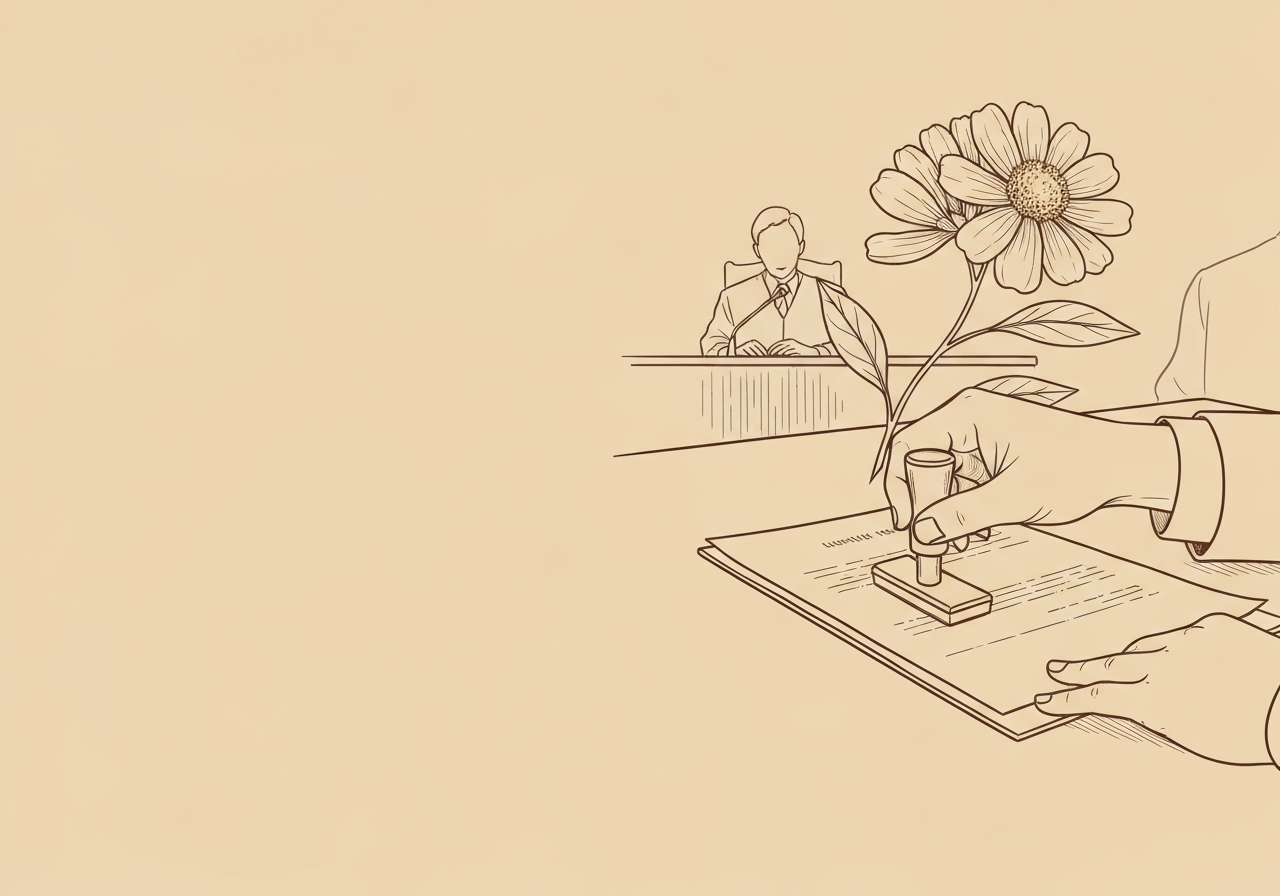
The lawyer watched the document being stamped with an exhibit number. He could have spoken. The trial judge waited. The courtroom waited—the only sound was the soft thud of the stamp hitting the paper. No objection came. The paper entered the record, and the case moved on. Only after the judgment went against him did the objection arrive—like a letter posted years too late.
Could a party who watched a document being admitted without a whisper of protest later turn around and call it inadmissible? The Supreme Court, in Malaya Kumar Ganguly v. Sukumar Mukherjee, answered with a rule that every litigator needs to hear: silence at the moment of marking is a permanent goodbye to the right to object.
The paper that nobody challenged
The facts were straightforward. One side produced a document. The other side—the objecting party—did not raise any objection when the paper was taken on record and marked as an exhibit. The lawyer, perhaps distracted, perhaps confident, said nothing. The judge's hand moved, the stamp came down, and the document sat in the evidence pile, unchallenged, through cross-examination, arguments, and judgment.
Only after losing did the party argue that the document should never have been admitted. The objection was not about the document's contents being false. It was about admissibility—the legal gate through which every piece of evidence must pass before a judge can look at it. The file, now thick with pages, contained that one document that had slipped through without a challenge.
The trial court had already ruled. The appellate courts had already reviewed. By the time the matter reached the Supreme Court, the question was narrow and sharp: does a party who fails to object at the moment of marking forfeit the right to challenge admissibility forever?
Why the court said 'estopped'
The Supreme Court observed: if a party does not object to a document being taken on record and marked as an exhibit, that party is estopped and precluded from questioning the admissibility thereof at a later stage. "Estopped" is a legal term that means barred from denying something because of your own previous action—or inaction. You cannot watch a document come in, say nothing, and then complain about it after you lose. The courtroom's silence at that critical moment becomes a binding admission.
The logic is procedural fairness. Once a document is admitted without objection, the non-objecting party effectively concedes the procedural compliance needed for its admission. The other side relied on that silence. The trial court relied on that silence. To allow a challenge years later would be to ambush the opponent and the judicial process. The smell of old paper and the weight of the case file—these are the only witnesses to what was, and was not, said.
But the Court also drew a crucial distinction. Failure to object waives admissibility challenges—the question of whether the document could legally enter the record. However, proof of the document's contents—whether what the document says is actually true—still requires the author to be examined and subjected to cross-examination. A document can be on record but still be worthless if its contents are not proved. The distinction: admissibility is about the door; proof is about what is inside.
Consider the mechanics of marking an exhibit. The document is tendered. The court clerk writes the exhibit number on it. The judge looks at the opposing counsel. There is a pause—a moment that feels like a held breath. If the opposing counsel says nothing, the document is marked. That pause is the only window for objection. Once it closes, the right is gone.
This procedural forfeiture is severe. It does not matter if the document was improperly obtained, if it lacked a seal, if it was not properly stamped. If you did not object when it was marked, you have waived the right to raise those grounds. The only exception might be if the document is so fundamentally inadmissible that no amount of silence can cure it—but the Court in Malaya Kumar Ganguly did not create a broad exception. The rule is that silence equals consent.
When the CDR certificate was missing
The same principle applies with even greater force to electronic evidence, as the Supreme Court discussed in Sonu @ Amar v. State of Haryana. Call Detail Records (CDRs)—the phone logs that show who called whom and when—are routinely used as evidence in criminal trials. But under Section 65-B(4) of the Evidence Act, electronic records are admissible only if accompanied by a certificate signed by a person in charge of the computer system, certifying the accuracy of the data.
In Sonu, the prosecution produced CDRs without the mandatory certificate. The defence did not object when the records were marked as exhibits. The printout of call logs was handed to the court. The certificate was simply not there. The judge glanced at the pile, then at the defence lawyer. Silence. The CDRs were marked. Later, the defence tried to argue that the CDRs were inadmissible because the certificate was missing.
The Court noted the crucial test: whether the defect could have been cured at the stage of marking the document. If a timely objection had been taken to the CDRs being marked without a certificate, the Court could have given the party adducing the evidence an opportunity to rectify the deficiency. The judge might have said, "Produce the certificate by next hearing." The prosecution would have scrambled to get it signed. The defect would have been cured.
Non-production of such a certificate is often viewed as a curable defect—a problem that can be fixed if caught early. But the defence did not object. The moment passed. The judge's expression—perhaps a slight frown, perhaps nothing at all—did not change. The CDRs stayed on record.
By failing to object, the opponent forfeited the chance to force the proponent to cure the defect immediately or risk exclusion. The defect—non-production of the certificate—transitions from a curable deficiency to a non-challengeable flaw regarding admissibility. The evidence remains on record. The burden shifts to the opponent to discredit its weight, rather than challenging its very presence. The defence must now try to argue that the call logs are unreliable, that the data is wrong—a much harder task than simply saying the certificate is missing.
This is the strategic trap. Many lawyers think they can save an objection for appeal. They believe that a defect in the mode of proof can be raised later. The Court in Sonu closed that door. If you do not object when the document is marked, you have lost the right to challenge its admissibility. The only thing left is to attack its weight—and weight is much harder to dislodge than admissibility.
What this means for every lawyer and litigant
The rule is brutal but simple: the moment a document is tendered and marked, the clock starts ticking. If you do not object then, you lose the right forever. There is no second chance, no belated appeal on admissibility grounds. The strategic advantage is irrevocably lost.
This applies to every kind of document—paper records, contracts, letters, and especially electronic evidence like CDRs, WhatsApp chats, and emails. The opponent's failure to produce a certificate under Section 65-B(4) is a curable defect only if you object at the right time. If you stay silent, you have effectively consented to the document being on record, and you cannot later complain that it should not be there.
Consider the practical implications. Every trial lawyer must now be vigilant at the moment of marking. The file is open. The document is being handed up. The clerk is reaching for the stamp. This is the moment to speak. Not after the judgment. Not after the appeal. Now. The courtroom silence that follows the stamp is the silence of a right being buried.
The rule also changes how litigants should instruct their lawyers. A client must know that if their lawyer does not object when a document is marked, that document is likely to stay in the record forever. The client cannot later blame the lawyer for failing to raise the point on appeal—because the point is gone. The only remedy might be a malpractice suit against the lawyer, but that does not help the case at hand.
For the proponent of evidence, the rule is equally important. If you know your document has a defect—a missing certificate, a lack of proper stamping—you can still get it admitted if the opponent does not object. The opponent's silence cures your defect. This is a tactical advantage that can be exploited. Produce the document confidently. Wait. If the opponent objects, you can try to cure the defect. If they do not, you have won the admissibility battle without a fight.
THE PLAY: Object to every document the moment it is marked as an exhibit—if you wait until appeal, the court will tell you that you already gave your consent by silence.
The document stayed in the record. The objection arrived too late. The court ended where it began: with a paper that nobody challenged when it mattered. The stamp mark on that paper, made in a moment of silence, became the final word. The Supreme Court's judgment is a reminder that in the courtroom, silence is not golden—it is a forfeiture.