A 2,000-year-old temple custom. A goddess of power. The court still said no.
A petitioner asked the Madras High Court to enforce an ancient temple custom barring widows from handing the Sengol — but the court found the texts didn't support it and the Constitution wouldn't allow it anyway.
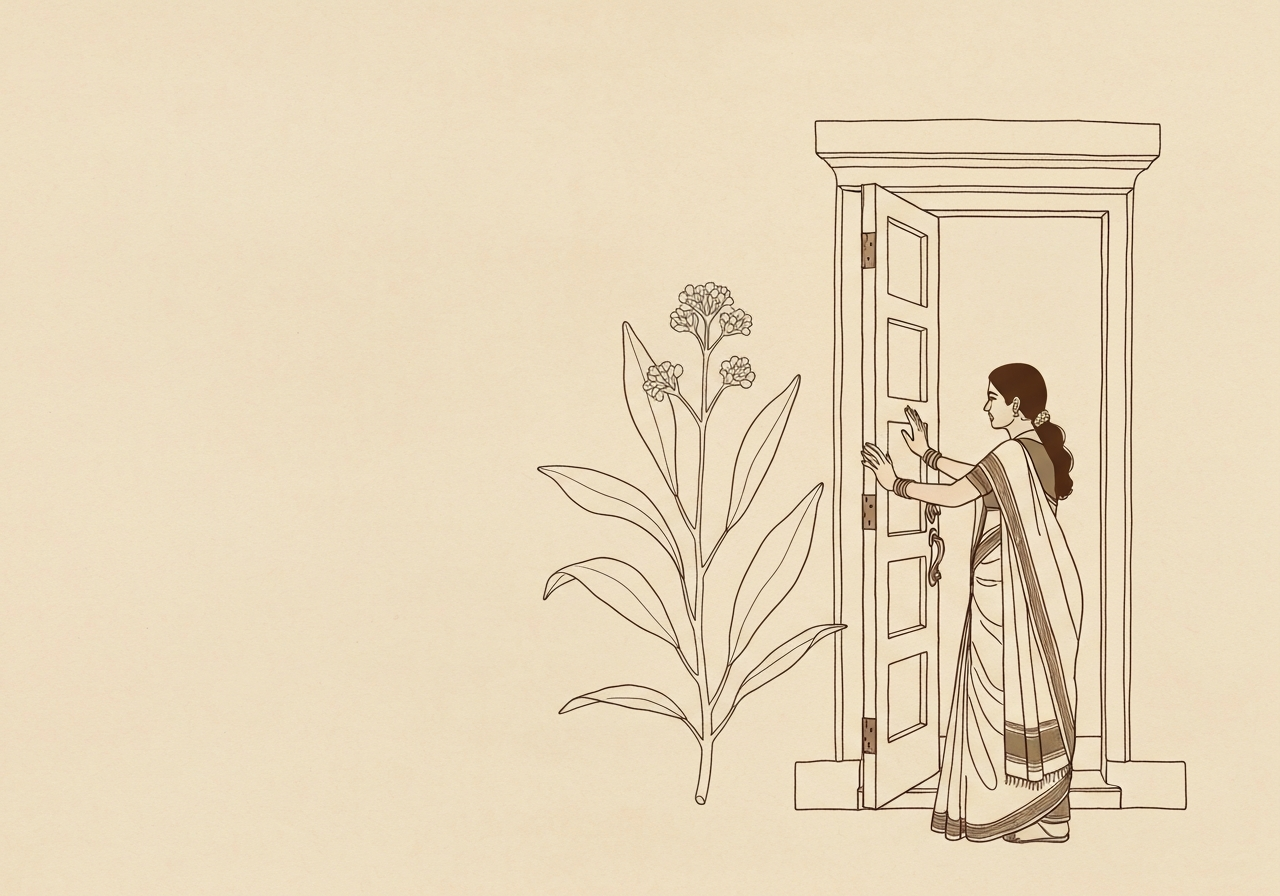
Rejected.
Custom vs. Constitution.
Sengol ceremony.
A petitioner asked the Madras High Court to enforce an ancient temple custom barring widows from handing the Sengol — but the court found the texts didn't support it and the Constitution wouldn't allow it anyway.
The Sengol, the Goddess, and the Custom That Could Not Stand
When S. Dhinakaran walked into the Madurai Bench of the Madras High Court, he was not asking for much. He wanted a writ — a mandamus — directing the authorities of the Sri Meenakshi Sundareshwarar Temple to follow what he called an ancient custom. On the Pattabhishekam day of the Chitra festival, the Sengol — the sceptre, the baton of rule — should be handed over to a qualified member of the Ananthakula Sadashiva Bhattar family. That was the surface. The real objection, the one that gave the case its sting, was this: the Sengol should not go to a widower or a widow. That, he claimed, violated Agama principles.
Justice C. Saravanan had a different question. What did the texts actually say? And even if they said what the petitioner claimed, could a court enforce a custom that excluded women and widows from a ceremony in a temple whose presiding deity is Meenakshi Amman — the very embodiment of womanhood and power?
The stakes were not small. At issue was the control of a centuries-old ritual at one of India's most famous temples. The petitioner was not just a devotee; he was asserting a right to dictate who could and could not participate. The temple authorities, backed by a Division Bench that had already upheld the appointment of trustees including women, were defending their administrative autonomy. And the Court was being asked to decide whether a claimed custom, even if ancient, could survive the constitutional guarantee of equality.
What the Sethala Kuripedu actually said
The petitioner's case rested on two documents: the Sethala Kuripedu and the Sethala Book. These are historical temple records, the kind that chronicle rituals, endowments, and customary practices over generations. Dhinakaran argued that these texts established an embargo — that the Sengol could only be handed to a male member of the Bhattar family who was not a widower, and certainly not to a widow.
Justice Saravanan read the texts. And found nothing of the sort.
The Court observed that the documents produced did not evidence any such embargo. The petitioner's claim that the custom excluded widows and widowers was simply not borne out by the records he himself relied upon. This was a critical finding. The Court was not being asked to weigh competing interpretations of a disputed custom. It was being shown texts that, on a plain reading, did not support the petitioner's position.
That alone might have been enough to dismiss the petition. But the Court went further.
The irony the Court could not ignore
Justice Saravanan noted something that cut to the heart of the matter. The presiding deity of the Sri Meenakshi Sundareshwarar Temple is Meenakshi Amman — a form of Parvathy, the consort of Lord Shiva. She is a symbol of womanhood and power, celebrated, revered, venerated, and worshipped by millions. The temple itself is named after her. And yet, the petitioner was asking the Court to enforce a practice that would exclude women — and widows in particular — from a ceremony in her honour.
"It is ironic," the Court observed, "to seek exclusion of women from the Sengol ceremony in a temple dedicated to a female deity."
This was not a stray remark. It was a doctrinal anchor. The Court was signalling that any custom, no matter how ancient, that discriminates on the basis of gender must be tested against the Constitution. And the Constitution, through Article 14, guarantees equality. A custom that excludes women or widows from a religious ceremony is, prima facie, an affront to that guarantee.
The custom that could not survive equality
This is the ratio that matters. The Court held that any custom or usage that discriminates against women or widows in the context of temple ceremonies cannot be enforced through a writ of mandamus. The Constitution is the supreme law. Customs must yield to it, not the other way around.
The Court did not need to decide whether the custom actually existed. It had already found that the texts did not support the petitioner's claim. But even if they had, the result would have been the same. A discriminatory custom, however ancient, cannot be the basis for a court order.
This is a powerful statement. It aligns with a line of Supreme Court decisions that have struck down discriminatory religious practices — from the entry of women into the Sabarimala temple to the exclusion of women from mosques. The Madras High Court was not breaking new ground. It was applying settled constitutional principle to a specific temple ritual.
THE TEST: If a claimed custom discriminates on the basis of gender, it must be tested against Article 14. If it fails, no court will enforce it — regardless of how old the custom is.
Why the writ failed
There was a second, procedural reason the petition was dismissed. The Court found that the dispute over customs and usages in temples governed by the Tamil Nadu Hindu Religious and Charitable Endowments Act, 1959, should be resolved through the statutory mechanism, not through a writ petition under Article 226.
Section 63(e) of the TN HR&CE Act gives the Joint Commissioner the power to decide disputes regarding customs and usages. The Court held that the petitioner should first approach the Joint Commissioner of the Sri Meenakshi Sundareshwarar Temple with an application under that provision. Only if that remedy is exhausted — and if the decision is adverse — could the petitioner approach the High Court.
This is a standard principle of writ jurisprudence: where an alternative statutory remedy exists, the High Court will not ordinarily entertain a writ petition. The Court was not shutting the door on the petitioner. It was directing him to the right door.
The Court also directed the Joint Commissioner to decide the petitioner's application — and to consider his representation dated 03.04.2024 — before the 2025 Chitra festival. That is a tight timeline. It ensures that the dispute will be resolved before the next ceremony, not lost in bureaucratic delay.
The Division Bench that had already spoken
The petitioner's challenge was not the first legal battle over the management of the Meenakshi Temple. A Division Bench of the same High Court had already dealt with a related issue. In W.P.(MD) No.29357 of 2023, decided on 06.11.2023, the Division Bench upheld the appointment of five trustees under G.O.Ms.(Pa)No.269. The Court found that the trustees satisfied the qualifications under Section 25-A of the TN HR&CE Act and did not suffer any disqualifications under Section 26. The composition of the board also met the requirements of Section 47(1)(c).
That order was significant because it confirmed that women could serve as trustees of the temple. The petitioner's challenge to the Sengol ceremony was, in part, an indirect challenge to the authority of those trustees — including the women among them. The Division Bench had already rejected that line of attack.
Justice Saravanan noted this. The current petition, he implied, was an attempt to relitigate a settled issue through a different route. That was not permissible.
What this means for practitioners
For advocates advising temple authorities or devotees, this judgment offers several clear takeaways.
First, the constitutional equality argument is now firmly embedded in temple custom disputes. Any claimed custom that excludes women or widows will face a high bar. The Court will not enforce it through a writ, and even the statutory authorities under the TN HR&CE Act will have to apply the equality standard.
Second, the procedural route matters. Disputes over customs and usages must first go to the Joint Commissioner under Section 63(e). A writ petition filed directly in the High Court will likely be dismissed on that ground alone. Practitioners should advise clients to exhaust the statutory remedy before approaching the High Court.
Third, historical texts must be carefully examined. The petitioner in this case relied on the Sethala Kuripedu and Sethala Book, but the Court found that they did not support his claim. Any party asserting a custom must be prepared to prove it with clear, unambiguous evidence. The Court will not take the petitioner's word for it.
Fourth, the timeline matters. The Court directed the Joint Commissioner to decide the petitioner's application before the 2025 Chitra festival. That is a practical direction that ensures the dispute does not drag on indefinitely. Practitioners should seek similar timelines when filing applications under Section 63(e).
The bottom line
The Sengol will be handed over during the Chitra festival. It may be handed to a man or a woman, a widower or a widow. The Court has not decided who will receive it. What it has decided is that the petitioner cannot use a writ to enforce a discriminatory custom that the texts do not even support. The dispute will now go to the Joint Commissioner, who must decide it before the 2025 festival — and who must apply the Constitution alongside the Agamas.
THE BOTTOM LINE: If you are challenging a temple custom, make sure the texts actually support your claim — and be prepared for the Constitution to override any custom that discriminates against women or widows.