A beer company's 'sales promoter' was actually a lender. SC says it's a financial creditor.
Sach Marketing deposited Rs 53 lakhs as security, earning 21% interest. The Supreme Court ruled that the real nature of the deal was a loan, not a service agreement.
53
lakhs.
Sach Marketing deposited Rs 53 lakhs as security, earning 21% interest. The Supreme Court ruled that the real nature of the deal was a loan, not a service agreement.
A company paid just Rs 4,000 a month for promotion work—but deposited over Rs 53 lakhs as security. When the beer maker went bust, the question was: was this a service or a loan?
The answer would decide whether Sach Marketing got a seat at the table where the company's fate was decided, or was left standing outside with other unpaid vendors. The Supreme Court's answer, delivered in April 2024, was blunt: a security deposit earning 21% annual interest, with no connection to actual work, is not a service fee. It is a loan. And the company that gave it is a financial creditor — entitled to vote on the insolvency resolution plan.
When the beer maker needed cash
Mount Shivalik Industries, a beer manufacturer, needed working capital. It did not approach a bank. Instead, in 2014 and 2015, it signed agreements appointing Sach Marketing as its "Sales Promoter". The job description was thin: Sach Marketing would receive Rs 4,000 per month for promotion work. But the real deal was hidden in the fine print — a single sentence buried in the agreement requiring a deposit of over Rs 53 lakhs.
The agreements required Sach Marketing to deposit over Rs 53 lakhs as a security deposit with the beer company. In return, the deposit would earn 21% annual interest. The deposit was repayable after a fixed tenure. There was no clause allowing the beer company to forfeit the deposit if Sach Marketing failed to perform its promotion duties. The deposit and the service work existed in separate worlds — the monthly Rs 4,000 cheque for promotion work had no relation to the lakhs sitting in the company's account.
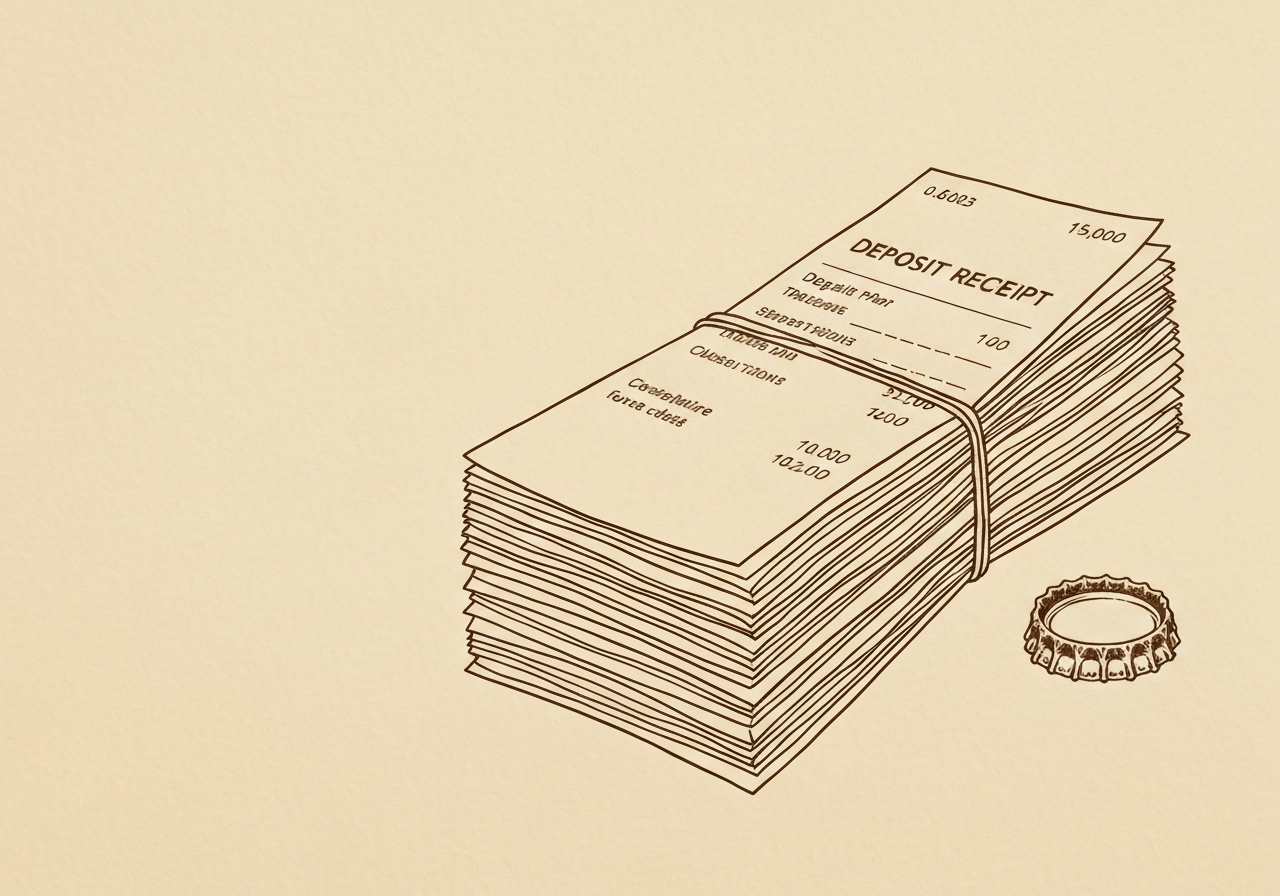
For years, the arrangement worked. Sach Marketing collected its monthly Rs 4,000 and its 21% interest. The beer company got its cash. Then Mount Shivalik Industries collapsed into insolvency, and the stack of deposit receipts became the centre of a legal battle.
The fight over a seat at the table
When a company enters the Corporate Insolvency Resolution Process (CIRP — the formal process under the Insolvency and Bankruptcy Code where creditors decide whether to revive the company or liquidate it), creditors are divided into two classes. Financial creditors — those who lent money — sit on the Committee of Creditors (CoC — the group that votes on the company's rescue plan). Operational creditors — those who supplied goods or services — do not get a vote. They are paid only what the financial creditors decide to give them.
Sach Marketing filed its claim as a financial creditor, arguing that its Rs 53 lakh deposit was a loan. The Resolution Professional (RP — the person appointed to manage the company during insolvency) rejected the claim on October 7, 2018, classifying it as an operational debt (a debt arising from the provision of services). The rejection letter was brief — the RP had decided the deposit was merely security for service performance.
Sach Marketing challenged this before the National Company Law Tribunal (NCLT — the first court that hears insolvency cases). The NCLT agreed with the RP on January 18, 2021, dismissing the application under Section 60(5) of the IBC. The courtroom in New Delhi was quiet as the order was read — the judge found that the deposit was tied to the service agreement, and therefore operational.
Sach Marketing then appealed to the National Company Law Appellate Tribunal (NCLAT — the second court that hears appeals in insolvency cases). On October 7, 2021, the NCLAT reversed the decision, ruling that Sach Marketing was indeed a financial creditor. The beer company's other creditors — Global Credit Capital Limited and others — appealed to the Supreme Court.
The legal question: what counts as a loan?
The Insolvency and Bankruptcy Code, 2016 (IBC — the law that governs corporate insolvency in India) defines "financial debt" in Section 5(8). The definition includes a catch-all clause: Section 5(8)(f), which covers any debt that has "the commercial effect of borrowing". This clause was the battleground.
The creditors challenging Sach Marketing's status argued that the deposit was simply a security for performance of the service agreement. Since Sach Marketing was supposed to promote the beer company's products, the deposit was an operational debt — a debt arising from the provision of services under Section 5(21) of the IBC.
Sach Marketing argued that the deposit had nothing to do with service performance. The Rs 4,000 monthly payment was the service fee. The Rs 53 lakh deposit was a loan — evidenced by the 21% interest rate, the fixed repayment tenure, and the absence of any forfeiture clause. The deposit had the commercial effect of borrowing, and therefore qualified as financial debt under Section 5(8)(f).
What the Supreme Court looked at
The bench of Justice Abhay S. Oka and Justice Pankaj Mithal examined the agreements closely. The courtroom fell silent as the judges read out the interest rate — 21% per annum — a figure that made the transaction's true nature unmistakable. They applied the test laid down in earlier Supreme Court judgments — particularly Anuj Jain v. Axis Bank (2020) and Pioneer Urban v. Union of India (2019) — which require courts to look at the real nature of a transaction, not just its label.
The court found three crucial features of the deposit:
- Interest at a commercial rate: 21% per annum is not a token return. It is the kind of return a lender expects from a loan. The Supreme Court held that "where security deposits under agreements carry interest at commercial rates, are repayable after fixed tenure without forfeiture provision, and have no correlation with service performance, the amounts have the commercial effect of borrowing."
- No forfeiture clause: If the deposit was truly a security for service performance, the beer company would have the right to keep the deposit if Sach Marketing failed to promote its products. The agreements had no such clause — the deposit was unconditionally repayable.
- No correlation with service: The deposit amount had no connection to the scope of promotion work. Sach Marketing was paid Rs 4,000 per month regardless of how much it deposited. The two amounts — Rs 4,000 and Rs 53 lakhs — existed in entirely separate compartments.
The court held that where a security deposit carries interest at commercial rates, is repayable after a fixed tenure, and has no connection with service performance, the amount has the commercial effect of borrowing. It is a financial debt under Section 5(8)(f). And once a debt is classified as financial debt, the creditor automatically becomes a financial creditor under Section 5(7) of the IBC.
The precedents that guided the court
The Supreme Court's reasoning drew heavily from Anuj Jain v. Axis Bank (2020), where the court had held that the definition of financial debt under Section 5(8) must be interpreted broadly, and that courts must look at the substance of the transaction rather than its form. In that case, the court had examined whether a corporate guarantee constituted financial debt — and held that any disbursal against the time value of money falls within the definition.
Similarly, in Pioneer Urban v. Union of India (2019), the court had held that home buyers who paid money to developers were financial creditors because their payments had the commercial effect of borrowing — the developer received money upfront and was obligated to return it with interest if the project failed. The principle was the same: when money is given with the expectation of return plus time value, it is a loan.
The court also cited Phoenix ARC v. Spade Financial Services (2021), which dealt with the classification of related party transactions, and Swiss Ribbons v. Union of India (2019), which established the constitutional validity of the IBC and emphasised the importance of the Committee of Creditors in the resolution process.
The real nature of the transaction
The court also addressed a broader principle: when a creditor claims under a written agreement that provides for rendering "service", the debt is operational only if the claim has some connection or co-relation with the service that is the subject matter of the transaction. If the claim arises from a separate arrangement — like a deposit that functions as a loan — the label "service agreement" does not change the real nature of the debt.
The court dismissed the appeals, upholding the NCLAT's decision. Sach Marketing was confirmed as a financial creditor, entitled to sit on the Committee of Creditors and vote on the beer company's resolution plan. The judgment in Global Credit Capital Limited & Anr. v. Sach Marketing Pvt. Ltd. & Anr. — Civil Appeal No. 1143 of 2022 — was delivered on April 25, 2024.
THE PLAY: When drafting any agreement that involves a security deposit, state explicitly whether the deposit is a loan or a performance guarantee — because the IBC will look past the label to the real nature of the transaction.
The beer company is gone. But the lesson remains: a deposit that smells like a loan, walks like a loan, and earns interest like a loan is a loan.