A DNA test linked him to a foetus. But the sample sat for months.
The Supreme Court said the burden is on the accused to prove the sample was mishandled—even after an expert admitted mistakes can happen.
6
months.
The Supreme Court said the burden is on the accused to prove the sample was mishandled—even after an expert admitted mistakes can happen.
The forensic lab's own scientist said mishandling a sample can give wrong results. But the judge asked: did you prove it was mishandled here?
The foetus had been preserved in ice since the post-mortem. For months, the sample sat untouched at the forensic lab. When the DNA report finally arrived, it linked the accused as the biological father of the unborn child. The prosecution built its case around that single piece of evidence. The defence argued the sample had been compromised by the delay. The Supreme Court had to decide: who carries the burden when a DNA sample sits for months and an expert admits mistakes can happen?
When the foetus became evidence
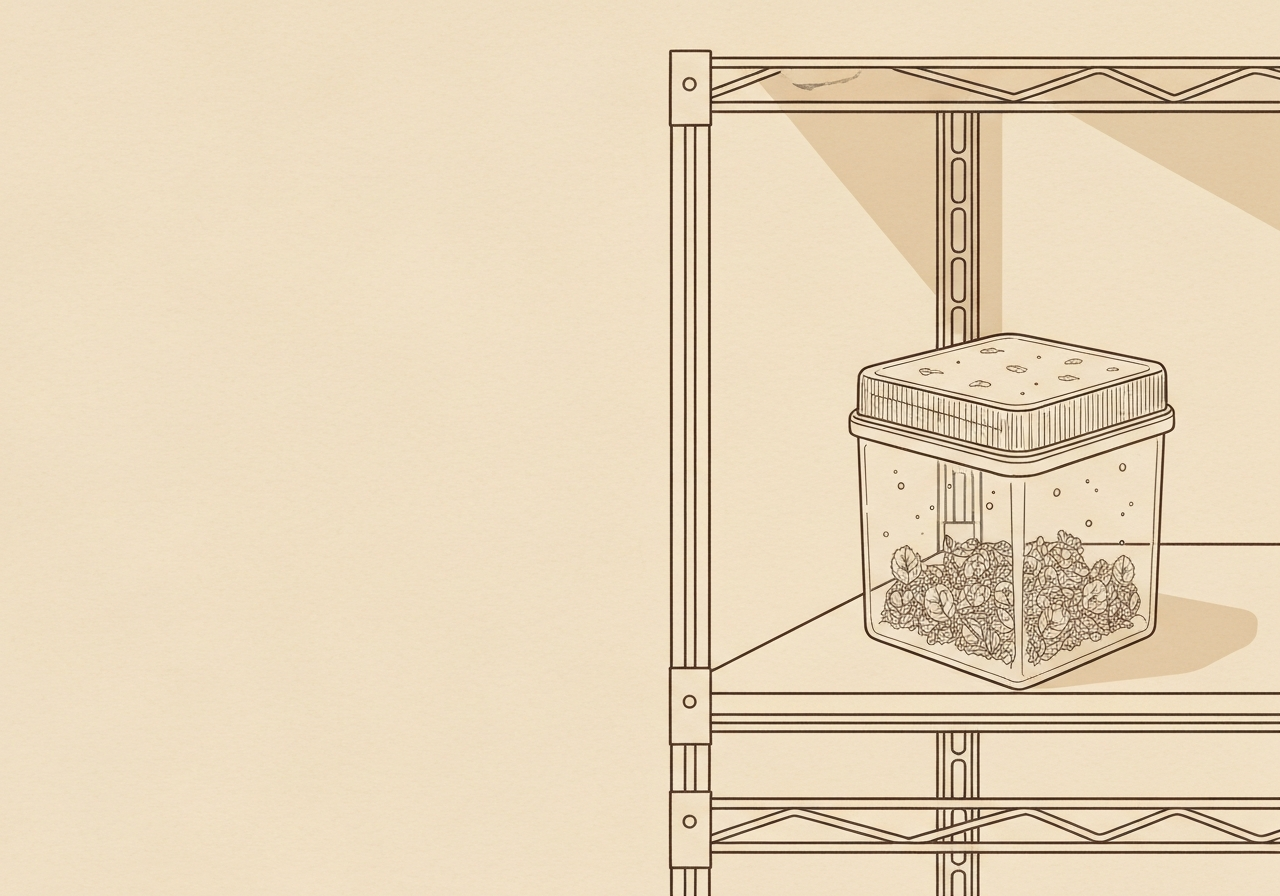
The case began with a brutal crime. The accused, Sandeep, was charged with serious offenses including murder and causing the death of an unborn child. The foetus was recovered and sent for post-mortem. On the day of the autopsy, the investigating officer took a sample from the foetus and preserved it in ice. The ice, packed around the sample in a sealed container, was meant to halt decay. That sample was then sent to the Central Forensic Laboratory for DNA testing.
But the test did not happen immediately. Weeks turned into months. The sample sat at the lab, waiting its turn on a bench or a shelf, the ice long gone, the tissue now in a preservative. When the DNA test was finally conducted, the result was damning: the foetus's DNA matched the accused's profile. The report stated that Sandeep was the biological father of the unborn child.
The trial court convicted him. Sandeep appealed to the Supreme Court, arguing that the delay in testing had compromised the sample. The prosecution's case, he said, was built on unreliable evidence.
The scientist who admitted the risk
At the trial, the prosecution called a Junior Scientific Officer (JSO) from the Central Forensic Laboratory. The JSO was the expert who had handled the sample and prepared the DNA report. The courtroom fell silent as he took the stand. Under cross-examination, the JSO made a critical concession: mishandling a sample, he said, could lead to wrong results. The words hung in the air, a crack in the prosecution's fortress.
For the defence, this was a gift. If the expert himself admitted that mistakes could happen, surely the sample's integrity was in doubt. The delay in testing—months of sitting in storage—only strengthened the argument. The defence urged the court to discard the DNA report as unreliable.
But the JSO did not stop there. He categorically deposed that the result reported in this case was not based on wrong facts. The sample had been preserved properly, he said. The delay did not affect the outcome. The DNA report linking the accused to the foetus was accurate. The file on the lab bench, thin and worn, held the only answer the court would trust.
Why the burden shifted
The Supreme Court framed the issue as a question of burden of proof (the obligation to prove a fact in court). The prosecution had presented a DNA report that linked the accused to the foetus. The defence argued that the delay in testing and the possibility of mishandling made that report unreliable.
The court observed that the DNA report was a piece of evidence that the prosecution had placed on record. The report itself was not challenged on its face—the defence did not produce any evidence to show that the sample had actually been contaminated or that the testing procedure was flawed. Instead, the defence relied on the JSO's general statement that mishandling could happen.
The Supreme Court held that this was not enough. The burden, the court said, was on the accused to prove that the prosecution case was vitiated because of the delay in conducting the test and because the sample was improperly preserved. The accused had to show—through evidence—that the sample had been compromised. A general concession about the possibility of mishandling, without specific proof that mishandling had occurred in this case, did not discharge that burden. The courtroom's silence returned as the judge read the finding.
The logic that sealed the conviction
The court's reasoning was straightforward. The DNA report was a piece of scientific evidence. The prosecution had established that the sample was taken from the foetus on the date of the post-mortem and preserved in ice. The JSO had confirmed that the result was accurate. The defence had not produced any evidence to contradict this.
The delay in testing, by itself, did not make the report unreliable. The court noted that the sample had been preserved properly. The JSO's testimony established that the result was not based on wrong facts. In the absence of the accused discharging the burden of proving that the sample was mishandled, the conviction for the offenses was held proper.
The Supreme Court dismissed the appeal. Sandeep's conviction stood. The smell of old paper from the case file lingered in the courtroom as the order was read out.
What this means for every criminal trial
The judgment settles a recurring question in cases involving DNA evidence. When the prosecution presents a DNA report, the burden shifts to the accused to show that the sample was compromised. A general admission by an expert that mishandling can happen is not enough. The accused must produce specific evidence—a challenge to the chain of custody (the record of who handled the sample and when), an alternative expert opinion, or proof of contamination—to vitiate the report.
For defence lawyers, the lesson is clear: a cross-examination that extracts a concession about the possibility of error is only the beginning. The real work lies in showing that the error actually occurred in the case at hand. For prosecutors, the judgment reinforces the value of a well-documented chain of custody and an expert who can stand by the specific result, not just the general procedure.
The foetus had been preserved in ice. The sample sat for months. But the court ended where it began: with a DNA report that the accused could not dislodge.
Deeper into the burden of proof
The concept of burden of proof (the obligation to prove a fact in court) is fundamental to criminal law. In most trials, the prosecution carries the burden of proving the accused's guilt beyond a reasonable doubt. But when the prosecution presents a piece of evidence—like a DNA report—that appears reliable on its face, the burden can shift. The accused must then challenge that evidence with something more than a suggestion of error.
In this case, the Supreme Court clarified the nature of that shift. The court did not say that the accused must prove his innocence. Rather, it said that once the prosecution establishes a prima facie case (a case that appears valid on first examination) through the DNA report, the accused must show why that report should not be believed. This is not a reversal of the presumption of innocence. It is a practical rule of evidence: a document that appears genuine and is supported by expert testimony cannot be dismissed by a theoretical possibility of error.
The JSO's concession that mishandling could lead to wrong results was, in the court's view, a general statement about the science of DNA testing. It was not a specific admission that the sample in this case had been mishandled. The accused needed to point to something concrete—a break in the chain of custody, a failure to follow protocol, a contradictory expert opinion—to raise a real doubt. Without that, the DNA report stood.
This reasoning has implications beyond the facts of this case. In any trial where scientific evidence is presented, the defence must engage with the specifics of the evidence, not just the general vulnerabilities of the science. A cross-examination that exposes the limits of a test or the possibility of human error is valuable, but it is only the first step. The second step—showing that those limits or errors actually affected the result in the case—is what the court demands.
The original crime and trial
The case of Sandeep v. State of UP began with a crime that shocked a community. The accused was charged with murder and causing the death of an unborn child. The prosecution's case rested heavily on the DNA evidence linking Sandeep to the foetus. At the trial, the prosecution presented the DNA report along with the testimony of the JSO. The defence cross-examined the JSO aggressively, extracting the concession that mishandling could lead to wrong results. But the defence did not call its own expert. It did not produce any evidence of contamination. It did not challenge the chain of custody beyond the general delay.
The trial court weighed the evidence. The DNA report was clear. The JSO's testimony was firm on the specific result. The delay, while notable, was not shown to have affected the sample. The court convicted Sandeep. The Supreme Court, on appeal, upheld that conviction, reinforcing the trial court's view that the defence had not met its burden.
The case file, now closed, carries a lesson for every criminal lawyer. The weight of a DNA report is heavy. To lift it, the defence must bring more than words.
THE PLAY: If you challenge a DNA report on grounds of delay or mishandling, you must bring evidence—not just the expert's general concession that mistakes are possible.
THE TEST: The Supreme Court in Sandeep v. State of UP tested whether a general admission about the possibility of sample mishandling, without specific proof of contamination, is enough to vitiate a DNA report. The answer: no.
WHAT THIS MEANS: The burden of proof in criminal trials involving DNA evidence now rests firmly on the accused to demonstrate actual compromise of the sample, not merely the theoretical risk of mishandling. This judgment protects the integrity of forensic evidence while demanding that challenges be grounded in fact, not speculation.